Konjska koža

AkordMOŠUS, AMBRA I ANIMALNI MIRISImošusni · topao · kožni
Bazne notePiramida
—Jačina
—Trajnost
—Poreklo
Uzorak
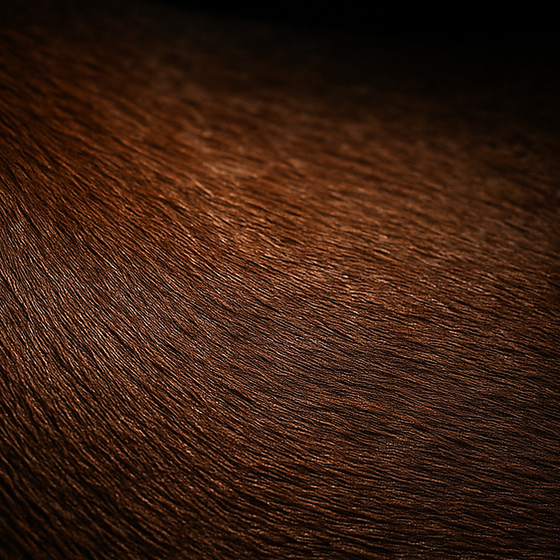
Konjska koža kao sirovina za parfeme
Bazne note
Fantazijska/konceptualna
Definicija

Horse skin: the waterproofed pelt of the horse, whose sweat glands release latherin, a protein that wets the hair for cooling.

SLADAK MOŠUSNI ANIMALNI KOŽNI TOPAO
Type
Akord
Olfactive family
Ambrasti i mošusni
Instrumenti
Piramida
GGornje note
SSrednje note
BBazne note

Detaljno

Horse sweat

Horse sweat contains latherin, a highly surface-active protein. Latherin presumably wets the hairs so that water can flow for evaporation, and the lathering often seen on the pelts of sweating horses is a side effect.

Pelt and sweat glands

Horses have a thick, waterproofed, hairy pelt that would normally slow the movement of sweat from the skin to the surface of the hair. Latherin is produced and stored in granules in the sweat glands of the skin, and it is also made in the salivary glands. The amino acid sequence of latherin is highly conserved across four equid species: horse, zebra, onager and ass.

Surface activity

Pure water has a surface tension of about 74 mN/m, and latherin brings it down to 56 mN/m at 1 mg/ml, a concentration close to that of latherin in horse sweat. This drop is typical of detergent-like behaviour, which explains why horse sweat and dilute latherin solutions foam easily and wet hydrophobic surfaces. Latherin works without lipids or sugar chains attached to it, so its surface activity is a property of the protein itself. The layers of latherin left on a surface rinse off easily with water, which probably matters because permanent wetting would compromise the natural water-repellent properties of the oily pelt.

Structure and allergy

Latherin is a monomer in solution with an almost cylindrical shape about 65 Å long and 25 Å wide, built from a four-stranded β-sheet and two long helices. It belongs to the PLUNC family of proteins, which are abundant in the mouth and saliva of mammals. Latherin is the target of IgE antibodies in some, but not all, people who are allergic to horses.

Horse hide and leather

Horse hides are used to make particularly durable leathers. Tanning stabilizes the proteins of the raw hide, particularly collagen, and tanned material dries to a flexible form that does not putrefy when rewetted. The horse is also the stereotypical animal source of animal glue, an adhesive made by prolonged boiling of animal connective tissue.

Shell cordovan

Shell cordovan is an equine leather made from the superficial fascia of the lower layers of the hide on the rump of a horse. The shell is found only in equine species. The material takes its name from the city of Cordoba, Spain, where this type of leather originated. It is used mostly for shoes, and also for wallets and watch straps.

Explore all seven extraits in the Discovery Set.

—

Related: Aldambre · Ambrarome · Ambrein · Ambreine · Ambrettolide · Ambronova · Ammonia · Animal Notes

Zanimljivosti

Horses, humans and patas monkeys are the only mammals known to sweat copiously for thermoregulation. Human sweat is high in salt and low in protein, whereas horse sweat is high in protein and low in salt.

Dobijanje i hemija

Način dobijanja

Leather, including horse leather, is obtained by tanning animal skins. For shell cordovan, the tanned rear piece of the hide (the butt) is passed through a splitting machine that removes the grain, or hair side, and reveals the shell.

Status prema standardima IFRA
Pogledajte napomenu

No IFRA Standard for the material itself (51st Amendment)

U parfemima

The leather family of fragrances features honey, tobacco, wood and wood tars in the middle or base notes.

Uloga u formuli
01modifikator
02nota potpisa
03sirovina za stapanje
04graditelj volumena
Oblici na tržištu
mirisni akord

Pogledajte i

8 nota