


List hrasta
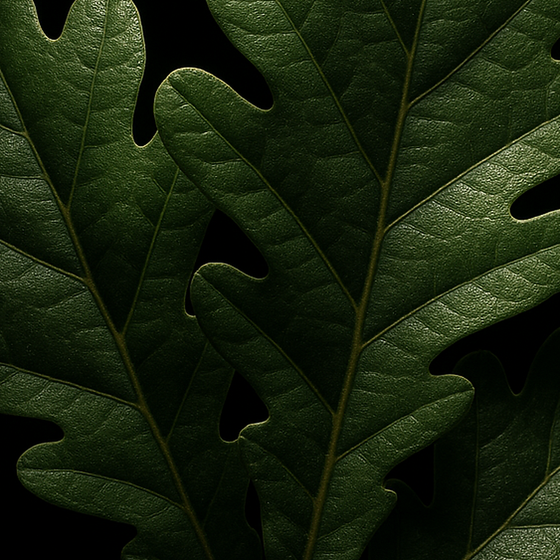
Tannic, dry, faintly astringent green turning to brown. Oak leaves smell like autumn underfoot -- crisp when fresh, leathery and earthy when decaying, always carrying the ghost of tannin.
- Type
- Sirovina
- Olfactive family
- Aromatični
- Source
- leaves and flowering tops
- Chemical class
- complex natural (essential oil)
Miris
Detaljno
Dobijanje i hemija
Način dobijanja
No commercial essential oil or absolute of oak leaves exists. The note is reconstructed from green-leaf aldehydes, methyl salicylate (tannic astringency), leathery molecules, and earthy modifiers (geosmin, vetiver).
- Formula
- Complex mixture: various tannins, phenolic compounds, leaf alcohols
- CAS
- N/A — natural plant material (absolute available; no single CAS)
- Botanički naziv
- Quercus spp.
- Izgled
- Pale yellow to amber liquid
- Jačina mirisa
- Srednji
- Sinonimi
- Oak leaf, Feuille de chêne
No IFRA Standard for the material itself (51st Amendment)
- Nota
- Absolute obtained by solvent extraction of dried oak leaves
U parfemima
Oak leaves provide a deciduous-forest green-to-earthy modifier across the heart-to-base transition. The note captures multiple leaf stages: fresh (green aldehydes), drying (leathery, methyl salicylate), and decomposing (geosmin, earthy). It provides a temperate-European forest reference in chypre, forest, and autumnal compositions. The tannic character distinguishes it from tropical or coniferous leaf notes.
Pogledajte i
8 nota