Palo santo

PrirodnaDRVA I MAHOVINEdrvenast · voćni · balzamski · sladak
Srednje notePiramida
—Jačina
—Trajnost
1Poreklo
Uzorak
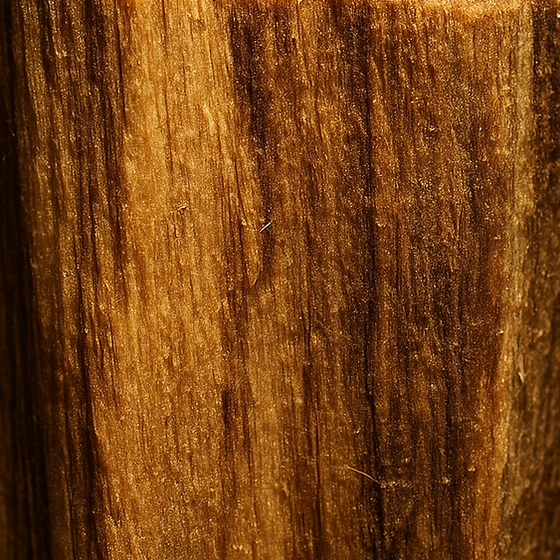
Palo santo kao sirovina za parfeme
Srednje note
Bursera graveolens
Definicija

Palo santo is the Spanish name of Bursera graveolens, a wild tree in the family Burseraceae. Its essential oil has a woody, fruity/balsamic, sweet aroma.

WOODY FRUITY BALSAMIC SWEET TERPENIC CITRUS MINT SPICE
Elaphrium graveolens, Amyris graveolens, Bursera tatamaco
Type
Sirovina
Olfactive family
Drvenasti
Source
wood
Chemical class
essential oil rich in monoterpenes
Instrumenti
Piramida
GGornje note
SSrednje note
BBazne note
Zemlje proizvođači
Ekvador

Miris

Palo santo essential oil has a woody, fruity/balsamic, sweet, terpenic aroma. It carries citrus, mint and soft spice nuances. The aroma is somewhat reminiscent of frankincense. Its aroma family is terpenic and woody.

Detaljno

The tree belongs to the same family as frankincense and myrrh. It is native to Mexico, Central America, northwestern South America from Venezuela to Peru, and the Galápagos Islands. It is found in the seasonally dry tropical forests of Peru, Venezuela, Colombia and several other countries. The subspecies malacophylla is endemic to the Galápagos Islands. Aged heartwood is rich in terpenes such as limonene and α-terpineol. In an Ecuadorian oil distilled from wood chips, thirty-six components were identified, representing 98.54% of the volatile oil. The main components of that oil were limonene (68.52%) and mentofuran (20.37%). Hydrocarbon monoterpenes were the most abundant fractions. Another steam-distilled oil from the stem of the tree in Ecuador consisted of monoterpenes (78.2%) and sesquiterpenes (9.6%), with limonene (58.6%) and α-terpineol (10.9%) as major constituents.

The Burseraceae Family

The Burseraceae are also known as the torchwood family, the frankincense and myrrh family, or the incense tree family. Their species are native to tropical regions of Africa, Asia, Australasia and the Americas. The trees and shrubs of the family carry resins, containing triterpenoids and ethereal oils, in their tissue from the resin canals of the bark to the leaf veins. The Maya also used a Bursera species to make incense.

Harvesting and Conservation

In 2006, the government of Peru listed Bursera graveolens as "In Critical Danger", banning the cutting of live trees and allowing only for the collection of naturally fallen or dead trees. In 2014 it was removed from the list of protected species of SERFOR, the National Forest and Wildlife Service. Illegal logging is a regular occurrence in northwestern Peru due to high demand. Peruvians harvest fallen branches and twigs of the tree, a practice regulated by the government of Peru, so trees are not cut for wood harvesting. In 2010, the International Union for Conservation of Nature stated the conservation status of the tree as "stable". In Ecuador there are reforestation programs for the palo santo tree. They use the transplant method, which takes trees growing very close to each other from a crowded part of the forest and moves them to an area where there are no trees.

Uses

The use of palo santo is traditional in South America, especially in Bolivia, Ecuador and Peru. Its use reportedly dates back to the Inca era. Palo santo is common today as a type of incense. Shavings of the wood may be lit and burned like incense. The tree is used in ritual purification and as folk medicine for stomach aches, as a sudorific and as liniment for rheumatism. It is also used against mala energía, or "bad energy". In Ecuador, palo santo tea is drunk. Palo santo wood has also been used in aging barrels for whiskey.

Not to Be Confused With

Not to be confused with Bulnesia sarmientoi, another tree known as palo santo, from whose wood an oil known as oil of guaiac is produced. Bulnesia sarmientoi belongs to the family Zygophyllaceae.

Dobijanje i hemija

Način dobijanja

The oil is steam distilled from the wood of Bursera graveolens. In one Ecuadorian study, the oil was distilled from wood chips, with an average yield of 1.26%. The wood chips came from Quimis, in the city of Jipijapa in the province of Manabí. The tree is wild harvested.

Formula
Complex natural mixture (key constituents: limonene; mentofuran; α-terpineol)
Botanički naziv
Bursera graveolens
Izgled
Colorless to pale yellow, transparent, mobile liquid
Sinonimi
Elaphrium graveolens, Amyris graveolens, Bursera tatamaco
Status prema standardima IFRA
Pogledajte napomenu

No IFRA Standard for the material itself (51st Amendment)

Fizička svojstva
Relativna gustina
1.029 g/mL (relative density)
Indeks prelamanja
1.4780 ± 0.0003 @ 20 °C

U parfemima

The oil is suggested for use in aromatherapy, perfumery, cosmetics, soapmaking and candle crafting. It is classed as a middle note.

Uloga u formuli
01modifikator
02sirovina za stapanje
Oblici na tržištu
eterično ulje

Pogledajte i

7 nota