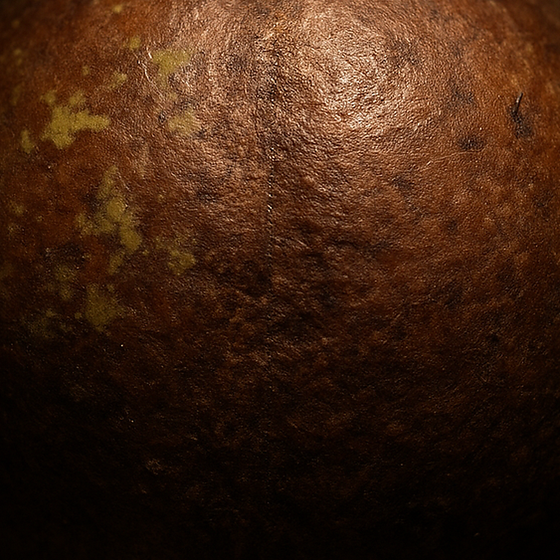
Calophyllum inophyllum is a large evergreen plant, commonly called tamanu, oil-nut, mastwood, beach calophyllum or beautyleaf. It is native to the Old World Tropics, from Africa through Asia to Australia and Polynesia. In Island Southeast Asia and Oceania, it is also commonly known as bintangur, bitaog, tamanu, or kamani. Its importance as a source of timber for the traditional shipbuilding of large outrigger ships led to its spread in prehistoric times by the migrations of the Austronesian peoples to the islands of Oceania and Madagascar. In many parts of Polynesia, mastwood groves planted in marae were considered sacred and the abodes of spirits. The flower has a sweet fragrance, which attracts many insects to pollinate it. The oil originates in Polynesia, where it continues to play an important cultural role.
Explore all seven extraits in the Discovery Set.
The Tree and Its Place in Culture
The accepted name of the species is Calophyllum inophyllum, in the family Calophyllaceae. The tree is low-branching and slow-growing, with a broad and irregular crown, and it usually reaches 8 to 30 m in height. Its trunk is thick and covered with black, cracked bark. Flowering can occur all year, but two periods are usual: late spring, from April to June, and late autumn, from October to December. Each flower is 25 to 30 mm wide, and the flowers grow in clusters of four to 15. The tree often grows in coastal regions and in nearby lowland forests, and it is best known as an ornamental plant. Mastwood grows to massive sizes on sandy or rocky beaches, sending arching trunks over the water where currents disperse its seeds. It was also carved into religious objects such as tiki, and it is commonly mentioned in the chants and folklore of Polynesia. In Australia, a clause was specially inserted in a bill debated in the Queensland Assembly to protect trees of this species at Thursday Island. The leaves contain coumarin derivatives that are poisonous to fish, the sap is poisonous and is used to make poison arrows in Samoa, and the mature fruit is poisonous enough to serve as rat bait.
The Fruit and Seed
Fruiting takes place twice a year, in May and November. When ripe, the fruit is wrinkled and its colour varies from yellow to brownish-red. A tamanu fruit produces a single large seed. The kernel is 1.5 cm in diameter and enclosed in a soft and a hard seed coat. Fresh kernels contain 55-73% oil and 25% moisture; the oil content increases to 70-75% when dry. The fruit, called the ballnut, is a rounded green drupe 2 to 4 cm across with a single large seed at its centre. Ripe and fallen fruits are collected from below the tree, by beating the limbs with a long stick or by climbing the tree and picking by hand. The average yield is 11.7 kg of oil per tree, or 4680 kg per hectare.
Chemistry
The main compounds of the seed oil are oleic, linoleic, stearic and palmitic acids. One table gives 36-53% oleic acid, 16-29% linoleic acid, 14.8-18.5% palmitic acid and 6.0-9.0% stearic acid. The concentration of resinous substances in the oil varies from 10 to 30%. The main neoflavonoid compounds in the oil are calophyllolide, inophyllums C, D, E and P, tamanolides D and P, calanolide Gut 70, and calanolides A, B and D. Other components include calophyllolide, friedelin, inophyllums B and P, terpenic essences, benzoic and oxibenzoic acids, phospho-amino lipids, glycerides, saturated fatty acids and 4-phenylcoumarins. In one study, ethanol extraction was found the best strategy for recovering bioactive compounds from the resin part of tamanu oil. Another set of figures gives 38% linoleic acid, 34% oleic acid, 13% stearic acid and 12% palmitic acid, and erucic acid is present at 2.5-3.5%. The oil has an iodine value of 79-98 and a saponification value of 190-205; unsaponifiable matter is at most 1.5% and moisture at most 0.5%. A further analysis puts lipids at about 70-80% of the oil and the resinous part, which holds the main bioactive compounds such as sterols, coumarins, triterpenoids and flavonoids, at about 15-20%. Calophyllolide has the formula C₂₆H₂₄O₅ and a molecular weight of 416.5. The proportions of the resin compounds differ between regions of the South Pacific: tamanolide E1/E2, calanolide Gut 70, tamanolide and inophyllum E are prominent in the resin from French Polynesia, whereas tamanolides P and D and inophyllum C are more prominent in samples from Fiji. Tamanolides E1 and E2 were isolated as a mixture of two very close compounds from the resin of commercial tamanu oil. Calanolide D and 12-oxocalanolide A, both in the neutral fraction of the resin, were identified from a natural source for the first time in one study. Calanolide A is a minor constituent of the resin extract. The ethanol-soluble extracts, their subfractions and the isolated metabolites showed stronger free-radical scavenging, antioxidant, anti-inflammatory, antimicrobial and antimycobacterial activity than the oil itself or its de-resinated lipid phase.
Uses
Tamanu oil extracted from the fruit kernels was important in Polynesian culture. The oils, as well as poultices made from leaves and flowers, are also commonly used for traditional medicine. The oil is rich in antioxidants and has UV-absorption properties. In the northwest coastal areas of Luzon island in the Philippines, the oil was used for night lamps. In Southern India, the oil may have been useful in waterproofing cloth and is used as a varnish. The oil can also be used to make soap. The fatty acid methyl esters derived from the seed oil meet the major biodiesel requirements in the United States and the European Union. Commercial uses of tamanu oil are predominantly for skin care. The oil also has value and use as a fuel. An extract from the fruit was once used to make a brown dye to colour cloth. As a raw material for cosmetic and therapeutic use, the oil is limited by a very high lipophilicity and by the small amount of potentially bioactive compounds in its minor soluble phase.