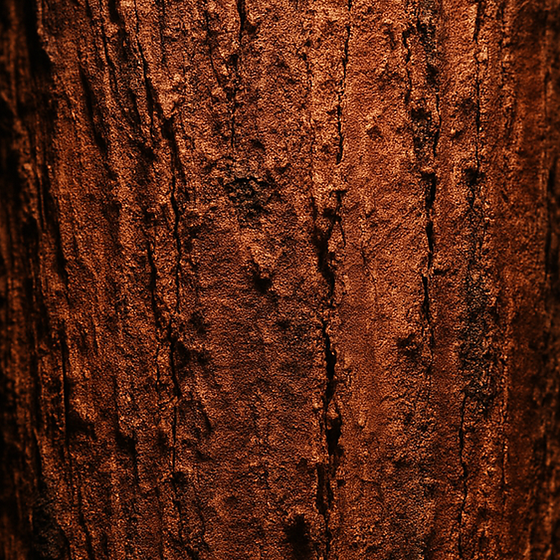
Johimbe

AkordDRVA I MAHOVINEdrvenast · zemljan · zelen
Srednje notePiramida
3/5Jačina
—Trajnost
2Poreklo
Uzorak
Johimbe kao sirovina za parfeme
Srednje note
Pausinystalia yohimbe (K.Schum.) Pierre ex Beille
Fantazijska/konceptualna
Definicija

Dry, bitter bark stripped from a West African tree prized more for its aphrodisiac legend than its scent. The smell is astringent and medicinal, closer to quinine than to any perfumer's palette.

DRVENAST ZELEN ZEMLJAN SLADAK BILJNI TOPAO SVEŽ
yohimbine, Yohimbe bark
Type
Sirovina
Olfactive family
Drvenasti
Source
bark
Chemical class
fantasy note (accord)
Instrumenti
Piramida
GGornje note
SSrednje note
BBazne note
3/5Jačina
Srednja
jačina mirisa
Zemlje proizvođači
Afrika Zapadna Afrika

Miris

Bitter bark, dry and astringent. A medicinal quality similar to of quinine or gentian root. Earthy undertone, raw and unsweet, like damp wood left in shade. Faint alkaloid sharpness at the edges, more chemical than aromatic. Less warm than cinnamon, less resinous than myrrh, more austere than either. The bitterness is clean and mineral, not putrid.

Detaljno

Yohimbe (Pausinystalia johimbe (K. Schum.) Pierre ex Beille, Rubiaceae — formerly P. yohimbe) is the bark of a West African tropical tree, sourced principally from Cameroon, Gabon, Nigeria and the Congo basin. The bark contains yohimbine (CAS 146-48-5, an indole alkaloid) and a small family of related alkaloids — the chemistry that drives its long ethnobotanical reputation as a stimulant and aphrodisiac [A].

Explore all seven extraits in the Discovery Set.

In perfumery

Yohimbe has no commercial essential oil. The bark itself smells dry, bitter and faintly woody — closer to broken cinchona than to any standard perfumery natural. Any 'yohimbe' note in fragrance is a conceptual reference (built from bitter-woody-dry materials: dry vetiver, leather, smoky cypriol, tobacco), not an actual extract. The pharmacology is the marketing — the smell is incidental.

Sources

[A] Yohimbine alkaloid chemistry — see standard pharmacognosy references. PubChem CID 8969 — yohimbine, CAS 146-48-5.

Dobijanje i hemija

Način dobijanja

Yohimbe bark is not commercially distilled or extracted for perfumery. The pharmaceutical industry extracts the alkaloid yohimbine via solvent extraction of dried bark. Any perfumery use is a fantasy accord reconstructed from other materials. Bark tinctures are theoretically possible but not standard practice.

Formula
Key alkaloid: yohimbine C₂₁H₂₆N₂O₃ (CAS 146-48-5)
CAS
85117-22-2
Botanički naziv
Pausinystalia yohimbe (K.Schum.) Pierre ex Beille
Izgled
Pale yellow to amber viscous liquid
Jačina mirisa
Srednji
Sinonimi
yohimbine, Yohimbe bark
Status prema standardima IFRA
Pogledajte napomenu

Not subject to an IFRA Standard (51st Amendment)

Fizička svojstva
Nota
Yohimbe bark extract (Pausinystalia johimbe). Key alkaloid: yohimbine.

U parfemima

Yohimbe is not a standard perfumery material. TGSC classifies it as not for fragrance use. When it appears on a fragrance pyramid, it functions as a fantasy note, an olfactory fiction built from dark bark accords, bitter-woody molecules, and earthy bases. Its value is entirely conceptual: the aphrodisiac reputation lends narrative tension to compositions exploring desire or provocation. A perfumer representing yohimbe would likely reach for bitter woods such as quassia, astringent bark tinctures, and dry earthy bases. The note belongs to the same imaginary shelf as concepts like skin, asphalt, or ink, where the idea carries more weight than any single raw material.

Uloga u formuli
01modifikator
02nota potpisa
03sirovina za stapanje
04naturalizator
05graditelj volumena
06svežina
Oblici na tržištu
eterično ulje

Pogledajte i

8 nota