Aftershave: Why It Burns, and the Bay Rum That Came First

Aftershave is a splash, lotion or balm for skin that has just been shaved. The classic splash is mostly alcohol with a little fragrance. It burns because ethanol lowers the temperature at which a heat-sensing nerve fires, from about 42 degrees to about 34. Bay rum is its oldest form.
What is aftershave?
Aftershave is a liquid, lotion or balm put on the skin after shaving, to scent it and to calm or tighten it. The classic splash is mostly alcohol: 50 to 80% ethanol on one maker's safety sheet, with 1 to 3% fragrance by the fragrance industry's own table. The oldest of the kind is bay rum, alcohol scented with the oil of a Caribbean leaf.
An aftershave does not burn because it is cleaning the cut. It burns because alcohol changes the temperature at which a nerve says hot. In 2002 a team writing in Nature Neuroscience measured it. The receptor that normally fires at about 42 degrees fires at about 34 once ethanol reaches it. Skin at body temperature is then, as far as that nerve can tell, too hot.
The rest of the bottle is older than the explanation. Men were dabbing scented alcohol on a shaved face, and complaining of the burn, long before anyone printed the word aftershave on a label.
Why does aftershave burn?
Because of one receptor. Sensory nerves carry a protein that answers to heat and to capsaicin, the molecule of chilli. The 2002 paper found that ethanol makes it more excitable: it "potentiated the response of VR1 to capsaicin, protons and heat and lowered the threshold for heat activation of VR1 from approximately 42 degrees C to approximately 34 degrees C."
The authors draw the conclusion themselves. This, they write, is "a likely mechanistic explanation for the ethanol-induced sensory responses that occur at body temperature and for the sensitivity of inflamed tissues to ethanol, such as might be found in esophagitis, neuralgia or wounds." A face that a blade has just crossed is the last item on that list.
The complaint is old. A shaving manual of 1906 already tells the man whose lotion gives him trouble to change it for pure distilled witch hazel, which "is soothing to the face and allays the burning."
Does the burn mean it is working?
The burn measures a nerve, not a result. Whether alcohol kills germs is a separate question with its own figures. A review of antiseptics in Clinical Microbiology Reviews puts it in one sentence: "the antimicrobial activity of alcohols is significantly lower at concentrations below 50% and is optimal in the 60 to 90% range."
A splash can be in that range. The safety sheet of one men's after shave splash, filed in 2018, declares ethanol at 50 to 80%. The European list of cosmetic ingredients gives denatured alcohol the functions antimicrobial, astringent, fragrance and solvent, four jobs in one line. None of them is the sting.
What does aftershave do, and what is it for?
It ends the shave. The 1906 manual lists what a man needs: "one or two good razors, a first-class strop, a mirror, a cup, a brush, a cake of shaving soap, and a bottle of either bay rum, witch hazel, or some other good face lotion." The routine follows: wash off the lather, "then to apply either witch hazel, bay rum or some other good face lotion, and to follow this with a small quantity of talcum powder." For a cut, a styptic pencil, and "in case you should not have the pencils, alum may be used."
The three products of that shelf are still on the ingredient lists, each with a job the regulator has written down.
| On the shelf in 1906 | What the manual used it for | Function in the European list today |
|---|---|---|
| Bay rum | Face lotion after the shave | Its alcohol: antimicrobial, astringent, fragrance, solvent |
| Witch hazel | Face lotion. "Allays the burning" | Extract: astringent, skin conditioning |
| Alum | Stops the bleeding of a cut | Potassium alum: astringent |
The modern shelf adds forms without alcohol. One skincare maker's guide lists lotion, gel, cream and balm beside the splash, and recommends "an aftershave balm or lotion instead of an alcohol-based aftershave splash." The purpose has not moved: to close the shave, and to leave a scent.
Witch hazel and alum: the aftershaves without alcohol
The 1906 shelf held two products that do not burn. Witch hazel is still registered in the European list as an astringent, and a 2025 review of the plant in skin care reports that its bark and leaves hold tannins and phenols whose antimicrobial and anti-inflammatory activity has "been verified by numerous in vitro and in vivo studies, as well as limited clinical trials." Alum is registered as an astringent and nothing else. One tightens the skin, the other stops a nick from bleeding, and neither is there for the smell.
Bay rum: the aftershave before the word
The lotion on the barber's shelf had a recipe, and a United States experiment station wrote it down in 1948: "The widely used bay-rum lotion, found on drug counters and in barber shops, consists of about 1 percent bay oil in a solvent of ethyl alcohol." The oil is distilled from the leaves of the bay-rum tree, Pimenta racemosa, of the myrtle family. It gives the lotion its smell, and the growers gave it more: the lotion "is considered to have some healing qualities which are attributed to the antiseptic action of the phenols in the oil."
The trade was Caribbean. "Practically the entire world's supply of bay oil comes from the West Indies," the same circular says. A report on the Virgin Islands in 1918 gives the scale.
| St Thomas and St John, 1918 | Figure |
|---|---|
| Bay rum made for export in a year | About 60,000 cases of twelve quart bottles, or 720,000 bottles |
| Retail price of bay rum in St Thomas | 25 cents a quart bottle |
| Price of bay oil in St John | 4.50 dollars a quart |
| Where it went | "All parts of the world," mostly Jamaica and Panama |
Not all of it deserved the name. An American handbook of toilet preparations complained in 1889 that "there is always much variation in quality; a great deal which is sold is hardly worthy of the name," and offered a recipe for "Bay Rum equal to the Imported": oil of bay leaves, allspice, cloves, 4 ounces of Jamaica rum and 21 ounces of alcohol. "Of course it is not a distilled bay rum," the author admits, "but it has a very much pleasanter aroma and is more lasting."
Aftershave vs cologne: is aftershave just cologne?
It is the weakest scent on the shelf. IFRA, the association of the fragrance industry, gives typical concentrations for fragrance in alcohol, and aftershave is the first line of the table.
| Name on the bottle | Fragrance concentration, IFRA | Typically around |
|---|---|---|
| Splash and aftershave | 1 to 3% | |
| Eau de Cologne | 3 to 8% | 5% |
| Eau de toilette | 5 to 15% | 10% |
| Eau de parfum | 10 to 20% | 15% |
| Perfume extract | 15 to 40% | 20% |
So an aftershave is not a cologne with another label. It carries about a third of the fragrance, and it is named for where it goes, the shaved face, while a cologne is named for its strength. The bay rum of 1948, at about 1% oil, is at the bottom of the first line. The journal has more on how to apply cologne and on the word eau de toilette.
Frequently Asked Questions
What does aftershave do?
It closes the shave: it scents the skin and, depending on the kind, tightens or soothes it. A 1906 shaving manual has the routine: wash off the lather, apply witch hazel, bay rum or another face lotion, then a little talcum powder. An alcohol splash also stings, which a balm does not.
Why does aftershave burn?
Ethanol acts on a heat-sensing receptor in the nerves of the skin. A 2002 study in Nature Neuroscience found that it lowers the temperature at which the receptor fires from about 42 degrees to about 34, so skin at body temperature registers as hot. Wounds and inflamed tissue are more sensitive still.
Is aftershave just cologne?
No. By the fragrance industry's own table an aftershave or splash holds 1 to 3% fragrance and an eau de Cologne 3 to 8%, typically around 5%. Aftershave is named for its use on shaved skin and often carries astringents such as witch hazel. Cologne is the name of a strength.
What is the difference between aftershave and cologne?
Strength and purpose. Aftershave is the lightest scented product in alcohol, 1 to 3% fragrance, made to go on the face after the razor. A cologne holds 3 to 8% and is worn as a perfume. Both are mostly alcohol, which is why both can sting on freshly shaved skin.
What is bay rum?
The classic aftershave lotion: about 1% bay oil in ethyl alcohol, by a United States circular of 1948. The oil is distilled from the leaves of the bay-rum tree, Pimenta racemosa, in the West Indies. In 1918 the island of St Thomas exported about 60,000 cases a year, at 25 cents a quart.
Does aftershave disinfect a shaving cut?
Alcohol does kill germs, best at 60 to 90% and much less below 50%, by a review of antiseptics. One splash's safety sheet declares 50 to 80% ethanol, and the European ingredient list gives denatured alcohol an antimicrobial function. The sting is another thing: it comes from a nerve receptor.
How much alcohol is in aftershave?
It depends on the form. The safety sheet of one men's after shave splash declares ethanol at 50 to 80%. The bay-rum lotion of 1948 was nearly all ethyl alcohol, with about 1% bay oil. Balms and lotions replace most or all of the alcohol with moisturising ingredients.
What does the fragrance in aftershave do?
It scents the skin, lightly: 1 to 3% fragrance by the industry's table, against 10 to 20% for an eau de parfum. In bay rum the scent is bay oil, and growers in 1948 also credited that oil's phenols with an antiseptic action, a belief their circular reports without testing.
Sources
- M. Trevisani and others, "Ethanol elicits and potentiates nociceptor responses via the vanilloid receptor-1", Nature Neuroscience 5, 2002. DOI 10.1038/nn0602-852.
- G. McDonnell and A. D. Russell, "Antiseptics and disinfectants: activity, action, and resistance", Clinical Microbiology Reviews 12(1), 1999.
- "Hamamelis virginiana L. in Skin Care: A Review of Its Pharmacological Properties and Cosmetological Applications", Molecules 30(13), 2025.
- 20th Century Correspondence School, Shaving Made Easy: What the Man Who Shaves Ought to Know, New York, 1906. Read in full text at the Internet Archive.
- N. F. Childers, P. Seguinot Robles and A. J. Loustalot, "Bay oil production in Puerto Rico", Federal Experiment Station in Puerto Rico, circular, 1948.
- Luther K. Zabriskie, The Virgin Islands of the United States of America, 1918, pages 169 to 170.
- Joseph A. Begy, Practical Hand-book of Toilet Preparations and Their Uses, 1889.
- IFRA, the International Fragrance Association, "About the IFRA Transparency List", typical concentrations of ethanol-based fragrance products. Read on 19 November 2026.
- European Commission, CosIng database: Alcohol denat., Hamamelis virginiana extract, Potassium alum.
- Safety data sheet of a men's after shave splash, Contract Filling Inc., 21 December 2018, for the share of ethanol.
- NIVEA USA, "What Does Aftershave Do?", for the forms sold today.
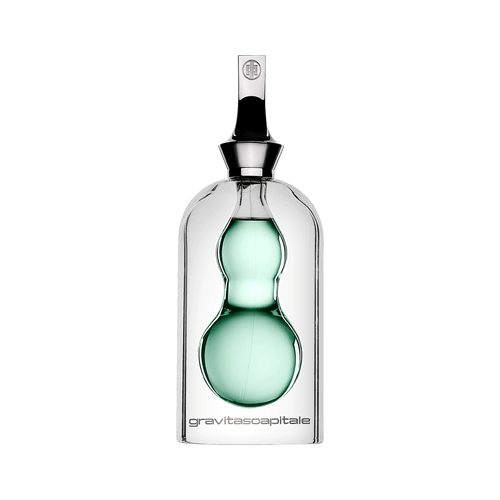
Gravitas Capitale
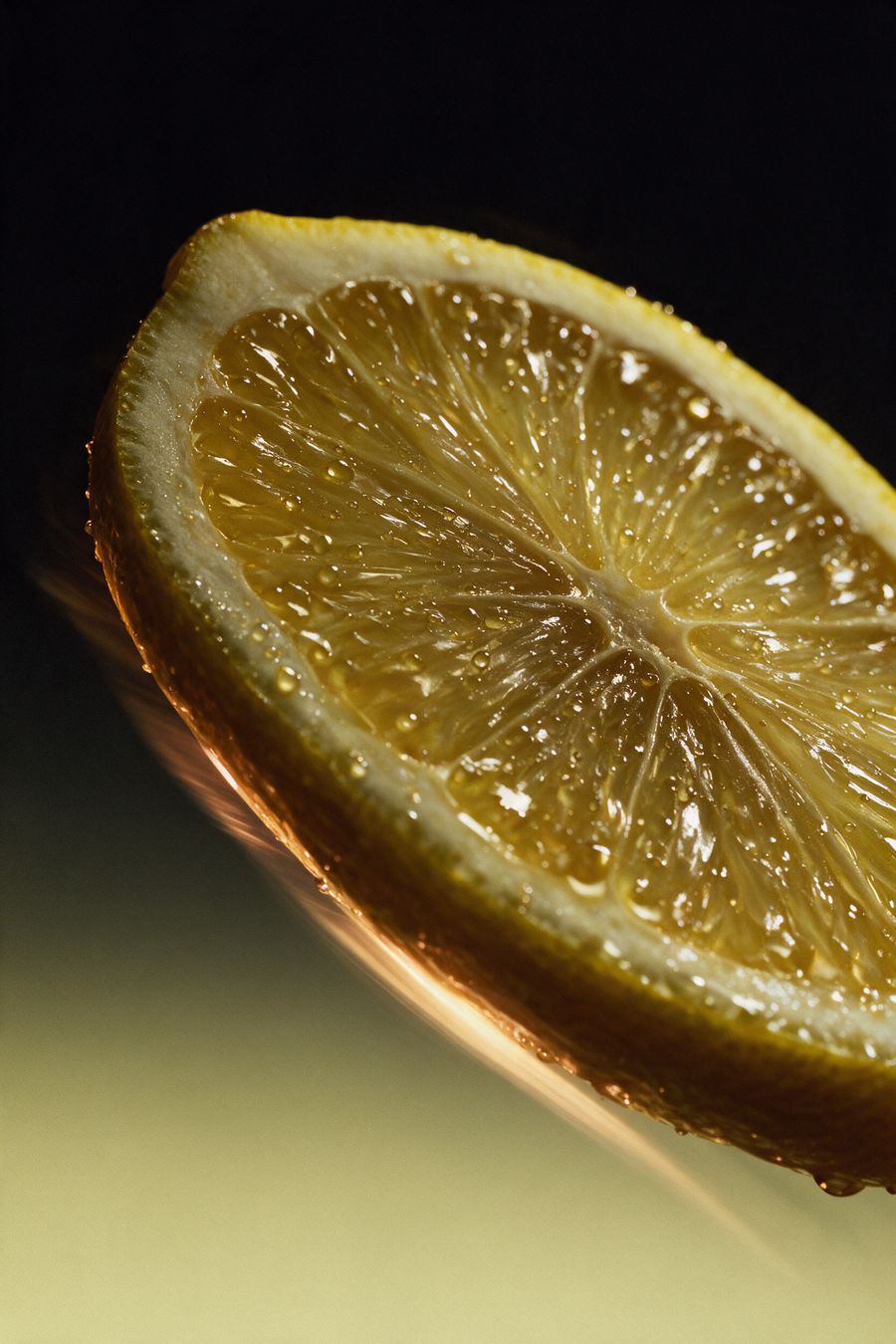
Extrait de parfum at 20%. 8 notes, including pimento, primofiore lemon and buddha's hand.
Read also
3
Cologne vs Perfume: Two Questions, One Query
Cologne is a perfumed liquid, not a strength and not a sex. The date 1709 belongs to a firm, the men's meaning grows in American books after 1920, and the old dictionaries say neither.

Where to Spray Cologne and How to Apply It
The two-spray rule is in no paper, standard or perfumer's text we read. What is measured: the neck is the warmest of 15 skin regions, and the wrist was not tested. What is only claimed: the rest.

Florida Water: The Cologne, the 1808 Claim and the Ritual
Florida water is a cologne-type toilet water that a New York firm advertised in 1858. Its Fountain of Youth story and its 1808 date rest on no early document read, and the ritual use rests on modern pages.
Next
Perfumery Journal
Cologne vs Perfume: Two Questions, One Query
21.07.26