


Brazil Nut
Keywords: nutty · creamy · rich
Brazil nut is the edible seed of Bertholletia excelsa, a tree that grows across the Amazon basin.

- Olfactive family
- Gourmand · 495 entries of the glossary in this family Subfamily: Nutty notes · 88 entries in this subfamily
- Material
- Natural Seed of the Brazil nut tree (Bertholletia excelsa)
- Pyramid
- Base Note
- Also called
- castanha-do-brasil, castanha-do-pará, castanha-da-amazônia, noz amazônica
Brazil Nut · Facets
Entries of the glossary that carry each facet, of 3,979:
- sweet 1,987
- gourmand 91
- warm 1,109
- fresh 1,390
- creamy 404
- milky 46
- nutty 259
- roasted 133
Brazil Nut · Scent
The crude oil pressed from the nut has a characteristic pleasant aroma and flavor.
Evolution over time
Brazil Nut: scent over time.
- Immediately
A pleasant, characteristic aroma.
- After a few hours
An agreeable scent.
- Tenacity
- > 200 hours
Brazil Nut · In Perfumery
Brazil nut oil is used in the manufacture of cosmetics such as soap and perfume. The cosmetic industry uses the oil for its sweetness and agreeable scent, and it is sold as a hydrating oil for skin and hair.
Pyramid
Brazil Nut: Base. Entries of the glossary stored at each place of the pyramid, of 4,000 (35 store no place):
- Top 718
- Top · Heart 496
- Heart 1,644
- Heart · Base 513
- Base 594
Role in the formula
Brazil Nut: roles in the formula. Entries of the glossary that share each role, of 4,000:
- Modifier 1,168
- Backbone 196
- Signature note 898
- Blender 1,041
- Volume builder 780
Brazil Nut · Terroir & Origins
- Producing countries
- Bolivia, Brazil, Peru
Brazil Nut · Extraction & Chemistry
The oil is extracted on an industrial scale by hot or cold pressing. Cold pressing does not degrade the oil’s bioactive compounds but typically yields only 30 to 40 percent. In the laboratory, solid-liquid extraction with the aid of solvents is commonly employed. One crude oil sample was cold-pressed from the milled nut with a press expeller.
Available as
Brazil Nut: available as.
- reconstructed accord
- crude oil
- cold-pressed oil
- Appearance
- Crude oil: fluid and light yellow at room temperature
Brazil Nut · Did You Know?
The capsule has a small hole at one end that lets large rodents like the agouti gnaw it open. They eat some of the seeds and bury others, and some of those germinate into new Brazil nut trees.
Brazil Nut · In Depth
The Brazil nut tree is one of the largest and longest-lived trees in the Amazon rainforest. It reaches 50 metres tall and may live for 500 years or more. Brazil nuts are seeds rather than true nuts. The Brazil nut is the only globally traded seed collected from the wild by harvesters in forests.
Origin and Production
The fruit is a large capsule 10–15 cm in diameter that weighs up to 2 kg. Its hard, woody shell contains eight to 24 wedge-shaped seeds, the Brazil nuts. The fruit takes 14 months to mature after pollination of the flowers. Brazil nut flowers are pollinated by large-bodied bees. Brazil nut fruits are also harvested in selectively logged forests. A study in Peru found production across five recently logged concessions. Plantations have yielded Brazil nuts, but production is low and currently not economically viable.
Harvesting is concentrated in three countries: Brazil, Bolivia and Peru. In 2024, world production of Brazil nuts was 79,736 tonnes, with Brazil and Bolivia combined accounting for 87% of the total. Brazil is the main exporter of in-shell nuts, while Bolivia and Peru are the principal exporters of shelled kernels. Given concerns over aflatoxins in Brazil nuts, maximum levels for total aflatoxins were recommended for use in international trade.
Composition
The edible kernel is 60–70% fat and 15–20% protein. Brazil nuts are a particularly rich source of selenium. A standard serving of 28 g, around 6 to 8 nuts depending on size, has an average of 544 micrograms of selenium, or 10 times the daily value of 55 micrograms. The amount of selenium within batches of nuts may vary considerably.
Brazil nut oil contains 82% unsaturated fatty acids, composed mainly of oleic and linoleic acids, as well as the phytosterol beta-sitosterol. The oil shows thermal stability up to 220 °C. The kernel’s fatty acids are 45.2% oleic, 31.4% linoleic, 13.8% palmitic and 8.7% stearic acid, with small amounts of palmitoleic and myristic acids.
Conservation
Harvesting Brazil nuts has contributed to the preservation of millions of hectares of Amazonian forests. It is illegal to fell Brazil nut trees in Brazil, Bolivia and Peru.
Other Uses
Laboratory tests on the oil supported its use as a raw material for the pharmaceutical and cosmetic industries. The wood of the tree is used in carpentry, flooring and heavy construction.
Brazil Nut · History
Smallholders across Madre de Dios (Peru), Acre (Brazil) and Pando (Bolivia) have historically depended on Brazil nut harvests to support their families. Brazil nuts were being loaded onto flatboats in the early 20th century.
Brazil Nut · Technical Sheet
Identity
- Botanical
- Bertholletia excelsa
- Botanical records
- Bertholletia excelsa: POWO, Bertholletia excelsa · IPNI, Bertholletia excelsa · GBIF, Bertholletia excelsa · Wikidata, Bertholletia excelsa · Wikipedia, Bertholletia excelsa · IUCN VU
- IPNI
- Bertholletia excelsa Bonpl., Pl. Aequinoct. [Humboldt & Bonpland] 1(5): 122, t. 36 (1807) — Aimé Jacques Alexandre Bonpland (1773–1858)
- Type
- Ingredient
- Category
- Fruits, vegetables and nuts
In Nature
- Growth form
- Tree · POWO
- Native range
- Northern South America · Western South America · Brazil · POWO
- Introduced to
- 1 region · Pacific 1
- Recorded altitude
- 0–250 m · median 50 m · 344 records with an altitude · GBIF
- Wild or cultivated
- 311 native · 4 cultivated among 5,846 records (the rest carry no such mark) · GBIF
- Recorded in
- 20 of 512 squares of the world grid; a brighter dot holds more records · GBIF
- Also from this botanical family
- Lecythidaceae: Cannonball Flower · Gustavia Flower · Jarana Flower
In Print
- In English books
- most mentioned in the 1870s · Google Books Ngram
Classification
- Cluster
- Nutty notes · 100 entries in this cluster
- Chemical class
- Oil rich in unsaturated fatty acids
Chemical data
- Formula
- Complex natural mixture (key constituents: oleic acid; linoleic acid)
- Structure
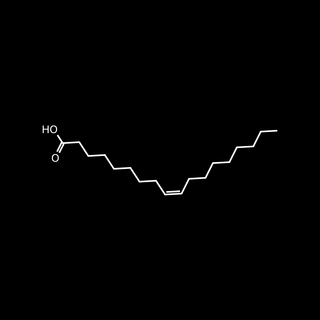
Oleic Acid
PubChem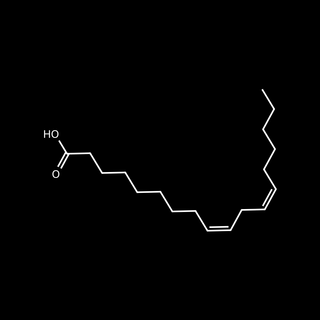
Linoleic Acid
PubChem- INCI names (CosIng)
- BERTHOLLETIA EXCELSA SEED OIL (SKIN CONDITIONING – EMOLLIENT, SKIN CONDITIONING)BERTHOLLETIA EXCELSA FLOWER EXTRACT (SKIN CONDITIONING)BERTHOLLETIA EXCELSA SEED EXTRACT (SKIN CONDITIONING)BERTHOLLETIA EXCELSA SEED OIL PEG-8 ESTERS (HAIR CONDITIONING, SKIN CONDITIONING)BERTHOLLETIA EXCELSA SEED OIL POLYGLYCERYL-6 ESTERS (SKIN CONDITIONING – EMOLLIENT, SURFACTANT – EMULSIFYING)BERTHOLLETIA EXCELSA SEED POWDER (ABRASIVE)
Physical properties
- Specific gravity
- 0.911 g/ml at 25°C
- Refractive index
- 1.466 at 25°C
- Note
- Brazil nut oil — specific gravity ~0.914–0.917 at 25°C; refractive index ~1.467–1.470
Performance and rules
- IFRA status
- No IFRA Standard for the material itself (51st Amendment)
Brazil Nut · See Also
Entries related to Brazil Nut, by their place in the pyramid. « shared » marks a scent word Brazil Nut has too.
Heart notes

Hazelnut
nutty (shared) · warm (shared) · gourmand (shared) Gourmand / Same cluster / Natural
Chestnut
nutty (shared) · sweet (shared) · warm (shared) Fruity / Same cluster / Fantasy/Concept
Coffee
gourmand (shared) · roasted (shared) · bitter Gourmand / Heart · Base / Natural
Jarana Flower
timber tree Florals / Natural


Base notes

Black Walnut
nutty (shared) · earthy · rich (shared) Gourmand / Same cluster / Natural
Shea Nuts
butter · fat · emollient Fruity / Same cluster / Natural
Chocolate
gourmand (shared) · bitter · warm (shared) Gourmand / Natural
Honey
gourmand (shared) · animalic · sweet (shared) Gourmand / Natural & Synthetic
Macadamia
nutty (shared) · creamy (shared) · roasted (shared) Gourmand / Natural


Brazil Nut · Sources
- Pharmacognosy magazine (2015) Physicochemical characterization, fatty acid composition, and thermal analysis of Bertholletia excelsa HBK oil
- SciELO YKSg6yrngwqTtB5spxP83wG
- SciELO Detailed study of Brazil nut (Bertholletia excelsa) oil micro-compounds: phospholipids, tocopherols and sterols
- PloS one (2015) Nut Production in Bertholletia excelsa across a Logged Forest Mosaic: Implications for Multiple Forest Use
- FAO Food and Agriculture Organization of the United Nations
- IFRA Standards, 51st Amendment
- Wikipedia Brazil nut
- Wikipedia Brazil nut oil
Cite as PREMIEREPEAU Glossary, “Brazil Nut”, https://premierepeau.com/
