


Chinese Wintergreen
Keywords: minty · medicinal · sweet
Chinese wintergreen is an essential oil of wintergreen from China, obtained by steam distillation of the leaves. Its odour is described as very floral, medicinal, green, powdery and smoky.
- Olfactive family
- Aromatic · 509 entries of the glossary in this family Subfamily: Herbal aromatics · 228 entries in this subfamily Cluster: Minty aromatics · 79 entries in this cluster
- Material
- Natural Leaves
- Pyramid
- Heart · Volatility: Heart Note
- Strength
- Strong Step 4 of 5 · shared by 500 of 2,148 graded entries Graded entries at each step, from 1 to 5: 4, 118, 1,462, 500, 40. 24 more sit between two steps.
- Also called
- Wintergreen oil China, oil of wintergreen China
Chinese Wintergreen · Facets
Entries of the glossary that carry each facet, of 3,979:
- minty 104
- medicinal 82
- sweet 1,988
- green 1,442
- fresh 1,387
- smoky 166
Chinese Wintergreen · Scent
Wintergreen oil is strongly minty aromatic and is described as fresh, sweet, and characteristically wintergreen. The essential oils of Gaultheria yunnanensis are sweet and long staying.
Evolution over time
Chinese Wintergreen: scent over time.
- Immediately
Fresh, strongly minty and characteristically wintergreen, with green and floral notes.
Scent words: fresh · green · floral - After a few hours
Sweet and floral, with a medicinal side.
Scent words: floral · sweet - After a few days
Powdery and smoky, sweet and long staying.
Scent words: powdery · sweet · smoky
- Tenacity
- Long staying (G. yunnanensis oils)
Chinese Wintergreen · In Perfumery
Wintergreen essential oil can be used in fruity or floral accords or to add a sweet undertone to an aromatic composition. Odour evaluation and blending determined that the essential oils of Gaultheria yunnanensis are sweet and long staying, and so more suitable for gum essence and toothpaste fragrances. Wintergreen is also used in some perfumery applications and as a flavoring agent for toothpaste, chewing gum, soft drinks and confectionery.
Pyramid
Chinese Wintergreen: Heart. Entries of the glossary stored at each place of the pyramid, of 4,000 (36 store no place):
- Top 718
- Top · Heart 497
- Heart 1,641
- Heart · Base 514
- Base 594
Role in the formula
Chinese Wintergreen: roles in the formula. Entries of the glossary that share each role, of 4,000:
- Modifier 1,167
- Flavoring agent fewer than 40 entries
- Freshness 720
- Fruity accent fewer than 40 entries
Chinese Wintergreen · Terroir & Origins
- Producing countries
- China
Chinese Wintergreen · Extraction & Chemistry
In China, wintergreen leaves are harvested from wild plants between May and July. They are then soaked overnight in warm water to release the methyl salicylate molecules that are the main component of wintergreen essential oil. The raw material is then steam distilled. Methyl salicylate is not present in the plant until formed by enzymatic action from a glycoside within the leaves as they are macerated in warm water.
- Appearance
- Pale yellow or pinkish fluid liquid
Chinese Wintergreen · Did You Know?
One milliliter (20 drops) of wintergreen oil is equivalent to about 1860 mg of aspirin, or almost six regular-strength adult aspirin tablets.
Chinese Wintergreen · In Depth
Botanical origin
Gaultheria is a genus of about 283 species of shrubs in the family Ericaceae. One variety of G. leucocarpa shows anti-inflammatory properties and is used in Chinese herbal medicine for the treatment of rheumatoid arthritis, swelling, and pain.
Chemistry
Wintergreen essential oil is about 99% methyl salicylate. In Gaultheria essential oils, methyl salicylates are major components at fairly high concentrations (70–99%), while other components are present in only trace amounts. A leaf oil of Gaultheria leucocarpa var. crenulata contained 95.93% methyl salicylate and 0.34% ethyl salicylate. Methyl salicylate is an organic compound with the formula C₈H₈O₃. It is the methyl ester of salicylic acid.
Standard
The standard ISO 21390:2005 specifies certain characteristics of redistilled oil of wintergreen from China (Gaultheria yunnanensis) in order to facilitate assessment of its quality.
Chinese Wintergreen · History
The first French explorers in America discovered the wintergreen plant and learned from the natives how to use it in infusions. This is how wintergreen leaves came to be known as Canada tea. Methyl salicylate was first isolated from Gaultheria procumbens in 1843 by the French chemist Auguste André Thomas Cahours. The genus name Gaultheria commemorates Jean François Gaultier of Quebec, an honour bestowed by Pehr Kalm in 1748.
Chinese Wintergreen · Technical Sheet
Identity
- Botanical
- Gaultheria yunnanensis (Franch.) Rehd.
- Taxonomy
- Ericales order › Ericaceae family › Gaultheria genus · GBIF
- Botanical records
- Gaultheria yunnanensis: POWO, Gaultheria yunnanensis · IPNI, Gaultheria yunnanensis · GBIF, Gaultheria yunnanensis · Wikidata, Gaultheria yunnanensis
- IPNI
- Gaultheria yunnanensis (Franch.) Rehder, J. Arnold Arbor. 15: 282 (1934) — Alfred Rehder (1863–1949)
- Type
- Ingredient
- Category
- Greens, herbs and fougeres
In Nature
- Wild or cultivated
- 1 cultivated among 351 records (the rest carry no such mark) · GBIF
- Recorded in
- 3 of 512 squares of the world grid; a brighter dot holds more records · GBIF
- Also from this genus
- Gaultheria: Indian Wintergreen · Wintergreen
In Print
- In English books
- most mentioned in the 1940s · Google Books Ngram
Classification
- Chemical class
- Salicylate ester (methyl salicylate)
Chemical data
- Formula
- Complex natural mixture (key constituents: methyl salicylate C₈H₈O₃; ethyl salicylate)
- Structure
- Methyl Salicylate, Ethyl Salicylate:
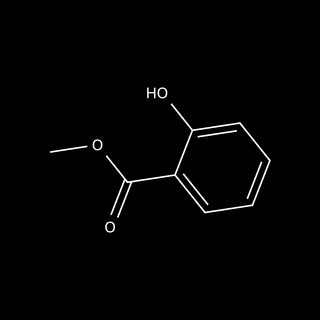
Methyl Salicylate
PubChem, Methyl Salicylate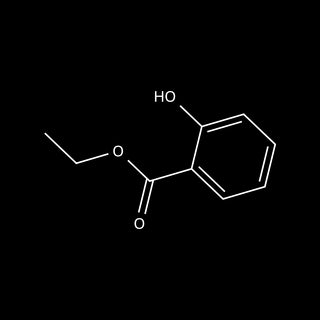
Ethyl Salicylate
PubChem, Ethyl Salicylate - CAS
- 68917-75-9 (registered for wintergreen oil, Gaultheria procumbens)
Performance and rules
- Available as
- essential oil
- IFRA status
- No IFRA Standard for the material itself (51st Amendment)
Chinese Wintergreen · See Also
Entries related to Chinese Wintergreen, by their place in the pyramid. “shared” marks a scent word Chinese Wintergreen has too.
Top notes

Wintergreen
green (shared) · fresh (shared) · sweet (shared) Aromatic / Same subfamily / Natural
Methyl Salicylate
minty (shared) · medicinal (shared) · sweet (shared) Aromatic / Top · Heart / Natural & Synthetic
Blueberry
fruity · sweet (shared) · fresh (shared) Fruity / Fantasy/Concept


Heart notes
-
Indian Wintergreen
wintergreen · sweet (shared) · fruity Aromatic / Same cluster / Natural 
Bearberry
herb · leaf Aromatic / Same subfamily / Natural

Chinese Wintergreen · Sources
- Molecules Gaultheria: Phytochemical and pharmacological characteristics
- Flavour and Fragrance Journal Multifunctional Properties of Wintergreen (Gaultheria procumbens) Essential Oil: Antimicrobial, Antibiofilm, and Insecticidal Effects
- IFRA Standards, 51st Amendment
- Wikipedia Wintergreen
- Wikipedia Methyl salicylate
- Wikipedia Gaultheria
- BSI Knowledge (BS ISO 21390:2005) Oil of wintergreen, China [Gaultheria yunnanensis (Franch.) Rehd.], redistilled
Cite as PREMIEREPEAU Glossary, “Chinese Wintergreen”, https://premierepeau.com/
