


Indian Wintergreen
Keywords: wintergreen · sweet · fruity
Indian wintergreen is a common name of Gaultheria fragrantissima (Ericaceae), whose leaves yield an essential oil with a wintergreen aroma.
- Olfactive family
- Aromatic · 509 entries of the glossary in this family Subfamily: Herbal aromatics · 228 entries in this subfamily Cluster: Minty aromatics · 79 entries in this cluster
- Material
- Natural Leaves of Gaultheria fragrantissima
- Pyramid
- Heart · Volatility: Heart Note
- Also called
- Fragrant wintergreen, dhasingre, Himalayan wintergreen
Indian Wintergreen · Facets
Entries of the glossary that carry each facet, of 3,979:
- sweet 1,988
- fruity 1,301
- minty 104
- aromatic 102
- fresh 1,387
- medicinal 82
Indian Wintergreen · Scent
The aromatic oil has a wintergreen aroma. Methyl salicylate, its major compound, has a sweet, fruity odor reminiscent of root beer.
Indian Wintergreen · In Perfumery
The aromatic oil is used in perfumery. Methyl salicylate, its major compound, is used as a fragrance and as a flavoring agent.
Pyramid
Indian Wintergreen: Heart. Entries of the glossary stored at each place of the pyramid, of 4,000 (36 store no place):
- Top 718
- Top · Heart 497
- Heart 1,641
- Heart · Base 514
- Base 594
Role in the formula
Indian Wintergreen: roles in the formula. Entries of the glossary that share each role, of 4,000:
- Fragrance ingredient 51
- Flavoring agent fewer than 40 entries
- Freshness 720
Indian Wintergreen · Terroir & Origins
- Producing countries
- Nepal
Indian Wintergreen · Extraction & Chemistry
Leaves of Gaultheria fragrantissima and water in a 1:2 ratio (w/v) were hydrodistilled in a Clevenger apparatus for 3 hours. The highest extraction yield, 1.48%, was obtained from dry leaves. Soaking fresh leaves for 18 h in 5% sodium chloride solution increased the yield drastically. The salt helps cleave the gaultherin molecule, which finally converts to methyl salicylate. Distillation for 120 minutes gave the maximum number of identified compounds.
Indian Wintergreen · Did You Know?
Elsholtzia ketone and β-dehydroelsholtzia ketone were detected in Chinese but not in Nepalese wintergreen essential oil. This result may be used to distinguish whether the oil comes from Nepal or China.
Indian Wintergreen · In Depth
The plant
Gaultheria fragrantissima is a species of flowering plant native to southern and southeastern Asia. It is a shrub or small tree. The flowering period of the plant extends from April to May. The form of the plant and the size and shape of its leaves can vary considerably based on its habitat. It is native to montane tropical and subtropical forests from 1,375 to 2,650 metres elevation.
It ranges from India and Sri Lanka through Nepal and Tibet to south-central China, and to Vietnam, Myanmar, Peninsular Malaysia, Sumatra, Java, and Bali.
The oil
In the leaf oil of Gaultheria fragrantissima, methyl salicylate, an ester of salicylic acid, makes up above 99%. Oils from different geographical locations and varying distillation conditions showed almost similar chemical compositions. Linalool, phenol, vetispirane, and ethyl salicylate were present in commercial wintergreen oils both from Nepal and China.
Methyl salicylate has the formula C₈H₈O₃. Its CAS number is 119-36-8.
Other uses
The oil is also used as a hair oil and medicinally. It is used topically to treat rheumatism, scabies, and neuralgia, and taken internally to treat hookworm. The subspecies Gaultheria fragrantissima subsp. fragrantissima is used as a medicinal plant in Ayurveda.
Indian Wintergreen · History
Methyl salicylate, the major compound of the oil, was first isolated in 1843 from Gaultheria procumbens by the French chemist Auguste André Thomas Cahours. The genus name Gaultheria commemorates Jean François Gaultier of Quebec, an honour bestowed by the Scandinavian Pehr Kalm in 1748 and taken up by Carl Linnaeus in his Species Plantarum.
Indian Wintergreen · Technical Sheet
Identity
- Botanical
- Gaultheria fragrantissima
- Taxonomy
- Ericales order › Ericaceae family › Gaultheria genus · GBIF
- Botanical records
- Gaultheria fragrantissima: POWO, Gaultheria fragrantissima · IPNI, Gaultheria fragrantissima · GBIF, Gaultheria fragrantissima · Wikidata, Gaultheria fragrantissima · Wikipedia, Gaultheria fragrantissima · IUCN Least concern (LC), Gaultheria fragrantissima
- IPNI
- Gaultheria fragrantissima Wall., Asiat. Res. 13: 397 (1820) — Nathaniel Wallich (1786–1854)
- Type
- Ingredient
- Category
- Greens, herbs and fougeres
In Nature
- Recorded altitude
- 1,250–2,700 m · median 2,050 m · 411 records with an altitude · GBIF
- Wild or cultivated
- 16 cultivated among 1,993 records (the rest carry no such mark) · GBIF
- Recorded in
- 19 of 512 squares of the world grid; a brighter dot holds more records · GBIF
- Also from this genus
- Gaultheria: Chinese Wintergreen · Wintergreen
In Print
- Timeline
- first described 1820 · earliest aroma paper in Europe PMC, 2017
- In English books
- most mentioned in the 1910s · Google Books Ngram
Classification
- Chemical class
- Salicylate ester (methyl salicylate, above 99%)
Chemical data
- Formula
- Complex natural mixture (key constituents: methyl salicylate C₈H₈O₃)
- Structure
- Methyl Salicylate:
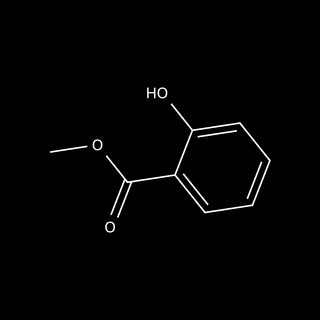
Methyl Salicylate
PubChem, Methyl Salicylate
Performance and rules
- Available as
- essential oil
- IFRA status
- No IFRA Standard for the material itself (51st Amendment)
Indian Wintergreen · See Also
Entries related to Indian Wintergreen, by their place in the pyramid. “shared” marks a scent word Indian Wintergreen has too.
Top notes

Wintergreen
green · fresh (shared) · sweet (shared) Aromatic / Same subfamily / Natural
Methyl Salicylate
minty (shared) · medicinal (shared) · sweet (shared) Aromatic / Top · Heart / Natural & Synthetic
Blueberry
fruity (shared) · sweet (shared) · fresh (shared) Fruity / Fantasy/Concept


Heart notes
-
Chinese Wintergreen
minty (shared) · medicinal (shared) · sweet (shared) Aromatic / Same cluster / Natural 
Bearberry
herb · leaf Aromatic / Same subfamily / Natural

Indian Wintergreen · Sources
- Plants Volatile Constituent Analysis of Wintergreen Essential Oil and Comparison with Synthetic Methyl Salicylate for Authentication
- USDA Phytochemical Database Plant Gaultheria fragrantissima (Ericaceae)
- IFRA Standards, 51st Amendment
- Wikipedia Gaultheria fragrantissima
- Wikipedia Methyl salicylate
- Wikipedia Gaultheria
- PubChem Methyl salicylate
Cite as PREMIEREPEAU Glossary, “Indian Wintergreen”, https://premierepeau.com/
