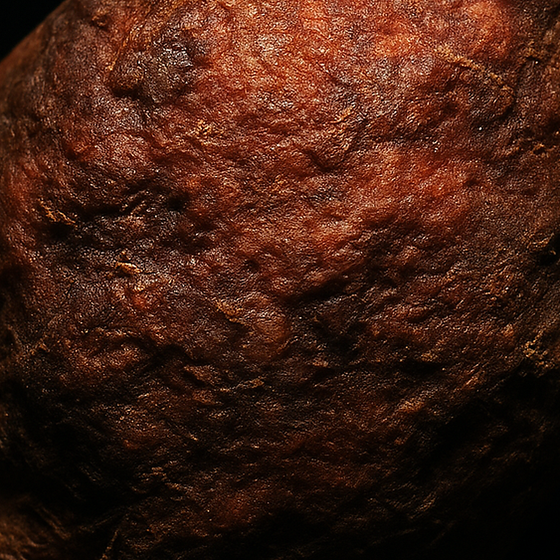
Fo Ti (Ho Shou Wu)

NaturalROOTS & MOSSESmedicinal root
HeartPyramid
—Strength
—Tenacity
1Origins
Specimen
Fo Ti (Ho Shou Wu) perfume ingredient
Heart
Reynoutria multiflora (Thunb.) Moldenke (syn. Fallopia multiflora, Polygonum multiflorum)
Definition

He shou wu is the root of Polygonum multiflorum, a member of the buckwheat family. It is one of the most commonly used tonic herbs of traditional Chinese medicine in China.

GREEN EARTHY SWEET HERBAL WARM FRESH ROASTED
tuber fleeceflower, Chinese knotweed, he shou wu, fo-ti
Type
Ingredient
Olfactive family
Earthy
Subfamily
Earthy woods
Cluster
Earthy woods
Instruments
Pyramid
TTop
HHeart
BBase
Producing countries
China

The Full Story

Botany

Pleuropterus multiflorus is a herbaceous perennial vine growing to 2-4 m tall from a woody tuber. It is a species of the buckwheat family Polygonaceae, native to central and southern China, Hainan, Taiwan, Vietnam, and Thailand. The flowers are white or greenish-white and appear in summer to mid-autumn. The English common names are tuber fleeceflower and Chinese knotweed, and the name fo-ti is a misnomer.

Traditional medicine

The Chinese Pharmacopoeia (2010) gives two forms of the root: the raw natural root and a processed form boiled in black-bean liquid by a traditional process. The raw root is used for detoxification, eliminating carbuncle, preventing malaria, and relaxing the bowel. The processed root is used for nourishing liver and kidney, supplementing essence and blood, blackening hair, strengthening bones and muscles, eliminating dampness, and reducing lipid. The predetermined daily dose is 3-6 g of raw root and 6-12 g of processed root. Shou-Wu-Pian, a product containing the root, is usually consumed as an antiaging product or as a tonic for dizziness with tinnitus.

Chemistry

More than 100 chemical compounds have been isolated from the plant, and the major components have been determined to be stilbenes, quinones, flavonoids, and others. Its extract contains a stilbene glycoside. Emodin, an anthraquinone, is particularly abundant in the roots of Polygonum multiflorum, among other plants. The tannin content of the root is high, and it decreases as processing time increases.

Safety

Overconsumption can lead to toxicity-induced hepatitis. A systematic review of case reports and case series covered 450 cases of liver damage associated with the root in 76 articles. Most of these patients recovered or had improved liver function after stopping the products. The review links most cases to long-term use and overdose.

—

Related: Alpha Pinene · Angelica · Angelica Root · Angelica Root Oil · Artemisia · Barrenwort · Beachheather · Behini Tree

Did You Know?

In Chinese folklore, the root of he shou wu is believed to be able, after a thousand years, to transform into a human form, either as a child or an old person. Zhang Guolao, one of the Eight Immortals, is also said to have achieved immortality by consuming the essence of he shou wu.

Extraction & Chemistry

Extraction method

In one processing method, the root slices are soaked, then simmered with black beans in warm water for 48 h, dried and sieved. They are then mixed with yellow wine and steamed for 6 h.

Formula
Complex natural mixture (key constituents: emodin C₁₅H₁₀O₅; stilbene glycoside; tannins)
Botanical
Reynoutria multiflora (Thunb.) Moldenke (syn. Fallopia multiflora, Polygonum multiflorum)
Synonyms
tuber fleeceflower, Chinese knotweed, he shou wu, fo-ti
IFRA status
See note

No IFRA Standard for the material itself (51st Amendment)

In Perfumery

Fo-ti, the root of Polygonum multiflorum, is not used as a fragrance or flavour material. No usage level is recommended for either fragrance or flavour.

Role in the formula
01modifier
02blender
03freshness
Available as
raw root processed root

See Also

7 notes