


Guarana
NaturalFRUITS, VEGETABLES & NUTSseed · caffeine-rich plant
HeartPyramid
—Strength
—Tenacity
1Origins
Specimen
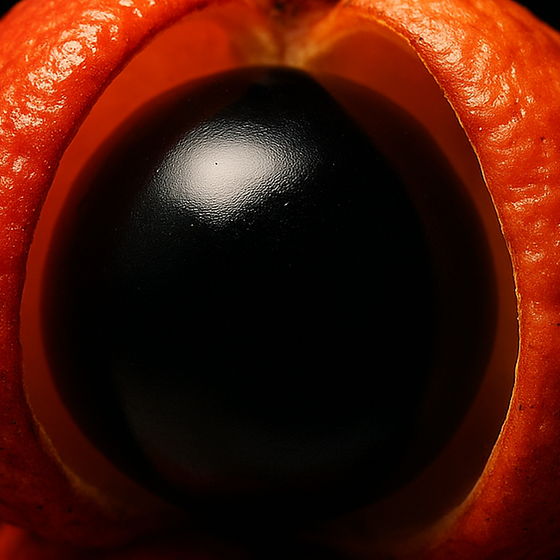
Paullinia cupana
Definition
Guarana is Paullinia cupana, a climbing plant in the family Sapindaceae, native to the Amazon basin and especially common in Brazil. It is a major source of caffeine for many South Americans.
EARTHY SWEET FRUITY HERBAL WARM FRESH BITTER
Guaraná, Paullinia sorbilis, Paullinia crysan
- Type
- Ingredient
- Olfactive family
- Fruity
- Subfamily
- Vegetable and culinary notes
- Cluster
- Mixed fruit notes
- Source
- Seeds of Paullinia cupana
Instruments
Pyramid
TTop
HHeart
BBase
Producing countries
Brazil
Scent
In PREMIEREPEAU
The Full Story
Did You Know?
The seeds can be up to about 6% caffeine, while green coffee beans are about 1-3% caffeine. Ripe guaraná fruits resemble human eyes.
Extraction & Chemistry
Extraction method
The Guaranis make a herbal tea called cupana by shelling, washing and drying the seeds, then pounding them into a fine powder. The powder is kneaded into a dough and shaped into cylinders, a product known as guaraná bread. The guaraná bread is grated and then immersed in hot water along with sugar.
- Formula
- Complex natural mixture (key constituents: caffeine C₈H₁₀N₄O₂; theobromine; theophylline)
- Botanical
- Paullinia cupana
- Synonyms
- Guaraná, Paullinia sorbilis, Paullinia crysan
IFRA status
See noteNo IFRA Standard for the material itself (51st Amendment)
In Perfumery
Guarana is supplied as a powdered extract and as a liquid extract.
Role in the formula
01modifier
02lifting agent
03blender
04volume builder
05freshness
Available as
seed powdered extract liquid extract
See Also
7 notes