


Kudzu
Keywords: floral · green · fruity
Kudzu is a group of climbing, coiling and trailing deciduous perennial vines of the pea family, native to much of East Asia.

- Olfactive family
- Florals · 779 entries of the glossary in this family Subfamily: Green florals · 143 entries in this subfamily Cluster: Green-fresh florals · 135 entries in this cluster
- Material
- Natural Flowers
- Pyramid
- Heart · Volatility: Heart Note
- Strength
- Medium Step 3 of 5 · shared by 1,473 of 2,156 graded entries Graded entries at each step, from 1 to 5: 4, 119, 1,473, 498, 39. 23 more sit between two steps.
- Also called
- Japanese arrowroot, Chinese arrowroot, kuzu
Family, subfamily and cluster: PREMIEREPEAU house classification, version 2026‑11.
Kudzu · Facets
Entries of the glossary that carry each facet, of 3,979:
- woody 792
- floral 1,546
- green 1,442
- earthy 660
- sweet 1,988
- herbal 757
- warm 1,108
- fresh 1,387
- fruity 1,301
- waxy 215
Kudzu · Scent
In kudzu flowers, ethyl linoleate, 1-octen-3-ol, (Z)-3-hexen-1-ol, farnesol and palmitic acid present fruity, mushroom, fresh green, floral and waxy odors respectively. Together these components contribute to the unique aroma of kudzu flowers.
Evolution over time
Kudzu: scent over time.
- Immediately
Fruity and fresh green notes
Scent words: fresh · green · fruity - After a few hours
Floral notes
Scent words: floral - After a few days
Waxy notes
Kudzu · In Perfumery
Methyl anthranilate, the compound mainly responsible for the ester fraction of kudzu flower aroma, is one of the two amines most commonly used to form Schiff bases in the fragrance industry, the other being ethyl anthranilate. When methyl anthranilate reacts with an aldehyde, water is released and a single, heavier compound is formed. These Schiff bases are typically yellow-to-orange, viscous liquids that are more stable than their parent aldehydes and have greater tenacity on skin, though they darken over time. Schiff bases have become less common in modern perfumery, in part because of the strong color many of them produce.
Pyramid
Kudzu: Heart. Entries of the glossary stored at each place of the pyramid, of 4,006 (42 store no place):
- Top 718
- Top · Heart 497
- Heart 1,641
- Heart · Base 514
- Base 594
Role in the formula
Kudzu: roles in the formula. Entries of the glossary that share each role, of 4,006:
- Diffusion enhancer 248
- Modifier 1,167
- Signature note 897
- Lifting agent 567
- Blender 1,040
- Freshness 720
- Floral note fewer than 40 entries
- Fruity accent fewer than 40 entries
- Green accent fewer than 40 entries
Kudzu · Terroir & Origins
- Producing countries
- China, Japan, United States
Kudzu · Extraction & Chemistry
The roots are smashed and put in a bucket, water is added and stirred, and the sediment is left to settle. The mixture is rinsed with water many times in a traditional method called Yoshino-zarashi. Scum and impurities are removed, the water is run off, and fresh water is added. These steps are repeated over ten days and give a white starch called nama-kuzu. The starch is then dried on a rack for over a month, and the whole process averages two to three months. In a laboratory method, extraction of the root with 45% ethanol at 60 °C for 1 hour gave 12.7 mg/g of puerarin, and the residue left from this extraction contained about 74% starch.
Available as
Kudzu: available as.
- synthetic accord
- fantasy note
- absolute
- Appearance
- No standard commercial essential oil; accord note
Kudzu · Did You Know?
Kudzu can grow up to 20 metres (66 ft) per year. Its roots can account for up to 40% of total plant biomass.
Kudzu · In Depth
Kudzu is a group of climbing, coiling, and trailing deciduous perennial vines native to much of East Asia, Southeast Asia, and some Pacific islands. The plants are in the genus Pueraria, in the pea family Fabaceae. The name comes from kuzu, the Japanese name of the plant.
Botany and Origin
Pueraria montana is native to East Asia, primarily subtropical and temperate regions of China, Japan, and Korea. The flowers are reddish-purple and yellow, fragrant, and similar to pea flowers. Each flower is about 20–25 millimetres wide, and the flowers are borne in elongated racemes about 20 centimetres long. The flowering period extends from July through October. The fruit is a flat hairy pod about 8 centimetres long with three seeds.
Kudzu is invasive in many parts of the world, primarily North America. The vine climbs densely over other plants and trees and grows so rapidly that it smothers and kills them by blocking most of the sunlight and taking root space. The tuberous roots are high in starch and water content.
Chemistry and Scent Source
In an analysis of kudzu flowers, esters occupied the largest relative peak area, mainly attributed to methyl anthranilate (28.76%). Methyl anthranilate is responsible for the characteristic flavor of the Concord grapes. Methyl anthranilate is an ester of anthranilic acid. Its chemical formula is C₈H₉NO₂. It occurs naturally in Concord grapes and bergamot, and also in gardenia, jasmine, neroli, tuberose and ylang ylang, among other sources.
Uses
The main uses of kudzu are for food, for fiber, and as a medicinal plant. The roots contain starch, which has traditionally been used as a food ingredient in East and Southeast Asia. Kudzu starch is used as a thickening or gelling agent similar to arrowroot, tapioca or potato starch. The flowers are used to make a jelly that tastes similar to grape jelly.
Kudzu fiber is a bast fiber similar to hemp and linen. To obtain the bast fibers, young vines are harvested in summer and boiled, then fermented by naturally occurring bacteria in mounds of grass. Kudzu has been used for centuries in East Asia in folk medicine, in herbal teas and tinctures. In the Southern United States, kudzu is used to make soaps, lotions, and compost.
Explore all seven extraits in the Discovery Set.
Kudzu · History
Early uses in China
The starchy root of kudzu has been used for food in China since before 540 CE. Kudzu fiber has been used for clothing in China for at least 6,000 years and in Japan for at least 1,500 years. From the Zhou dynasty to the early twentieth century, kudzu was one of three major textile materials used in China, with silk and ramie.
Arrival in the United States
Kudzu reached the United States from Japan in 1876, at the Japanese pavilion of the Centennial Exposition in Philadelphia. It remained a garden plant until the Dust Bowl era (1930s-1940s), when it was marketed as a way for farmers to stop soil erosion. The new Soil Conservation Service grew seventy million kudzu seedlings and paid $8 an acre to anyone who would sow the vine.
Promotion in the South
Channing Cope popularised kudzu in the South as a fix for eroded soils. He started the Kudzu Club of America, which by 1943 had 20,000 members. The Soil Conservation Service stopped promoting kudzu altogether by the 1950s.
Kudzu · Technical Sheet
Identity
- Botanical
- Pueraria montana var. lobata
- Taxonomy
- Fabales order › Fabaceae family › Pueraria genus · GBIF
- Botanical records
- Pueraria montana var. lobata: POWO, Pueraria montana var. lobata · IPNI, Pueraria montana var. lobata · Wikidata, Pueraria montana var. lobata · Wikipedia, Pueraria montana var. lobata
- IPNI
- Pueraria montana var. lobata (Willd.) Maesen & S.M.Almeida ex Sanjappa & Predeep, in M. Sanjappa, Legumes of India 288 (1992) — Maesen, Laurentius Josephus Gerardus (Jos) van der (1944-); Sarah Marselin Almeida (1940–2025) · ≡ Dolichos lobatus Willd. (1802)
- Type
- Ingredient
- Category
- Flowers
- Note
- No standard commercial oil; olfactory accord inspired by Pueraria montana flowers
In Nature
- Native range
- Russian Far East · China · Eastern Asia · Indo-China · Malesia · Papuasia · Australia · Northwestern Pacific · POWO
- Introduced to
- 69 regions · Northern America 22 · Africa 16 · Pacific 10 · Tropical Asia 7 · Southern America 5 · Europe 4 · Australasia 3 · Temperate Asia 2
- Also from this botanical family
- Fabaceae: Acacia · Albizia · Amburana Bark · Amburana Wood · Ashoka Flower · Astragalus · 50 more entries
Classification
- Chemical class
- Fantasy note
Chemical data
- Formula
- Complex natural mixture (key constituents: methyl anthranilate C₈H₉NO₂; ethyl linoleate; 1-octen-3-ol; (Z)-3-hexen-1-ol; farnesol; palmitic acid)
- Most reported compounds
- Daidzin (25 papers; one: Phytochemistry 1998, Daidzin) · Daidzein (20 papers; one: Phytochemistry 1998, Daidzein) · Genistein (9 papers; one: Phytochemistry 1998, Genistein) · Formononetin (8 papers; one: Phytochemistry 1998, Formononetin) · LOTUS
- Structure
- Methyl Anthranilate, Ethyl Linoleate, Cis-3-Hexenol (Leaf Alcohol):
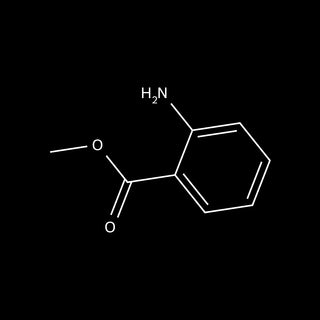
Methyl Anthranilate
PubChem, Methyl Anthranilate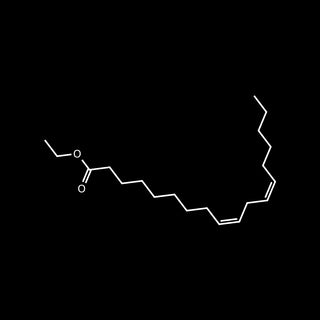
Ethyl Linoleate
PubChem, Ethyl Linoleate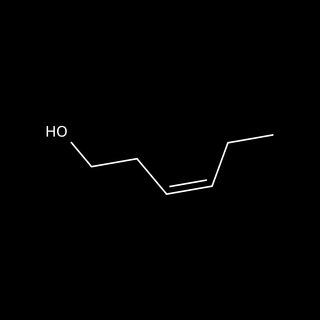
Cis-3-Hexenol (Leaf Alcohol)
PubChem, Cis-3-Hexenol (Leaf Alcohol) - Compound classes reported
- Monoterpenoids 1 % · Isoflavonoids 31 % · Triterpenoids 11 % · of 153 compounds reported, 19 % of them esters · LOTUS
Labelling
- EU allergens reported
- Pinene
Performance and rules
- IFRA status
- No IFRA Standard for the material itself (51st Amendment)
Kudzu · See Also
Entries related to Kudzu, by their place in the pyramid. “shared” marks a scent word Kudzu has too.
Heart notes

Snow Lotus
alpine Saussurea herbs Florals / Same cluster / Fantasy/Concept
Orange Blossom
floral (shared) · honeyed · citrus Florals / Natural
Jasmine
floral (shared) Florals / Natural
Tuberose
floral (shared) · narcotic · creamy Florals / Natural
Rose
floral (shared) · honeyed · waxy (shared) Florals / Natural
Sophora Toromiro Flower
legume tree · endemic species Woods / Heart · Base / Fantasy/Concept


Base notes

Iris
powdery · earthy (shared) · violet Florals / Natural
Ethyl Linoleate
fatty · oily · fruity (shared) Green


Kudzu · Sources
- International Plant Names Index (IPNI) Pueraria montana var. lobata (Ohwi) Maesen & S.M.Almeida
- J-STAGE Analysis of aroma components of Pueraria montana var. lobata Ohwi (Kudzu) flowers
- YAKUGAKU ZASSHI (1973) Studies on the Constituents of Flowers. I. On the Components of Flower of Pueraria thunbergiana BENTH
- FAO AGRIS Component Analysis of the Kudzu (Pueraria lobata) Root and Development of Puerarin and Starch Extraction Method
- Alabama Cooperative Extension System History and Use of Kudzu in the Southeastern United States
- IFRA Standards, 51st Amendment
- Wikipedia Kudzu
- Wikipedia Pueraria montana
- Wikipedia Methyl anthranilate
- Ministry of Agriculture, Forestry and Fisheries of Japan Yoshino hon kuzu kuzumochi
Cite as PREMIEREPEAU Glossary, “Kudzu”, https://premierepeau.com/
