


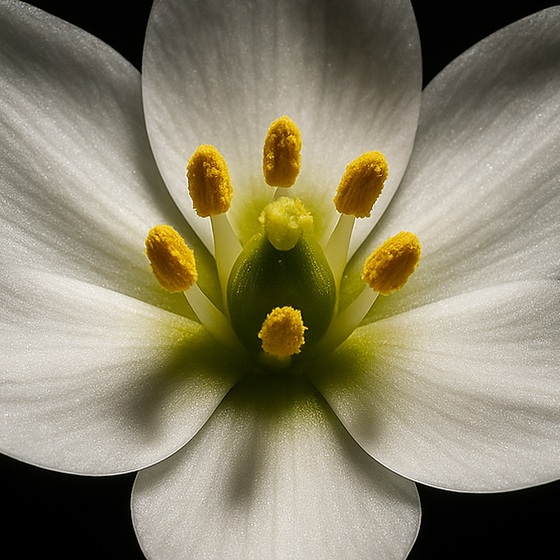
Subtle, green-white floral with a papery delicacy. Star-of-Bethlehem carries almost no scent -- its perfumery note is a fantasy of purity and translucence.
- Type
- Ingredient
- Olfactive family
- Florals
- Subfamily
- White florals
- Cluster
- Green-fresh florals
- Source
- flowers
- Chemical class
- complex natural (essential oil)
Scent
The Full Story
Did You Know?
Several Ornithogalum species are toxic -- the bulbs contain cardiac glycosides similar to those in foxglove. The common name 'star-of-Bethlehem' may derive from its star-shaped white flowers, but medieval herbalists also called it 'dove's dung,' a name whose origin is genuinely lost to history.
Extraction & Chemistry
Extraction method
No extraction exists. Ornithogalum flowers produce negligible volatile compounds. The note is an entirely synthetic fantasy accord.
- Formula
- N/A — no commercial essential oil
- CAS
- N/A — ornamental flower, no commercial essential oil
- Botanical
- Ornithogalum spp.
- Appearance
- No standard commercial essential oil; headspace-derived floral accord
- Odour strength
- Medium
- Synonyms
- STAR-OF-BETHLEHEM
No IFRA Standard for the material itself (51st Amendment)
- Note
- No standard commercial oil; based on headspace analysis of Ornithogalum flowers
In Perfumery
Ornithogalum is a clean, transparent fantasy floral for the heart zone. Since the actual flower carries negligible fragrance, the accord translates visual purity into scent: hedione (radiant transparency), muguet materials (dewy white-floral), and clean musks (skin-like softness). Works in clean, minimalist, and bridal compositions as a near-invisible white-floral modifier.
See Also
7 notes