Papaya Blossom

AccordFLOWERSfloral · tropical · sweet
HeartPyramid
—Strength
—Tenacity
—Origins

Editorial noteWe own no rights to this material, its name or its trademark. This entry is independent editorial journalism, published under freedom of expression.
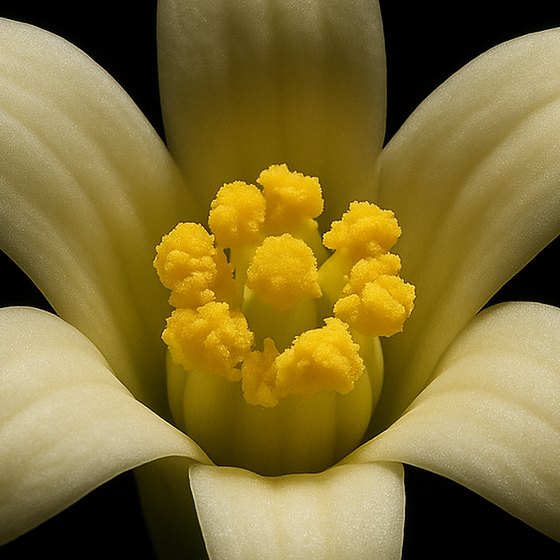
Specimen
Papaya Blossom perfume ingredient
Heart
Carica papaya
Fantasy/Concept
Definition

The flowers of the papaya, Carica papaya, are trumpet-shaped and yellow to white.

FLORAL GREEN SWEET FRESH CREAMY TROPICAL
Type
Accord
Olfactive family
Florals
Subfamily
Tropical florals
Cluster
Classic florals
Instruments
Pyramid
TTop
HHeart
BBase

Scent

The flowers are sweet-scented.

The Full Story

The plant

The papaya is the plant species Carica papaya, in the family Caricaceae. It was first domesticated in Mesoamerica, within modern-day southern Mexico and Central America. It is a very large herbaceous plant that grows up to 8 to 10 m tall. Spaniards introduced it to the Old World in the 16th century, and its cultivation is now nearly pantropical. The leaves are large, 50 to 70 cm across, deeply palmately lobed with seven lobes, and all parts of the plant contain latex.

The flowers

The flowers are five-parted and highly dimorphic. The male flowers grow in long racemes, the female ones in small clusters or sometimes alone. Male and female flowers are borne in the leaf axils. They open at night and are wind- or insect-pollinated. The flowers are trumpet-shaped, fragrant, and yellow to white. In the male flowers the stamens are fused to the petals. The female flowers have a superior ovary and five contorted petals loosely connected at the base. The pollen grains are elongated and about 35 microns long.

Genus and name

Carica is a genus of flowering plants in the family Caricaceae. The genus once held about 20 to 25 species, but most of the others have since been moved to the genus Vasconcellea, a few to Jacaratia and Jarilla. The genus name comes from the botanical name of the fig, Ficus carica, because the leaves or fruits of the species resemble those of the fig.

Fruit, cultivation and uses

The fruit is a large berry about 15 to 45 cm long, ripe when soft and amber to orange in skin. In 2024 world production of papayas was about 15 million tonnes, with India supplying 36% of the total. The enzyme papain, extracted from the milky sap of young papaya, is used as a meat tenderizer and in chewing gum production.

—

Related: Abelia · Almond Blossom · Alpha Terpineol · Alstroemeria · Alumroot · Amarillys · Amazon Moonflower · Amethyst Flower

Extraction & Chemistry

Extraction method

The scent of a living flower can be captured by headspace technology, in which an airtight dome or sphere surrounds the flower. Inert gas is passed through the space, or a vacuum is made, so that the odor compounds are drawn out of the headspace. The compounds are then caught on cold surfaces, in solvent traps or on adsorbent materials, and the samples can be analyzed by gas chromatography or mass spectrometry.

Botanical
Carica papaya
IFRA status
See note

No IFRA Standard for the material itself (51st Amendment)

In Perfumery

A living flower and a picked one smell differently, and headspace analysis lets chemists identify the components of the living scent and compare them with the picked one.

Role in the formula
01modifier
02signature note
03lifting agent
04blender
05freshness
Available as
synthetic accord fantasy note

See Also

5 notes