


Plastic Bag
Keywords: paraffin · burnt · roasted
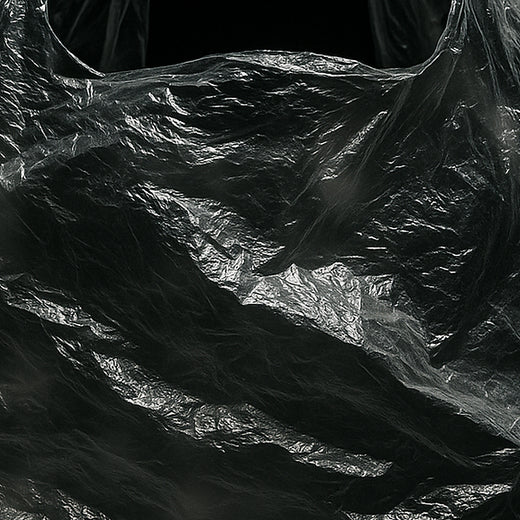
Plastic Bag: A plastic bag is a type of container made of thin, flexible plastic film, nonwoven fabric, or plastic textile. Plastic bags are used for containing and transporting goods such as foods, produce, powders, ice, magazines, chemicals, and waste.
- Olfactive family
- Florals · 782 entries of the glossary in this family Subfamily: Fresh florals · 108 entries in this subfamily Cluster: Classic florals · 247 entries in this cluster
- Material
- Fantasy/Concept Primarily fossil fuels (single-use plastic bags)
- Pyramid
- Base · Volatility: Base Note
- Strength
- N/A — no measured strength for a fantasy accord Not on the graded scale
- Producing countries
- N/A — fragrance accord
- Also called
- poly bag, pouch
Plastic Bag · Facets
Entries of the glossary that carry each facet, of 3,979:
- sweet 1,988
- fresh 1,387
- dry 159
Editorial note We own no rights to this material, its name or its trademark. This entry is independent editorial journalism, published under freedom of expression.
Plastic Bag · Scent
Burning polyethylene gives off an odour of paraffin, similar to a candle flame. The thermal oxidation of polyethylene releases unpleasant odors, mainly caused by unsaturated aldehydes and ketones.
Evolution over time
Plastic Bag: scent over time.
- Immediately
N/A — no documented evolution for a fantasy accord
- After a few hours
N/A
- After a few days
N/A
Plastic Bag · In Perfumery
Masking unwanted odors in recycled plastic with fragrances has been attempted, but the method can be ineffective.
Pyramid
Plastic Bag: Base. Entries of the glossary stored at each place of the pyramid, of 4,000 (36 store no place):
- Top 718
- Top · Heart 497
- Heart 1,641
- Heart · Base 514
- Base 594
Role in the formula
Plastic Bag: roles in the formula. Entries of the glossary that share each role, of 4,000:
- N/A — no documented formula role 361
Plastic Bag · Extraction & Chemistry
Polyethylene is produced by the polymerization of ethylene, the monomer. LDPE is produced by free-radical polymerization. Ethylene is usually produced by cracking hydrocarbons.
Available as
Plastic Bag: available as.
- synthetic accord
- fantasy note
- Appearance
- Polyethylene film varies between almost clear, milky-opaque and opaque
Plastic Bag · Did You Know?
Every year, about 1 to 5 trillion plastic bags are used and discarded around the world. From point of sale to destination, plastic bags have a lifetime of 12 minutes.
Plastic Bag · In Depth
Material
Polyethylene is the most commonly produced plastic. It is a polymer primarily used for packaging, including plastic bags and plastic films. LDPE’s most common use is in plastic bags. Clear plastic bags are made of LDPE, while blown-film shopping bags with handles are now made of HDPE.
Smell of plastic
Plastic materials tend to absorb the scents they are in contact with. Polymer degradation during the lifetime of a plastic also contributes to odorant contamination. Plasticizers such as adipates and phthalates are often added to brittle plastics like PVC to make them pliable.
Explore all seven extraits in the Discovery Set.
Related: Vinyl · Tires · Spray Paint · Diving Suit
Plastic Bag · History
The modern lightweight shopping bag is the invention of Swedish engineer Sten Gustaf Thulin. In the early 1960s, Thulin developed a method of forming a simple one-piece bag by folding, welding and die-cutting a flat tube of plastic. His design was patented worldwide by Celloplast in 1965. The first industrially practical polyethylene synthesis was discovered accidentally in 1933 by Eric Fawcett and Reginald Gibson at the Imperial Chemical Industries works in Northwich.
Plastic Bag · Technical Sheet
Identity
- Botanical
- N/A — synthetic/conceptual accord
- Type
- Accord
- Category
- Accords and curiosities
- Note
- N/A — fragrance accord. The characteristic plastic smell comes from various volatile organic compounds including aldehydes and phthalates released from polymer materials.
Classification
- Chemical class
- Polymer (polyethylene)
Chemical data
- Formula
- (C₂H₄)ₙ (polyethylene)
- CAS
- 9002-88-4 (polyethylene)
Physical properties
- Specific gravity
- 0.924 (LDPE, density in g/cm³)
Performance and rules
- IFRA status
- No IFRA Standard for the material itself (51st Amendment)
Plastic Bag · See Also
Entries related to Plastic Bag, by their place in the pyramid. “shared” marks a scent word Plastic Bag has too.
Top notes

Toothpaste
fresh (shared) · spicy · sweet (shared) Aromatic / Fantasy/Concept
Brown Scotch Tape
synthetic · complex · particular Aromatic / Top · Heart / Fantasy/Concept


Heart notes

Tennis Ball
rubber · glue Florals / Same cluster / Fantasy/Concept
Tuberose
floral · narcotic · creamy Florals / Natural
Jasmine
floral Florals / Natural
Straw
earthy · dry (shared) Earthy / Heart · Base / Fantasy/Concept


Base notes

Iris
powdery · earthy · violet Florals / Natural

Other entries · Place in the pyramid not stored

Carnation
floral · spicy · clove Florals / Same cluster / Natural

Plastic Bag · Sources
- Nanomaterials (2022) Grafting of Poly(ethylene imine) to Silica Nanoparticles for Odor Removal from Recycled Materials
- FAO AGRIS Identification of odor-active compounds resulting from thermal oxidation of polyethylene
- IFRA Standards, 51st Amendment
- Wikipedia Plastic bag
- Wikipedia Polyethylene
- Wikipedia Low-density polyethylene
- Wikipedia High-density polyethylene
- Wikipedia Plastic
Cite as PREMIEREPEAU Glossary, “Plastic Bag”, https://premierepeau.com/
