


Rosalina
Keywords: herbal · aromatic · green
Rosalina is an essential oil steam-distilled from the leaves and branchlets of Melaleuca ericifolia (Myrtaceae). The plant is also known as the lavender tea tree.
- Olfactive family
- Aromatic · 495 entries of the glossary in this family Subfamily: Herbal aromatics · 227 entries in this subfamily
- Material
- Natural Leaves and branchlets of Melaleuca ericifolia
- Pyramid
- Heart Note
- Also called
- Rosalina oil, lavender tea tree
Rosalina · Facets
Entries of the glossary that carry each facet, of 3,979:
- herbal 757
- aromatic 103
- green 1,442
- fresh 1,390
- camphoraceous 140
Rosalina · In Perfumery
The aromatic oil in the leaves has been used in scented soaps.
Pyramid
Rosalina: Heart. Entries of the glossary stored at each place of the pyramid, of 4,000 (35 store no place):
- Top 718
- Top · Heart 496
- Heart 1,644
- Heart · Base 513
- Base 594
Role in the formula
Rosalina: roles in the formula. Entries of the glossary that share each role, of 4,000:
- Perfuming agent 43
- Fragrance ingredient 51
- Green note fewer than 40 entries
Rosalina · Terroir & Origins
- Producing countries
- Australia
Rosalina · Extraction & Chemistry
Rosalina oil is obtained from the leaves and branchlets of the tree or bush by traditional steam distillation.
Rosalina · Did You Know?
The species name ericifolia refers to the resemblance of its leaves to those of Erica in the family Ericaceae.
Rosalina · In Depth
Origin and botany
Melaleuca ericifolia, commonly known as swamp paperbark, is a plant in the myrtle family, Myrtaceae, native to south-eastern Australia. It is a tall, dense shrub, sometimes a tree growing to a height of 9 m (30 ft). The leaves are dark green and linear, 5–18 mm long. The flowers are creamy-white and appear from October to November in the native range.
Swamp paperbark occurs in near-coastal areas of New South Wales south of Port Macquarie to Port Philip Bay in Victoria. It is also common near the coast in the north, north east and west of Tasmania. It grows beside streams and in coastal swamps in heath and dry sclerophyll forest. Draining of swamps and clearing of land have greatly reduced its numbers in Victoria.
Chemistry
Linalool (35.0–55.0%), 1,8-cineole (18.0–26.0%) and α-pinene (5.0–12.0%) are given as the major compounds of rosalina oil. In one sample of Australian rosalina oil, linalool and 1,8-cineole were the main constituents, at 38.19% and 27.57%. Analysis of the leaves in another report found mostly 1,8-cineole, with significant amounts of α-pinene. Linalool is a naturally occurring terpene alcohol, classified as an acyclic monoterpenoid. 1,8-Cineole, also called eucalyptol, is a monoterpenoid and a bicyclic ether.
Uses
The aromatic oil in the leaves has been used for dental and medical preparations.
Rosalina · History
Melaleuca ericifolia was first formally described by the English botanist James Edward Smith in 1797. The variety erubescens, described by George Bentham in 1867, is now regarded as a synonym of Melaleuca diosmatifolia.
Aboriginal people used the bark of this tree for paintings, blankets, and roofing for shelters. Oil from the leaves was used for medicine, and nectar from the flowers was used to make sweet drinks.
Rosalina · Technical Sheet
Identity
- Botanical
- Melaleuca ericifolia
- Botanical records
- Melaleuca ericifolia: POWO, Melaleuca ericifolia · IPNI, Melaleuca ericifolia · GBIF, Melaleuca ericifolia · Wikidata, Melaleuca ericifolia · Wikipedia, Melaleuca ericifolia · IUCN Least concern (LC), Melaleuca ericifolia
- IPNI
- Melaleuca ericifolia Sm., Trans. Linn. Soc. London 3: 276 (1797) — James Edward Smith (1759–1828)
- Type
- Ingredient
- Category
- Greens, herbs and fougeres
In Nature
- Recorded altitude
- 0–150 m · 180 records with an altitude · GBIF
- Wild or cultivated
- 167 native · 8 introduced · 14 cultivated among 8,575 records (the rest carry no such mark) · GBIF
- Recorded in
- 16 of 512 squares of the world grid; a brighter dot holds more records · GBIF
- Also from this genus
- Melaleuca: Cajeput · Flax-Leaved Paperbark · Honey Myrtle · Paperbark · Tea Tree Oil
- Also from this botanical family
- Myrtaceae: Allspice · Anise Myrtle · Blue Mallee · Clove · Clove Leaf · Cloves · 22 more entries
In Print
- Timeline
- first described 1797 · earliest aroma paper in Europe PMC, 2026
- In English books
- most mentioned in the 1870s · Google Books Ngram
Classification
- Cluster
- Herbal aromatics · 68 entries in this cluster
Chemical data
- Formula
- Complex natural mixture (key constituents: linalool C₁₀H₁₈O; 1,8-cineole C₁₀H₁₈O)
- Structure
- Linalool, Eucalyptol (1,8-Cineole):
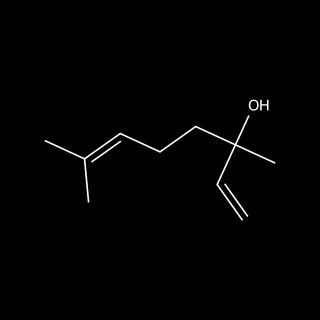
Linalool
PubChem, Linalool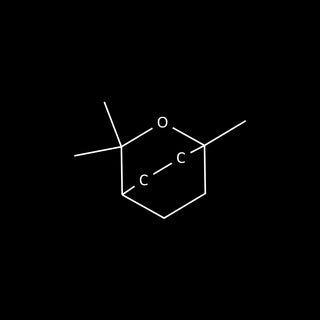
Eucalyptol (1,8-Cineole)
PubChem, Eucalyptol (1,8-Cineole)
Performance and rules
- Available as
- essential oil
- IFRA status
- No IFRA Standard for the material itself (51st Amendment)
Rosalina · See Also
Entries related to Rosalina, by their place in the pyramid. “shared” marks a scent word Rosalina has too.
Top notes

Paperbark
fresh (shared) · herbal (shared) · camphoraceous (shared) Aromatic / Same subfamily / Natural-
Tea Tree Oil
fresh (shared) · citrus · green (shared) Aromatic / Same subfamily / Natural 
Lemon Myrtle
citrus · fresh (shared) · green (shared) Citrus / Natural
Guava
fruity · sweet · tropical Fruity / Natural & Synthetic


Rosalina · Sources
- Molecules (Basel, Switzerland) HPTLC Analysis and Chemical Composition of Selected Melaleuca Essential Oils
- IFRA Standards, 51st Amendment
- Wikipedia Melaleuca ericifolia
- Wikipedia Linalool
- Wikipedia Eucalyptol
- PubChem Linalool
- PubChem 1,8-cineole
Cite as PREMIEREPEAU Glossary, “Rosalina”, https://premierepeau.com/
