Plod akebije

PrirodnaVOĆE, POVRĆE I ORAŠASTI PLODOVIvoćni · sladak
Srednje notePiramida
—Jačina
—Trajnost
3Poreklo
Uzorak
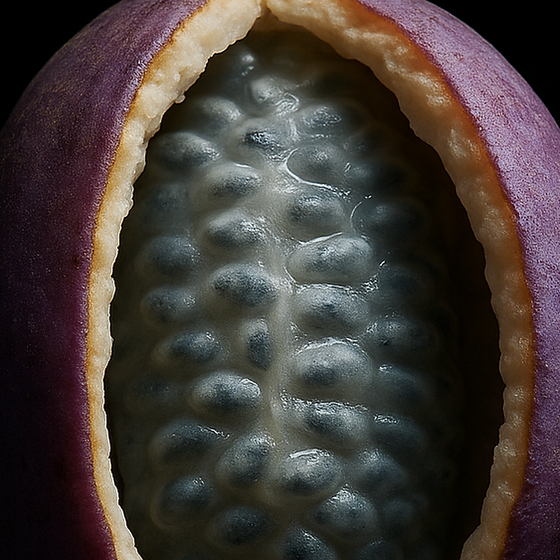
Plod akebije kao sirovina za parfeme
Srednje note
Akebia quinata
Definicija

Akebia fruit is the sausage-shaped pod of the vine Akebia quinata, which contains edible pulp. The pulp is white, semi-translucent, gelatinous and mildly sweet.

SLADAK VOĆNI
chocolate vine, five-leaf akebia, akebi, five-leaf chocolate vine
Type
Sirovina
Olfactive family
Voćni
Source
fruit
Instrumenti
Piramida
GGornje note
SSrednje note
BBazne note
Zemlje proizvođači
Kina Japan Koreja

Miris

The flavour of the fruit varies from plant to plant: some fruits are complex, resembling a mixture of banana, passionfruit and lychee, while others are mild or even flavourless. The pulp is mildly sweet.

Detaljno

Akebia quinata is a climbing evergreen vine that grows to 10 m or more in height, and its fruits are sausage-shaped pods that contain edible pulp. The vine is commonly known as akebi, chocolate vine or five-leaf akebia.

Origin and Production

Akebia quinata is native to Japan, China and Korea and is cultivated globally. The fruits are 5 to 11 cm long and mature in September to October. Each fruit has a white inner pulp that encases up to 200 seeds. Akebia quinata will only produce fruit if pollinated by a genetically different plant.

Botany

Akebia is a genus of five species in the family Lardizabalaceae. Akebia quinata and Akebia trifoliata both bear edible fruit, containing a sweet white flesh. The fruit is a purplish gray follicle, and it splits open naturally. The seeds are tiny and shiny, either brown or black. The leaves are palmately compound, with five leaflets that are notched at the tip. The cultivar 'White Chocolate' has white flowers and white fruit.

Taste and Uses

The fruit is often eaten fresh and is best after it fully opens naturally on the vine. The pulp is eaten primarily in Japan as a seasonal delicacy. Flavor varies greatly in akebias, even within the same species, with some individuals displaying a complex flavor profile resembling a mixture of banana, passionfruit and lychee, with others being mild, or even insipid. The rind has a slight bitter taste and is used as a vegetable. The seeds are very bitter and can even lead to throat irritation if chewed. The fruit can be processed into jams, jellies, drinks and even added to smoothies or ice-creams. The leaves are also made into a tea infusion.

Chemistry

The essential oil of the dried fruits of Akebia quinata contains 86 components, which make up 98.4% of the oil. The major compounds of that oil are limonene, eugenol, octanal and p-cymene. Monoterpenoids and saturated short-chain aldehydes (C6 to C10) are the main volatile fractions of the oil.

Zanimljivosti

In China the fruit is commonly known as "wild banana" or "northern banana".

Dobijanje i hemija

Formula
Complex natural mixture (key constituents: limonene; eugenol; octanal; p-cymene)
Botanički naziv
Akebia quinata
Izgled
Purplish gray follicle, 5 to 11 cm long; white, semi-translucent gelatinous pulp
Sinonimi
chocolate vine, five-leaf akebia, akebi, five-leaf chocolate vine
Status prema standardima IFRA
Pogledajte napomenu

No IFRA Standard for the material itself (51st Amendment)

Pogledajte i

7 nota