


Alfa-humulen
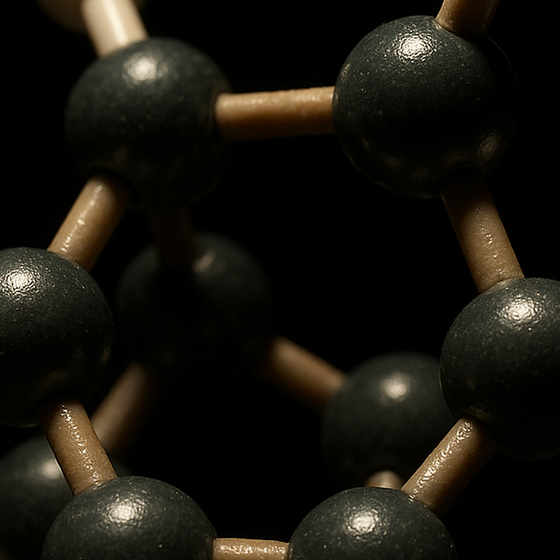
Dry, woody-green, with an unexpected watery undertow. The smell of crushed hop cones in a cold warehouse — bitter, herbal, faintly oceanic.
- Type
- Sirovina
- Olfactive family
- Drvenasti
- Source
- hops, sage, ginger
- Chemical class
- terpenoid (sesquiterpene)
Miris
Detaljno
Zanimljivosti
In brewing, the humulene-to-caryophyllene ratio in hop oil is a defining metric of hop nobility. Ratios above 3:1 characterise the classic European noble hops — Saaz, Hallertau Mittelfrüh, Tettnang, Spalt — and produce the floral-herbal-spicy aroma profile prized in pilsners and lagers. American-style hops tend toward lower ratios with higher myrcene, yielding citrusy-resinous character instead.
Dobijanje i hemija
Način dobijanja
Isolated from hop essential oil (Humulus lupulus) by steam distillation followed by fractional distillation to separate it from co-occurring beta-caryophyllene and myrcene. Supercritical CO2 extraction at 40-50°C and 150-400 bar is an alternative method that preserves thermolabile fractions. Hop oil yields are typically 0.5-1.5% of dried cone weight; within that oil, alpha-humulene comprises 15-40% depending on cultivar — noble varieties (Hallertau, Saaz) trend toward the upper range. Also available as a synthetic or semi-synthetic isolate. Plant yields of high-purity alpha-humulene remain inconsistent across species, and no single botanical source has been established as a reliable high-concentration supply.
- Formula
- C15H24
- CAS
- 6753-98-6
- Botanički naziv
- Major component of Humulus lupulus (hops), Zingiber zerumbet (shampoo ginger), Cannabis sativa
- Izgled
- Colourless to pale yellow liquid with a woody, earthy-spicy odour
- Sinonimi
- HUMULENE ALPHA-HUMULENE HUMULENE
Not subject to an IFRA Standard (51st Amendment)
- Tačka ključanja
- 99.00 to 100.00 °C. @ 3.00 mm Hg
- Tačka paljenja
- 194.00 °F. TCC ( 90.00 °C. )
- Relativna gustina
- 0.88900 to 0.89500 @ 25.00 °C.
- Indeks prelamanja
- 1.49900 to 1.50500 @ 20.00 °C.
U parfemima
Background modifier and naturalistic bridge note. Alpha-humulene rarely appears as a standalone isolate in fragrance formulation — it contributes through essential oils and absolutes that contain it (hop absolute, clary sage, ginger CO2). Its principal value is the unusual watery-woody quality: it can anchor aquatic or marine accords in a natural, herbal context without resorting to synthetic ozonics like Calone. In herbal-aromatic families (fougère, aromatic chypre), it reinforces earthy depth. In cannabis-inspired or beer-inspired accords — a small but active niche — it provides the signature hoppy realism. Functionally, it works alongside beta-caryophyllene, myrcene, and linalool in complex herbal bases. Its moderate tenacity (vapour pressure ~0.01 mmHg at 25°C) places it in the heart-to-base transition zone rather than as a true fixative.
Pogledajte i
7 nota