Kora amburane

PrirodnaDRVA I MAHOVINEdrvenast · sladak · topao

Sedam parfemaJedan od njih vas posmatra

Bazne notePiramida
—Jačina
—Trajnost
4Poreklo
Uzorak
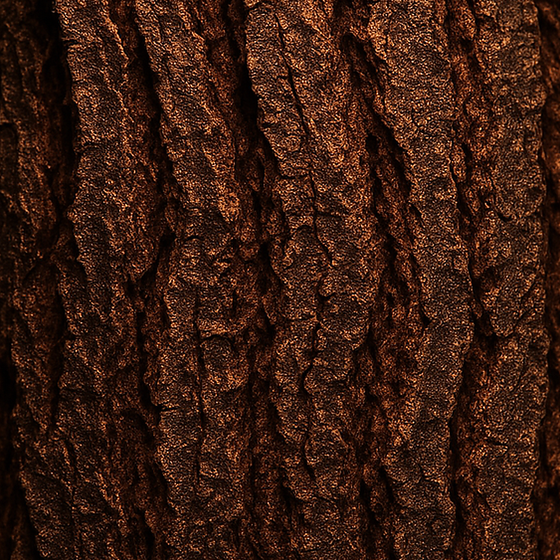
Kora amburane kao sirovina za parfeme
Bazne note
Amburana cearensis
Definicija

Amburana bark is the trunk bark of Amburana cearensis, a timber tree of the family Fabaceae. The bark contains coumarin, whose odor is sweet and resembles vanilla.

DRVENAST CVETNI ZAČINSKI SLADAK VOĆNI TOPAO SMOLAST
Amburana, cumaru, imburana, umburana-de-cheiro, cerejeira, cerejeira rajada, ishpingo, roble criollo
Type
Sirovina
Olfactive family
Drvenasti
Source
Trunk bark
Chemical class
complex natural (coumarin, phenol acids, flavonoids)
Instrumenti
Piramida
GGornje note
SSrednje note
BBazne note
Zemlje proizvođači
Argentina Bolivija Brazil Paragvaj

Miris

The wood has a distinct sweetish odor, attributed to coumarin. Coumarin itself smells sweet, like vanilla, and its odor is also described as hay-like and bittersweet.

Detaljno

Amburana cearensis is a species of timber tree in the family Fabaceae. Torresea cearensis is a synonym of the species. The tree is native to northern, eastern and west-central Brazil, northwestern Argentina, Bolivia and Paraguay. It is not protected under CITES regulations.

The heartwood is basically yellow to brown, with streaks or without streaks. The basic specific gravity of the wood is 0.52-0.57-0.65 g/cm3.

Coumarin, 6-hydroxycoumarin, isokaempferide, formononetin, vanillic acid, amburoside A and (E)-o-coumaric acid have been isolated from the seeds and trunk bark of the tree. Six new amburosides were isolated from the seeds, and a new 6-coumaryl protocatechuate from the trunk bark. Coumarin belongs to the benzopyrone chemical class and is considered a lactone. Vogel of Munich first isolated coumarin from tonka beans in 1820 and at first mistook it for benzoic acid.

Tonka beans, the seeds of Dipteryx odorata, normally contain about 1-3% coumarin, and rarely up to 10%. Tonka beans have been used as a source of natural coumarin, and after its synthesis in the 1940s artificial coumarin became one of the first artificial flavoring agents, as a vanilla substitute.

In northeastern Brazil, the trunk bark and seeds are popularly used for the treatment of respiratory affections such as asthma and bronchitis. The hydroalcohol extract from trunk bark and some of its constituents demonstrated bronchodilator, antiinflammatory and analgesic activities in pre-clinical trials.

—

Related: Alder · Alpha Humulene · Amaranth · Amberever · Antillone · Apple Tree · Araucaria

Dobijanje i hemija

Način dobijanja

Powdered dried trunk bark can be extracted with ethanol on a Soxhlet apparatus. This gives a brown extract amounting to 5.4% of the bark mass.

Formula
Complex natural mixture (key constituents: coumarin C₉H₆O₂)
CAS
Coumarin, a constituent: 91-64-5
Botanički naziv
Amburana cearensis
Izgled
Brown (ethanol extract of the trunk bark)
Sinonimi
Amburana, cumaru, imburana, umburana-de-cheiro, cerejeira, cerejeira rajada, ishpingo, roble criollo
Status prema standardima IFRA
Ograničeno

No IFRA Standard for the material itself (51st Amendment). Its constituent coumarin is restricted by the IFRA Standard « Coumarin » (Amendment 49).

U parfemima

Coumarin, the compound that gives the wood its sweetish odor, is used in the perfume industry.

Uloga u formuli
01fiksativ
02modifikator
03okosnica
04nota potpisa
05sredstvo za podizanje
06sirovina za stapanje
Oblici na tržištu
eterično ulje

Pogledajte i

7 nota