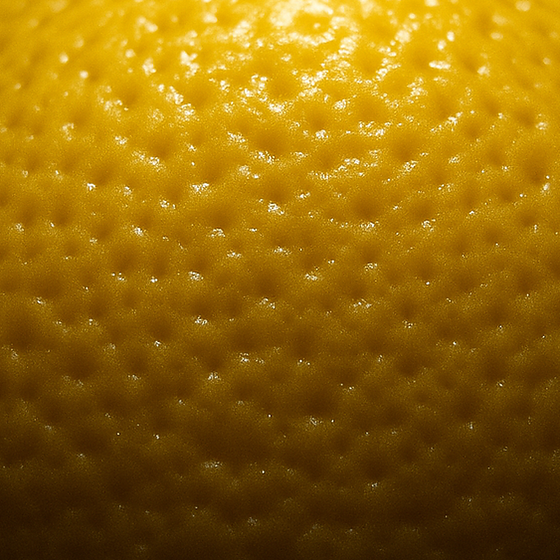
Korica limuna

PrirodnaCITRUSNI MIRISIcitrusni · svež · zelen
Gornje notePiramida
4/5Jačina
24hTrajnost
5Poreklo
Uzorak
Korica limuna kao sirovina za parfeme
Gornje note
Citrus limon
Definicija

Zesty and refreshing, lemon zest adds a bright citrus note to perfumes.

CITRUSNI ZELEN SLADAK BILJNI TOPAO SVEŽ
lemon peel, lemon oil
Type
Sirovina
Olfactive family
Citrusni
Source
fruit peel
Chemical class
complex natural (expressed oil)
Instrumenti
Piramida
GGornje note
SSrednje note
BBazne note
4/5Jačina
Visoka
jačina mirisa
Trajnost na mirisnoj traci
24sati
1 h6 h24 h3 d7 d400 h
Zemlje proizvođači
Italija (Sicilija, Kalabrija) Španija Argentina Sjedinjene Američke Države (Kalifornija) Francuska (Gras)

Miris

Lemon zest has a bright and tangy aroma that is unmistakably fresh and bracing. It has a sharp citrus quality that can be likened to biting into a ripe lemon. The initial impression is clean and crisp, with a hint of sweetness that balances its acidity.

Scent Evolution

As the scent develops, the sharpness of lemon zest softens slightly. The brightness persists, but it becomes layered with subtle green and herbal undertones. This evolution has the complexity of lemon zest.

Signature Accords

After a day on a blotter, lemon zest maintains its freshness while integrating with other notes. The citrus character remains evident, but it may take on a slightly warmer aspect as it melds with sweeter or woodier base notes. This lasting quality enhances its versatility.

Teroar i oblici

Detaljno

Lemon zest in perfumery is the cold-pressed peel oil of Citrus limon (CAS 8008-56-8) — the same expressed material as the culinary 'zest' produced by rasping the outer yellow layer of the rind. The oil is captured by mechanical pressure on the rind's oil glands, with no heat; the volatile chemistry survives the process intact.

Explore all seven extraits in the Discovery Set.

Chemistry

Lemon peel oil is limonene-dominant (~65–75%, CAS 5989-27-5) [A], with γ-terpinene (~6–11%), β-pinene (~6–12%), citral (geranial + neral, ~2–5%), neral and geranial each providing the lemon-aldehydic angle, and small fractions of citronellal, linalool, geraniol and α-pinene. The phototoxic furocoumarin bergapten is present at modest levels — IFRA limits apply to expressed lemon oil in leave-on products.

Sources & Notes

[A] PubChem CID 22311 — d-limonene, CAS 5989-27-5. The dominant terpene of lemon peel oil. pubchem.ncbi.nlm.nih.gov/compound/22311.

Dobijanje i hemija

Način dobijanja

Cold pressing

Formula
Limonene C₁₀H₁₆ (major component, 60–70%) · Citral C₁₀H₁₆O
CAS
84929-31-7
Botanički naziv
Citrus limon
Izgled
colorless to pale yellow liquid
Jačina mirisa
Visok
Trajnost
24 hours
Sinonimi
lemon peel, lemon oil
Status prema standardima IFRA
Ograničeno

Restricted. Expressed lemon oil is phototoxic due to furocoumarin content (bergapten, oxypeucedanin); IFRA limits use in leave-on products unless furocoumarin-free (FCF) grade is used.

Fizička svojstva
Relativna gustina
0.79000 to 0.84000 @ 25.00 °C.
Indeks prelamanja
1.36000 to 1.37000 @ 20.00 °C.

U parfemima

In perfumery, lemon zest is primarily used as a top note, providing an immediate burst of freshness that can invigorate a fragrance. Its bright and cheerful scent is excellent for opening a composition, setting a lively tone that captures attention. It can also harmonize well with floral notes, adding a refreshing lift to bouquets. The use of lemon zest in fragrances can create a sense of cleanliness and brightness, making it particularly popular in summer scents and those designed to carries a feeling of rejuvenation. Its smooth blending ability with a wide variety of other notes makes it a staple in many perfumers' creations, underscoring its importance in fragrance formulation.

Uloga u formuli
01modifikator
02okosnica
03nota potpisa
04sredstvo za podizanje
05sirovina za stapanje
Oblici na tržištu
ulje dobijeno hladnim ceđenjem

Pogledajte i

8 nota