Smirna

PrirodnaSMOLE I BALZAMIsmolast · gorak · dimni
Bazne notePiramida
3/5Jačina
—Trajnost
5Poreklo
Uzorak
Smirna kao sirovina za parfeme
Bazne note
Commiphora myrrha (Nees) Engl.
Definicija

Myrrh is an oleo-gum-resin obtained from the stem of different species of Commiphora. It has a balsamic odor.

ZEMLJAN DIMNI ZAČINSKI SLADAK AMBRAST TOPAO SUV MEDICINSKI
Somali myrrh, herabol myrrh, common myrrh
Type
Sirovina
Olfactive family
Smolasti
Source
resin (oleogum)
Chemical class
oleo-gum-resin
Instrumenti
Piramida
GGornje note
SSrednje note
BBazne note
3/5Jačina
Srednja
jačina mirisa
Zemlje proizvođači
Etiopija Kenija Oman Somalija Jemen

Miris

The aromatic resins produced by the stem-bark of Commiphora species are characterized as having a nicely bitter taste with a slight irritable balsamic smell. Myrrh has a peculiar odor resulting from furano-sesquiterpenes. Myrrh is a fragrant gum resin that is similar to frankincense.

Klase i odležavanje

Detaljno

Commiphora myrrha is a tree in the family Burseraceae. It is one of the primary trees used in the production of myrrh, a resin made from dried tree sap. The tree is indigenous to Somalia, the Somali regions of Ethiopia and Kenya, Djibouti, Eritrea and parts of the Arabian Peninsula (Yemen and Oman). Somalia is the largest producer of both myrrh and frankincense.

Explore all seven extraits in the Discovery Set.

The tree and the resin

The tree thrives well in the arid and semi-arid regions. It grows at an elevation of approximately 250 to 1,300 m, with a yearly mean rainfall of about 23 to 30 cm. Commiphora myrrha is very spiny and it grows to a height of about 5 m. The leaves of Commiphora myrrha are a greyish-green colour with a papery texture. Its smooth, brown fruit is about the same size as the flowers, and is shaped like an egg.

When a cut on a tree penetrates through the bark and into the sapwood, the tree secretes a resin. Myrrh gum, like frankincense, is such a resin. Myrrh gum is commonly harvested from trees of the genus Commiphora. It is commonly extracted from the species Commiphora myrrha, Commiphora africana, Commiphora erythraea, Commiphora gileadensis, Commiphora habessinica, Commiphora hodai, Commiphora quadricincta, Commiphora schimperi, and Commiphora truncata.

The gum is yellowish and may be either clear or opaque. It darkens deeply as it ages, and white streaks emerge. Meetiga, a trade name for Arabian myrrh, is gummier and more brittle than the Somali variety and does not have the latter's white markings. Its taste is bitter and acrid. With water, myrrh forms an emulsion.

Chemistry

Myrrh contains 2-8% volatile oil (myrrhol), 23-40% resin (myrrhin), 40-60% gum, and a bitter principle of 10-25%. The major composition of terpenes in myrrh is furano-sesquiterpenoids. Furanodienes such as curzerene are sources of the fragrance emitted by myrrh and of its analgesic property.

The volatile oil from Commiphora molmol is thick and has a pale yellow color. Furanoeudesma-1,3-diene was the main component among the compounds isolated from the n-hexane extract of the essential oil of Commiphora molmol; furanodiene and β-elemene were also isolated from it. Furanoeudesma-1,3-diene is a colorless, unstable liquid. It can be rapidly auto-oxidized in air to give a resinous substance. Components of Commiphora molmol include cadinene, elemol, eugenol, cuminaldehyde and numerous furanosesquiterpenes.

The chemistry of myrrh resin is not completely elucidated. The resin is generally classified into a bigger ether soluble fraction and a smaller insoluble fraction. The ether soluble fraction consists of α-, β- and γ-commiphoric acid, esters of a resin acid, commiphorinic acid, and two phenolic resins, α- and β-heerabomyrrhol. Triterpenoids were the most biologically active compounds identified in resin of species of Commiphora. Phytochemical studies have shown that myrrh contains terpenoids, diterpenoids, triterpenoids, and steroids.

Uses

Myrrh is still used for ceremonial incense and anointing in a number of nations, including Somalia, Ethiopia, Sudan, and Yemen. It is commonly used today in mouthwash and toothpaste. Resin from Commiphora myrrha is an important source of myrrh, which adds flavour to meat products, desserts, soft drinks, gum and sweets. Myrrh gum has often been claimed to reduce the symptoms of indigestion, ulcers, colds, cough, asthma, respiratory congestion, arthritis, and cancer, although more good scientific evidence is needed to support these uses.

The oleo-gum-resins of a number of other Commiphora species are also used as perfumes, medicines and incense ingredients. Fragrant myrrh beads are made from the crushed seeds of Detarium microcarpum, an unrelated West African tree.

Zanimljivosti

Chemists and pharmacologists at the University of Florence tested three main compounds of myrrh and found that two of them, furanoeudesma-1,3-diene and curzerene, had pronounced analgesic effects. Additional tests suggested that these compounds interact with the opioid receptors in the brains of the mice, decreasing the sensation of pain.

Dobijanje i hemija

Način dobijanja

Myrrh is harvested by repeatedly cutting the trees to bleed the gum, which is waxy and coagulates quickly. After the harvest, the gum becomes hard and glossy. From the stem of Commiphora myrrha, the oleoresin oozes from incisions in the bark and dries into small clumps of sap. Solvent extraction of gum myrrh with 90% alcohol yielded 27-60% crude polysaccharide.

Formula
Complex natural mixture (key constituents: furanoeudesma-1,3-diene C₁₅H₁₈O; curzerene C₁₅H₂₂O)
CAS
8016-37-3
Botanički naziv
Commiphora myrrha (Nees) Engl.
Izgled
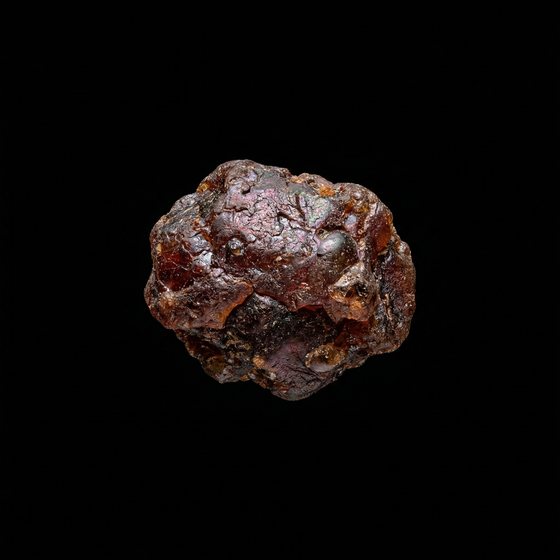
reddish brown mass, covered with a brownish yellow dust
Jačina mirisa
srednji
Sinonimi
Somali myrrh, herabol myrrh, common myrrh
Status prema standardima IFRA
Pogledajte napomenu

No IFRA Standard for the material itself (51st Amendment)

Fizička svojstva
Tačka paljenja
> 93.33 °C (> 200 °F), TCC
Relativna gustina
0.988-1.017 @ 25 °C
Indeks prelamanja
1.517-1.528 @ 20 °C

U parfemima

Myrrh has been used in incense and perfume since ancient times. The essential oil of Commiphora myrrh has applications in cosmetics, aromatherapy, and perfumery. Its use as a fragrance in incense has extended to other cosmetic products, such as mouthwash, soaps, and perfumes. Myrrh essential oils are used as an adorning agent, incense, and bioactive agents. Myrrh is mentioned as a rare perfume in several places in the Hebrew Bible.

Uloga u formuli
01fiksativ
02modifikator
03okosnica
04nota potpisa
05sirovina za stapanje
Oblici na tržištu
eterično ulje apsolut CO2 ekstrakt rezinoid

Pogledajte i

8 nota