Sandalovina iz Majsora

PrirodnaDRVA I MAHOVINEdrvenast · kremast · topao
Bazne notePiramida
3/5Jačina
—Trajnost
1Poreklo
Uzorak
Sandalovina iz Majsora kao sirovina za parfeme
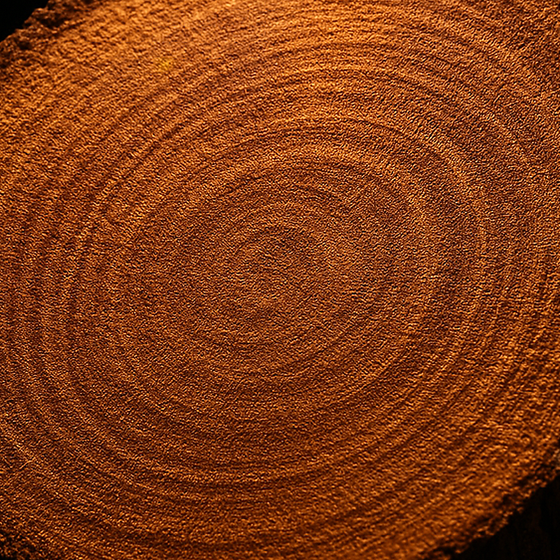
Bazne note
Santalum album
Definicija

Mysore sandalwood is the oil of Santalum album, or Indian sandalwood, extracted in the Mysore district of Karnataka, India, and sold under a trademarked name.

DRVENAST CVETNI SLADAK BALZAMSKI TOPAO KREMAST
Indian sandalwood, East Indian sandalwood
Type
Sirovina
Olfactive family
Drvenasti
Source
heartwood
Chemical class
essential oil
Instrumenti
Piramida
GGornje note
SSrednje note
BBazne note
3/5Jačina
Srednja
jačina mirisa
Zemlje proizvođači
Indija

Miris

Sandalwood oil has a woody-floral scent. Under certain conditions it can also have a creamy or even pickled aroma.

Detaljno

Origin and registration

Mysore Sandalwood Oil is registered for protection as a geographical indication under the TRIPS agreement. In 2006 it was listed under the GI Act 1999 of the Government of India as Mysore Sandalwood Oil. The heartwood of the tree gives its fragrance, and the outer sapwood is unscented. The trunk of the tree starts to develop its fragrance after about 10 years of growth, but is not ready to harvest until after 20.

Composition and quality

Sandalwood oil contains more than 90% sesquiterpenic alcohols, of which 50-60% is α-santalol. β-santalol comprises 20-25%. The ISO standard for S. album oil, ISO 3518:2002, requires 41-55% α-santalol and 16-24% β-santalol. In 1942 Mysore sandalwood oil was assessed as having an assured minimum of 90% santalol.

Supply, price and substitutes

Mysore sandalwood oil was considered one of the best of the many varieties of sandalwood oil in 1938. The sandalwood oil produced in Mysore accounted for 70% of the world's sandalwood production in 1996. Indian sandalwood production declined from approximately 4,000 tonnes per year in the 1960s to around 350 tonnes per year in 2014. In Karnataka, private cultivation was permitted in 2001. The Indian government has placed a ban on the export of the timber. As of 2020, Indian sandalwood oil was priced at about US$2,500 per kg and Australian sandalwood oil at around US$1,500 per kg.

Because the wood is so rare and expensive, cosmetic companies use synthetic substitutes of similar structure and scent. Ebanol, Firsantol and Sandalore are among the common synthetic substitutes.

Explore all seven extraits in the Discovery Set.

—

Related: Bacdanol · Firsantol · Indian Sandalwood · Paraguayan Green Sandalwood · Sandalore · Sandalwood · Sandela · Santamanol

Zanimljivosti

At their peak, the facilities in Bangalore and Mysore produced roughly 2,800 tons of sandal oil per annum, a 350-fold increase from about 8 tons per year in 1916. A survey in 1974 revealed that only 350,000 sandal trees were still standing and that little more than 1% of them were mature enough for harvest.

Dobijanje i hemija

Način dobijanja

Sandalwood oil is obtained by steam distillation of chips and billets cut from the heartwood. The oil is distilled from the wood of the entire tree, including stump and roots. Indian sandalwood requires removal of the sapwood before distillation. The essential oil is found only in the central portion of the trunk, the heartwood, and in the roots. S. album has to be cut down completely for oil distillation.

Formula
Complex natural mixture (key constituents: α-santalol C₁₅H₂₄O; β-santalol C₁₅H₂₄O)
CAS
8006-87-9
Botanički naziv
Santalum album
Jačina mirisa
srednji
Sinonimi
Indian sandalwood, East Indian sandalwood
Status prema standardima IFRA
Pogledajte napomenu

No IFRA Standard for the material itself (51st Amendment)

Fizička svojstva
Tačka ključanja
276 °C @ 760 mm Hg
Tačka paljenja
> 200 °F
Relativna gustina
0.970 to 0.978 @ 25 °C
Indeks prelamanja
1.498 to 1.512 @ 20 °C

U parfemima

Mysore sandalwood oil is used as a blender fixative in the blending of many popular perfumes. Sandalwood oil is added to soaps, cosmetics and perfumes, usually combined with floral, resinous and spicy notes. It pairs well with other wood or floral scents such as violet, rose, tuberose, clove, and oakmoss. It is also used as a mild food flavouring.

Uloga u formuli
01modifikator
02okosnica
03nota potpisa
04sirovina za stapanje
05graditelj volumena
06fiksativ
Oblici na tržištu
eterično ulje

Pogledajte i

8 nota