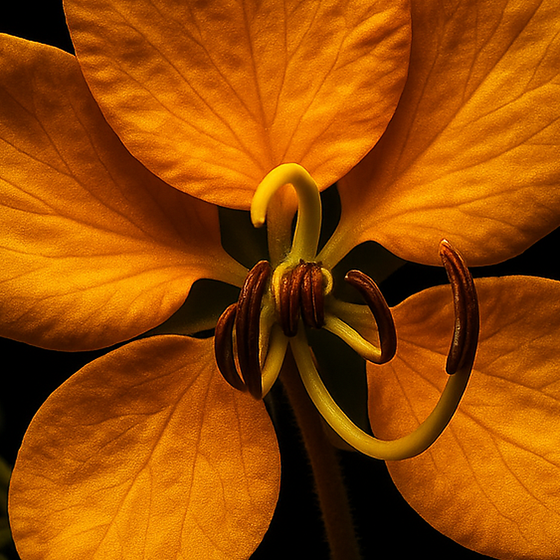
Kasija (orange cassia tree)

PrirodnaZAČINIcitrusni · drvenast · začinski

Sedam parfemaJedan od njih vas posmatra

Srednje notePiramida
3/5Jačina
160hTrajnost
3Poreklo
Uzorak
Kasija (orange cassia tree) kao sirovina za parfeme
Srednje note
Cinnamomum cassia
Definicija

Warm cinnamon bark with a citrus tilt. Cassia is cinnamon's bolder, less clean cousin -- sharper, sweeter, more direct.

Floral
95
Vert
94
Doux
56
Poudré
44
Fruité
33
Boisé
24
Cassia, Chinese Cinnamon
Type
Sirovina
Olfactive family
Začinski
Source
fruit peel
Chemical class
complex natural (essential oil)
Instrumenti
Piramida
GGornje note
SSrednje note
BBazne note
3/5Jačina
Srednja
jačina mirisa
Trajnost na mirisnoj traci
160sati · 7 dana
1 h6 h24 h3 d7 d400 h
pri 100 %
Zemlje proizvođači
Kina Vijetnam Indonezija

Miris

Hot, sweet, and assertively spicy. More aggressive than true cinnamon -- less subtle, more candy-like, with a raw cinnamaldehyde sharpness. The sweetness is immediate and direct, without the delicate complexity of Ceylon cinnamon. A faint woody-balsamic undertone from the bark. This is the cinnamon of red-hot candies and spiced teas, not of French patisserie.

Teroar i hemotipovi

Detaljno

Orange cassia (Cinnamomum cassia) is a persistent tree native to southern China whose bark produces an essential oil dominated by cinnamaldehyde (75-90%). The 'orange' modifier in this entry likely references a cassia-citrus blend or the orange-tinged bark col or, as cassia itself has no inherent citrus character.

Cassia is often confused with true cinnamon (Cinnamomum verum/zeylanicum), but the two differ significantly: cassia is stronger, sharper, and sweeter, with a higher cinnamaldehyde content and a thicker, rougher bark. It is the cinnamon sold in most North American supermarkets and the dominant cinnamon in Chinese, Korean, and Vietnamese cuisine.

In perfumery, cassia oil provides a bold, warm spice note. It is less clean than true cinnamon -- rawer, more assertive, with a candy-like sweetness that true cinnamon lacks. The high cinnamaldehyde content makes it a skin sensitizer at strengthens concentrations, requiring careful dosing.

Explore all seven extraits in the Discovery Set.

—

Related: Accord Eudora · African Marigold · Alpha Amylcinnamaldehyde · Alyssum · Angels Trumpet · Aquaflora · Ashoka Flower · Aurantiol

Dobijanje i hemija

Način dobijanja

Steam distillation of the bark of Cinnamomum cassia. Oil contains 75-90% cinnamaldehyde. Major production: southern China (Guangxi, Guangdong). Also produced from leaves, which yield a slightly different oil profile.

Formula
Complex mixture (no single formula)
CAS
8007-80-5
Botanički naziv
Cinnamomum cassia
Izgled
yellow to yellow brown clear oily liquid
Jačina mirisa
Srednji
Trajnost
160 hours at 100.00%
Sinonimi
Cassia, Chinese Cinnamon
Status prema standardima IFRA
Ograničeno

Restricted (contains cinnamaldehyde, a known sensitizer; usage limits apply per IFRA 49th Amendment)

Fizička svojstva
Tačka ključanja
266.00 °C. @ 760.00 mm Hg
Tačka paljenja
> 200.00 °F. TCC ( > 93.33 °C. )
Relativna gustina
1.04500 to 1.06300 @ 25.00 °C.
Indeks prelamanja
1.60200 to 1.61400 @ 20.00 °C.

U parfemima

Cassia functions as a heart note in Amber, spicy, and gourmand compositions. Its high cinnamaldehyde content provides bold spice warmth. IFRA restricts concentration due to sensitization risk. Works well with vanilla, clove, nutmeg, and amber materials. Used in traditional Amber accords alongside labdanum and benzoin.

Uloga u formuli
01modifikator
02graditelj volumena
03svežina
Oblici na tržištu
eterično ulje

Pogledajte i

5 nota