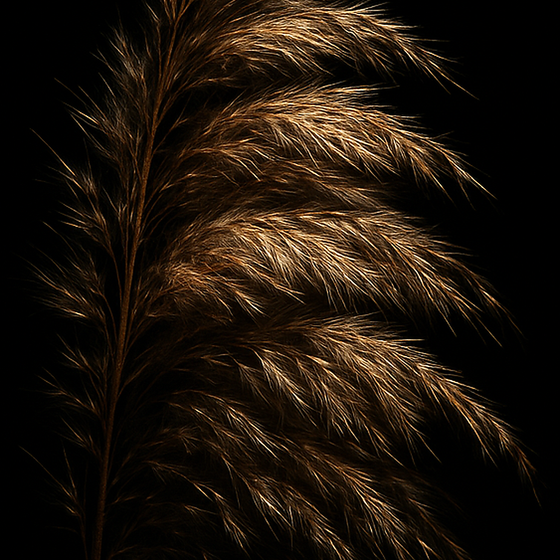
Trska

AkordZELENE NOTE, BILJE I FUŽERIsvež · zelen · zemljan
Srednje notePiramida
3/5Jačina
—Trajnost
·Poreklo
Uzorak
Trska kao sirovina za parfeme
Srednje note
Phragmites australis
Fantazijska/konceptualna
Definicija

Dry, hollow, and faintly sweet — the smell of sun-dried river grass. Reed carries wetl and margins, not water itself: papery stalks, warm starch, and the quiet rustle of Phragmites in wind.

CVETNI ZELEN ZEMLJAN BILJNI SVEŽ
CATTAIL
Type
Akord
Olfactive family
Aromatični
Source
leaves and flowering tops
Instrumenti
Piramida
GGornje note
SSrednje note
BBazne note
3/5Jačina
Srednja
jačina mirisa
Zemlje proizvođači
Kosmopolitska vrsta: raste na svim kontinentima osim Antarktide

Miris

Dry, papery, and faintly starchy — sun-baked grass stalks rather than fresh-cut lawn. Less sharp than galbanum, less watery than lotus, less green than fig leaf. A quiet, almost transparent note that suggests warm marshland air without any specific green sharpness. The sweetness is minimal — warm starch, not sugar. The dryness is the dominant character: hollow stems, rustling leaves, the vegetal equivalent of parchment.

Detaljno

Reed in perfumery captures the margin between water and land — the dry, papery, faintly sweet smell of sun-dried marsh grass. It is not an aquatic note (that territory belongs to water lily, lotus, Calone). It is not a green note in the sharp, galbanum sense. It is specifically the smell of dried stalks: warm starch, hollow stems, the rustling papery quality of Phragmites swaying in a breeze.

No commercial extract of reed exists. The note is a compounded accord, built from dry-green molecules (cis-3-hexenol at low, faded doses), starchy-papery materials (Cashmeran for diffuse warmth, methyl laitone or Habanolide for a clean, textile-like dryness), and grassy-woody undertones (vetiver for rooty depth, lemongrass traces for a hay-like sweetness). Some formulations add a whisper of aquatic molecules — Calone or Hedione — to place the reed near water without submerging it.

The note functions as atmospheric scenery. It sets a territory rather than describing a single material: marshland, riverbank, estuary. It pairs naturally with water-lily, iris, vetiver, and clean musks in compositions that aim for quiet, naturalistic beauty rather than projection or drama.

Explore all seven extraits in the Discovery Set.

—

Related: Alpha Pinene · Angelica · Angelica Root · Angelica Root Oil · Artemisia · Barrenwort · Beachheather · Behini Tree

Zanimljivosti

Phragmites australis (common reed) is a widely distributed plants on Earth, found on every continent except Antarctica. A single stand can spread via rhizomes to cover several hectares. The stalks have been used for thatching, paper-making, and musical instruments (clarinet and oboe reeds are cut from Arundo donax, a related species) for at least 5,000 years.

Dobijanje i hemija

Način dobijanja

No commercial essential oil or absolute of reed (Phragmites australis) exists in standard perfumery supply chains. The note is a compounded accord. Some artisanal perfumers create tinctures by macerating dried Phragmites stalks in ethanol, yielding a faint, starchy, dry-green liquid, but this is not commercially standardized.

Formula
N/A — olfactory accord
CAS
N/A — olfactory accord
Botanički naziv
Phragmites australis
Izgled
Colorless to pale green liquid
Jačina mirisa
Srednji
Sinonimi
CATTAIL
Status prema standardima IFRA
Pogledajte napomenu

Not applicable: accord or concept, not a single material

Fizička svojstva
Nota
N/A — olfactory accord / concept

U parfemima

Reed is an atmospheric accord note in perfumery, evoking the vegetal, papery quality of dried Phragmites or cattail stalks. It functions as a heart-to-base green note that is drier and less sharp than galbanum, less aquatic than water-lily, and more specifically 'marshland' than generic green accords. The note is typically constructed using dry-green molecules (cis-3-hexenol at low doses for a faded-green impression), papery-starchy notes (Cashmeran, methyl laitone), woody-grassy materials (vetiver, lemongrass traces), and sometimes a clean aquatic undercurrent (Calone at trace levels, or Hedione). Reed accords appear in aquatic-naturalistic compositions, garden-themed fragrances, and minimalist green structures where the goal is territory rather than bouquet.

Uloga u formuli
01modifikator
02nota potpisa
03sredstvo za podizanje
04sirovina za stapanje
05naturalizator
06graditelj volumena
Oblici na tržištu
standardni oblik

Pogledajte i

7 nota