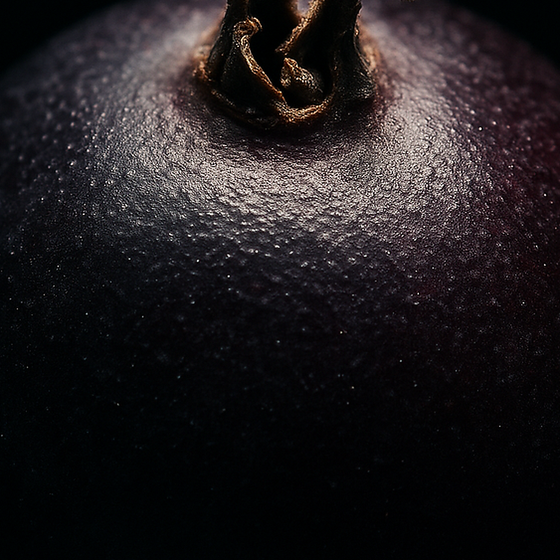
Sarsaparilla is a common name of Smilax ornata, a perennial trailing vine with prickly stems that is native to Mexico and Central America. Smilax ornata belongs to the family Smilacaceae and has the synonym Smilax regelii. The name is used specifically for the Neotropical S. ornata and as a catch-all term in particular for American species of Smilax.
The Genus Smilax
Smilax is a genus of about 300-350 species, found in the tropics and subtropics worldwide. They are climbing flowering plants, many of which are woody and/or thorny. On their own, Smilax plants grow as shrubs that form dense impenetrable thickets. They can also grow over trees and other plants up to 10 m high, their hooked thorns letting them hang onto branches. The genus includes both deciduous and evergreen species. The leaves are heart shaped and vary from 4-30 cm long in different species. Common names of the genus include catbriers, greenbriers, prickly-ivys and smilaxes. Greenbrier is dioecious, and the plants flower in May and June. A pollinated plant produces a bright red to blue-black spherical berry about 5-10 mm in diameter that matures in autumn.
Chemistry
Steroidal saponins are characteristic bioactive components of the genus Smilax. Sarsasapogenin glycosides were isolated from the root of Smilax ornata. Sarsasapogenin has the molecular formula C₂₇H₄₄O₃. Parillin and sarsaparilloside are constituents of sarsaparilla. In all, 104 steroidal saponins have been reported from 20 different Smilax species. On the basis of their sapogenin structures they fall into five groups: spirostane, isospirostane, furostane, pregnane and cholestane. Sarsasapogenin glycosides were also isolated from the root of Smilax aspera subsp. mauritanica. Smilagenin has the same molecular formula as sarsasapogenin, C₂₇H₄₄O₃, and a molecular weight of 416.6. Astilbin is a main flavonoid among Smilax species. Other compounds reported from various greenbrier species are parillin (also called sarsaparillin or smilacin), sarsapic acid, sarsapogenin and sarsaponin. Steroidal saponins of the genus have shown significant antifungal, cytotoxic and anti-inflammatory activities, and they inhibit cAMP phosphodiesterase.
Names
Common names of Smilax ornata include sarsaparilla, Honduran sarsaparilla and Jamaican sarsaparilla. Smilax aristolochiifolia is known as Mexican sarsaparilla, and Smilax glyciphylla as sweet sarsaparilla. In Spanish the plant is called zarzaparrilla, from zarza, meaning bramble, and parrilla, meaning little grape vine.
Uses
Smilax ornata is used as the basis for a soft drink known as sarsaparilla. Sarsaparilla is sometimes considered to be a type of root beer. The roots of Smilax may also be used in soups or stews. The young shoots can be eaten raw or cooked and are said to taste like asparagus, and the berries can be eaten both raw and cooked. The powdered roots of Jamaican sarsaparilla are used as a traditional medicine for gout in Latin American countries.
Sassafras and Safrole
All parts of the plant are aromatic and spicy. Filé powder, a spicy herb made from the dried and ground leaves of the sassafras tree, was adopted into Louisiana Creole cuisine. Safrole also occurs in filé, nutmeg, mace, cinnamon, anise, black pepper and sweet basil, in concentrations low enough to be deemed safe.
A Note on Identity
Indian sarsaparilla (Hemidesmus indicus) belongs to the family Apocynaceae. It is a species of plant found in South Asia, and its root is a substitute for sarsaparilla. The major component of the essential oil of the roots is 2-hydroxy-4-methoxybenzaldehyde, a positional isomer of vanillin. 2-Hydroxy-4-methoxybenzaldehyde has the formula C₈H₈O₃.