


Цвіт мигдалю
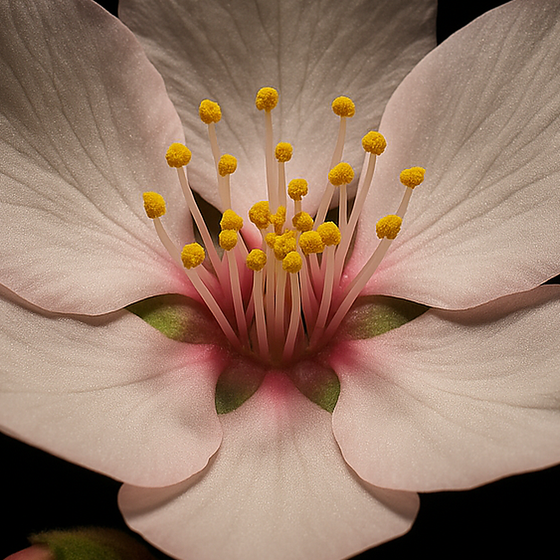
Almond trees thrive in Mediterranean climates with warm, dry summers and mild, wet winters. The flowers are fragrant.
- Type
- Акорд
- Olfactive family
- Квіткові
- Source
- flower
Запах
Докладно
Цікавий факт
The almond blossom supplied a model for the menorah which stood in the Holy Temple. In Numbers 17, Levi is chosen from the other tribes of Israel by Aaron's rod, which brought forth almond flowers.
Отримання й хімія
Спосіб отримання
Bitter almond oil, the material behind the almond note, is obtained from the kernels of bitter almond and related fruit. The fixed oils are first cold-pressed from the crushed kernels, and the press cake is macerated in water for 12 to 20 hours so that the amygdalin is broken down enzymatically. The mixture is then steam distilled, giving about 0.5 to 0.7% of essential oil. The crude oil contains 2-4% hydrogen cyanide, which is removed by washing with alkaline solutions of iron(II) salts, and redistillation then gives an oil free from hydrogen cyanide. Bitter almonds yield only about 0.6% of oil, so apricot kernels, which yield 1.2%, are the preferred starting material. Synthetic benzaldehyde is produced mainly by liquid phase chlorination and oxidation of toluene.
- Ботанічна назва
- Prunus amygdalus
- Зовнішній вигляд
- White to pale pink flowers
No IFRA Standard for the material itself (51st Amendment)
У парфумерії
Bitter almond oil, which contains benzaldehyde, is used as a food flavouring and in perfume. Piperonal is commonly used to add vanilla or almond nuances, generally imparting balsamic, powdery and floral aspects to a scent's character. In perfumery, 4-anisaldehyde is particularly used in hawthorn, lilac and cherry blossom accords because of its good tenacity. The combination of α-ionone and β-ionone is used with other components in perfumery and flavouring to recreate the scent of violets.
Див. також
4 ноти