Ambroxan

СинтетичнийМУСКУС, АМБРОВИЙ АКОРД, ТВАРИННІ ЗАПАХИдеревний · амбровий · мускусний
Базові нотиПіраміда
4/5Сила
1годСтійкість
—Походження

Редакційна приміткаМи не маємо жодних прав на цей матеріал, його назву чи торговельну марку. Ця стаття глосарію є незалежною редакційною журналістикою й опублікована на підставі свободи вираження поглядів.
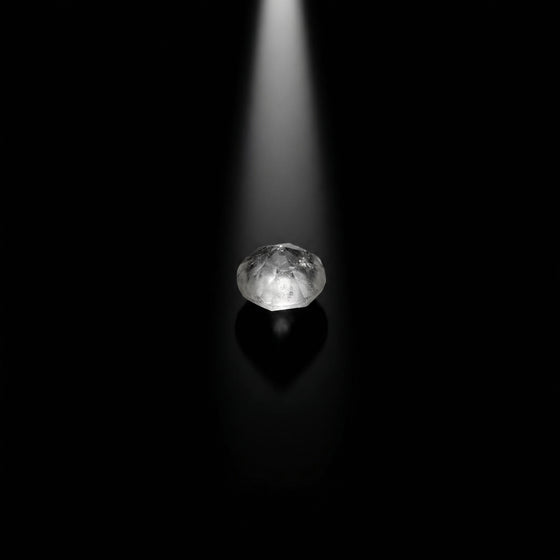
Зразок
Ambroxan як парфумерна сировина
Базові ноти
Визначення

Ambroxan, the brand name by which ambroxide is widely known, is a terpenoid and one of the key constituents responsible for the odor of ambergris. Its scent has woody, musky and slightly salty nuances.

ДЕРЕВНИЙ АМБРОВИЙ МУСКУСНИЙ ТЕПЛИЙ ЧИСТИЙ СОЛОДКИЙ
Type
Складник
Olfactive family
Амброві й мускусні
Source
Synthesized from sclareol (clary sage)
Chemical class
Terpenoid
Інструменти
Піраміда
ВВерхні ноти
СНоти серця
ББазові ноти
4/5Сила
Висока
інтенсивність запаху
Стійкість на блотері
1годин
1 год6 год24 год3 дн.7 дн.400 год

Запах

The aroma is described as characteristically ambergris, sweet, labdanum, dry, woody, pine, cedar, green and seedy. It is also described as a very clean and warm ambergris note with woody and musky tonalities. The odor of ambergris and of (-)-ambroxide is characterized by descriptors such as amber, woody, green, sweet and marine.

Докладно

Ambroxan is the synthetic isolate of ambergris, the crystalline base of PREMIEREPEAU's Rose Monotone, anchoring rose oxide and lychee against modern vetiver.

Ambroxide is a terpenoid and an autoxidation product of ambrein. Ambrein is a triterpene alcohol and the chief constituent of ambergris, a secretion from the digestive system of the sperm whale. Ambrein itself is odorless.

In the 1940s Stoll and his co-workers identified (-)-Ambrox as the most important constituent of natural ambergris. Stoll made the first synthesis of Ambrox by reducing sclareolide with LiAlH4 and cyclising the resulting diol with acid. Ambroxan was commercialised in the 1970s after extensive research into the key olfactory molecules of natural ambergris.

Ambroxide is insoluble in water and soluble in ethanol. Its density is 0.939 g/cm³.

Ambroxan provides the radiant, skin-scent finish of Rose Monotone, amplifying crystalline rose oxide and lychee with its diffusive mineral warmth.

Relation to ambergris

Freshly produced ambergris has a marine, fecal odour, and it acquires a sweet, earthy scent as it ages. Oxidation of the relatively scentless ambrein produces ambroxide and ambrinol, the main odour components of ambergris. Perfume makers have highly valued ambergris as a fixative that makes a scent last much longer, but synthetic ambroxide has mostly replaced it. Persians, Turks and Arabs were the primary consumers of ambergris and used it for perfuming, while the Japanese and Chinese used it as a fixative to prolong other fragrances rather than for its odor.

Human perception

The share of people homozygous for the insensitive OR7A17 allele varies from 0% among the Luhya in Webuye, Kenya to 50% among Southern Han Chinese in China. Ancient literature documents high regard for the odor of ambergris in Northern Africa, Europe and the Middle East, while its olfactory characteristics were not valued in certain East Asian populations.

Ambrein and ambergris

Ambrein is made in nature from squalene, a common triterpenoid precursor. The enzyme squalene-hopene cyclase turns squalene into the monocyclic 3-deoxyachilleol A, and tetraprenyl-beta-curcumene synthase then converts that compound into the tricyclic ambrein. Ambergris is a solid, waxy, flammable substance of a dull grey or blackish colour, produced in the digestive system of sperm whales. It is presumably made to protect the whale from injuries caused by the sharp beaks of giant squid, a major part of the whale's diet. Lumps usually weigh from 15 grams to 50 kilograms or more. When first expelled it is pale white, sometimes streaked with black, and soft; after months to years of photodegradation and oxidation in the ocean it hardens and turns dark grey or black with a crusty, waxy texture. White crystals of ambrein can be separated from ambergris by heating raw ambergris in alcohol and letting the solution cool. Ambergris is found mainly in the Atlantic Ocean and on the coasts of South Africa, Brazil, Madagascar and other regions, and most commercially collected ambergris comes from the Bahamas. Ambrein has been proposed as the active component behind the supposed aphrodisiac effects of ambergris, and it is thought to have fixative properties for other odorants. It has also been shown to act as an analgesic and to increase sexual behaviour in rats.

The ambroxide molecule

(-)-Ambrox is recognised as the prototype of all ambergris odorants. A second registry number covers the compound without specified stereochemistry, and a database item for that number describes it as a group of stereoisomers. It is also named 8α,12-oxido-13,14,15,16-tetranorlabdane.

The starting material, sclareol

Sclareol is a fragrant compound named after Salvia sclarea, in which it is found. It is an amber-coloured solid with a sweet, herbaceous, balsamic scent, used in perfume manufacture and as a flavouring agent. It is also extracted from the flowers of Cistus creticus, Nicotiana glutinosa and Cleome spinosa. As of 2021, genetic enhancement of sclareol-producing plants was under study to improve yields for fragrance and flavour manufacture. (-)-Sclareol has been used extensively to prepare (-)-Ambrox because it is available commercially at a reasonable price as an extract of Salvia sclarea.

Other synthetic routes

Besides sclareol, the starting materials investigated for commercial syntheses include homofarnesic acid, homofarnesol, monocyclohomofarnesic acid and monocyclohomofarnesol. All the chemical routes reported involve several steps with high processing costs, long reaction times and severe conditions such as high pressure and temperature. In one route the alkoxy radicals of sclareol derivatives undergo a fragmentation to an iodoethyl acetate intermediate, which is converted to ambrox in three more steps in 20% overall yield; it needs stoichiometric iodobenzene diacetate and iodine. Another route reaches ambrox in two steps through the cleavage of an alkoxy radical, in 11-12% overall yield, using 70% hydrogen peroxide with stoichiometric copper acetate and iron sulfate over seven days, and it is considered impractical. In preliminary work, ambrox was detected by accident in 2% yield during the preparation of sclareolide by oxidising sclareol with hydrogen peroxide over a sodium tungstate catalyst. This showed that a one-pot reaction should be possible if a suitable catalyst was chosen. The one-pot method needs only one isolation and chromatographic purification, uses hydrogen peroxide as oxidant with water as the only theoretical by-product, and runs at a catalyst loading of 3%. The ring-closing step of the homofarnesol route is comparable to the cyclization of squalene in the synthesis of steroids. The fermentation route is 100% naturally derived and keeps 100% renewable carbon.

History

References to ambergris go back at least to the 13th century, when Marco Polo documented it. Queen Elizabeth I and Catherine de Medici used ambergris to perfume their gloves. Perfumers valued it as a fixative that gave a lasting scent, helped the ingredients blend and extended the shelf life of a perfume. Ambergris is rare, and once a whale expels it, it often floats for years before reaching land. The slim chances of finding it, together with legal ambiguity, led perfume makers away from ambergris and led chemists to look for alternatives. Kaempfer noted in 1727 that the preferences for the scent of ambergris among East Asian ethnicities differ from those of Arabian ethnicities.

Use as a flavouring

Small amounts (< 0.01 ppm) are used as a flavoring in food. The FDA has approved the addition of ambroxide to food as a flavoring agent.

This note in PREMIEREPEAU. Albâtre Sépia · Gravitas Capitale · Rose Monotone. Sample all seven extraits in the Discovery Set.

Отримання й хімія

Спосіб отримання

Ambroxide is synthesized from sclareol, a component of the essential oil of clary sage. Sclareol is a bicyclic diterpene alcohol found in Salvia sclarea, and it is mainly produced in the glandular trichomes of sage flower calyces. Sclareol is extracted by steam distillation of fresh flowers and then purified by further extraction with an organic solvent. Sclareol is the most common starting material for manufacturing ambroxide. In the industrial route, the side chain of sclareol is oxidatively degraded to give sclareolide, sclareolide is reduced to ambradiol, and ambradiol is cyclodehydrated. This route has disadvantages, such as expensive or toxic reagents, elaborate operation, long reaction time and massive pollutant discharge. A one-pot synthesis from (-)-sclareol using hydrogen peroxide and a quaternary ammonium phosphomolybdate catalyst gave (-)-Ambrox in 20% overall yield. A patented route uses homofarnesol as the raw material and was stated to require 100 times less agricultural surface than the traditional method from clary sage. The last step of that route involves a polyene cyclization. A biotechnological process for making ambroxide, sold as Ambrofix, starts with fermenting sustainably sourced sugar cane and requires a hundred times less land per kilogram than the traditional production method.

Формула
C₁₆H₂₈O
CAS
6790-58-5 ((-)-ambroxide); 3738-00-9 (unspecified stereochemistry)
Зовнішній вигляд
Colourless solid
Сила запаху
Висока
Стійкість
1 month
Статус IFRA
Див. примітку

No IFRA Standard for the material itself (51st Amendment)

Фізичні властивості
Температура кипіння
120 °C @ 1.40 mm Hg
Температура плавлення
75 °C
Температура спалаху
161 °C (322 °F)
Показник заломлення
1.48

У парфумерії

Ambroxide is used in perfumery for creating ambergris notes and as a fixative. Ambroxide is highly tenacious and substantive, clinging to skin, fabric and hard surfaces and persisting for many hours, which is the basis of its role as a fixative. Its most prominent use is in fine fragrance, where it serves simultaneously as a base note and a fixative. It enhances volume and body, improves diffusion in the top note and provides exceptional substantivity in the base. It works across masculine, feminine and unisex fragrances, in both fine fragrance and functional applications. Dosage in perfumery ranges from 0.1 to 10%. Its tenacity stays outstanding even at low dosage. It is valuable both as a featured ingredient and as a behind-the-scenes performance booster. Ambroxide is used in consumer products ranging from laundry detergents and shampoos to fine fragrances. In PREMIEREPEAU’s compositions, ambroxan appears as the crystalline base of Rose Monotone (/products/rose-monotone-crystalline-lychee-perfume), where it hovers beneath rose oxide and Haitian vetiver. Ambrox Super provides mineral depth in Albâtre Sépia (/products/albatre-sepia-white-truffle-ink-perfume) and the asphalt-vetiver base of Gravitas Capitale (/products/gravitas-capitale-neo-cologne-citron-asphalt-perfume).

Роль у формулі
01модифікатор
02фірмова нота
03сполучний компонент
04формувач об’єму
05свіжість
06фіксатор
Форми випуску
синтетична речовина

Див. також

8 ноти