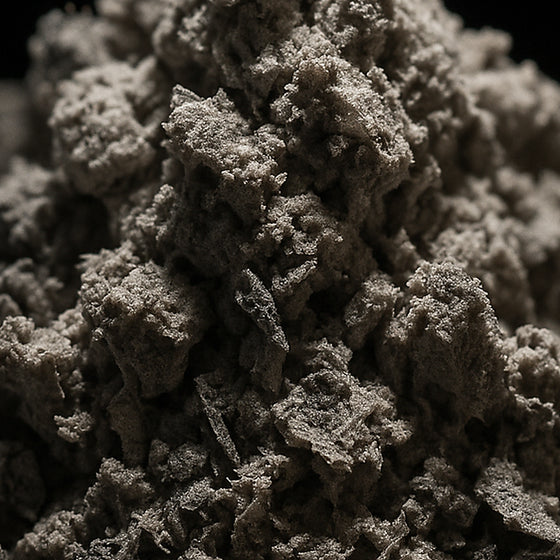
What ash is
Ashes as the end product of incomplete combustion are mostly mineral, but usually still contain an amount of combustible organic or other oxidizable residues. The best-known type of ash is wood ash, as a product of wood combustion in campfires, fireplaces, etc. The darker the wood ashes, the higher the content of remaining charcoal from incomplete combustion. More exactly, ash is every non-aqueous, non-gaseous residue that remains after something burns. Some ashes contain natural compounds that make soil fertile, while others hold chemical compounds that can be toxic but may break down in soil through chemical change and microorganism activity. In analytical chemistry, ash is what is left, neither gas nor liquid, after complete combustion, and measuring it gives the content of minerals such as calcium, sodium, potassium and phosphorus and of metals such as lead, mercury, cadmium and aluminium.
Composition
Wood ash is largely composed of calcium compounds, along with other non-combustible trace elements present in the wood. Much of wood ash contains calcium carbonate (CaCO₃) as its major component, representing 25% or even 45% of total ash weight. Wood ashes also contain between 20% and 50% calcium in the form of calcium oxide and are generally rich in potassium carbonate. The pH of ash collected from wood boilers is between 10 and 13, mostly because the oxides of calcium, potassium and sodium are strong bases. Mineral content in ash depends on the species of tree burned, even in the same soil conditions. Some analyses find calcium carbonate as the main constituent and others find calcium oxide instead, which forms at higher combustion temperatures. Ash collected from wood boilers has been found to hold 17-33% calcium as calcium oxide, 2-6% potassium as potassium oxide, 2.5-4.6% magnesium as magnesium oxide and 1-6% phosphorus as phosphorus pentoxide. Typical major elements of wood ash are carbon (5-30%), calcium (7-33%), potassium (3-10%), magnesium (1-2%), manganese (0.3-1.3%), phosphorus (0.3-1.4%) and sodium (0.2-0.5%). The colour of ash comes from small amounts of inorganic minerals such as iron oxides and manganese. Ash from grasses, the grass family in particular, is rich in silica. Spruces contain seven times as much chloride as oaks, and elms twice as much magnesium as Scotch pine. Salts of silicon and calcium are more abundant in bark than in wood, while potassium salts occur chiefly in wood.
Uses
For thousands of years, plant or wood ash was leached with water to yield an impure solution of potassium carbonate. Traditionally, lye was made by leaching wood ashes in water, creating an alkaline liquor rich in potassium carbonate. Wood ash serves as a source of potassium and calcium carbonate, the latter acting as a liming agent to neutralize acidic soils. Wood ash has a very long history of being used in ceramic glazes, where it acts as a flux that reduces the melting point of the glaze. Like soap, ash is alkaline and acts as a disinfecting agent. Because it has a high char content, wood ash can be used as an odor control agent, especially in composting. Calcining the ash should in theory give a compound chemically identical to quicklime, and mixing that with sand or grog and water gives a cement. The leached solution of potassium carbonate could be mixed with oils or fats to make a soft soap or soap-like product. Adding slaked lime to ash lye raises its alkalinity, turning the potassium carbonate into potassium hydroxide, or caustic potash. Lye made from wood ashes was also used by the tribes of the Eastern Woodlands of North America to treat hominy corn by nixtamalization, and in Assam a lye called khar is made from the ashes of banana stems, roots and skins.
Explore all seven extraits in the Discovery Set.