Кораловий вапняк

АкордНАТУРАЛЬНІ Й СИНТЕТИЧНІ, ПОПУЛЯРНІ Й НЕЗВИЧНІбез запаху · мінеральний
Базові нотиПіраміда
—Сила
—Стійкість
—Походження
Зразок
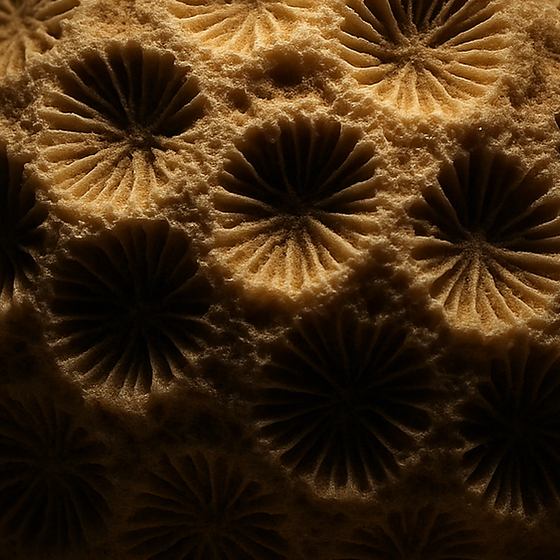
Кораловий вапняк як парфумерна сировина
Базові ноти
Фантазійний/концептуальний
Визначення

Coral reefs are formed of colonies of coral polyps held together by calcium carbonate. Coral Limestone is a carbonate sedimentary rock composed mostly of the minerals calcite and aragonite, which are different crystal forms of calcium carbonate.

КВІТКОВИЙ ЦИТРУСОВИЙ ТЕПЛИЙ СВІЖИЙ СУХИЙ МІНЕРАЛЬНИЙ
Type
Поняття
Olfactive family
Акватичні
Source
Skeletal fragments of marine organisms such as coral
Інструменти
Піраміда
ВВерхні ноти
СНоти серця
ББазові ноти

Запах

Calcium carbonate, the compound of the minerals calcite and aragonite that make up limestone, is odorless.

Докладно

Coral reefs and their skeletons

Coral reefs are formed of colonies of coral polyps held together by calcium carbonate. Unlike sea anemones, corals secrete hard carbonate exoskeletons that support and protect the coral. Coral reefs first appeared 485 million years ago, at the dawn of the Early Ordovician.

A fossilized reef in Florida

The Key Largo Limestone is a geologic formation in Florida and a fossilized coral reef. The limestone includes fossils of corals, mollusks and bryozoans.

Formation

Limestone forms when calcite and aragonite precipitate out of water containing dissolved calcium. This can happen through biological and nonbiological processes, but biological ones, such as the accumulation of corals and shells in the sea, have likely been more important for the last 540 million years. Most grains in limestone are skeletal fragments of marine organisms such as coral or foraminifera, which secrete structures of aragonite or calcite and leave them behind when they die. Coral grains are more common in high-energy environments, characterized by strong currents and turbulence.

Composition

Calcite in limestone is divided into low-magnesium and high-magnesium calcite, with the dividing line placed at a composition of 4% magnesium. Coquina is a poorly consolidated limestone composed of abraded pieces of coral, shells, or other fossil debris. Limestone often contains fossils which provide scientists with information on ancient environments and on the evolution of life.

Uses

Limestone is used as a chemical feedstock for the production of lime used for cement, as aggregate for the base of roads, and as white pigment or filler in products such as toothpaste or paint. It is also used as a soil conditioner and as a popular decorative addition to rock gardens.

Explore all seven extraits in the Discovery Set.

—

Related: Aqual · Aquozone · Calone · Calone 1951 · Crustaceans · Diving Suit · Fish · Iodine

Отримання й хімія

Спосіб отримання

Powdered limestone is made by milling the stone; unlike quicklime and slaked lime, it needs no lime burning in a lime kiln. Lime for farm fields today is often crushed limestone.

Формула
Complex natural mixture (key constituents: calcite CaCO₃; aragonite CaCO₃)
Зовнішній вигляд
Commonly white to gray
Статус IFRA
Див. примітку

No IFRA Standard for the material itself (51st Amendment)

Фізичні властивості
Нота
The density of limestone depends on its porosity, which varies from 0.1% for the densest limestone to 40% for chalk.

У парфумерії

Calone gives the olfactory impression of a fresh seashore through marine and ozone nuances.

Роль у формулі
01none
Форми випуску
limestone rock powder

Див. також

5 ноти