Chocolate Flower

AccordFLOWERSgourmand · floral · earthy
HeartPyramid
—Strength
—Tenacity
2Origins

Editorial noteWe own no rights to this material, its name or its trademark. This entry is independent editorial journalism, published under freedom of expression.
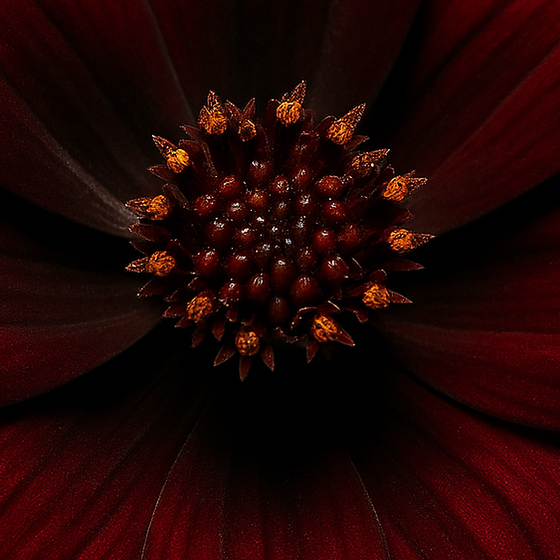
Specimen
Chocolate Flower perfume ingredient
Heart
Berlandiera lyrata
Fantasy/Concept
Definition

Chocolate flower is the common name of Berlandiera lyrata, a wildflower of the daisy family (Asteraceae) native to the southwestern United States and Mexico. Its flowers smell like chocolate.

FLORAL EARTHY SWEET WARM FRESH
chocolate daisy, lyreleaf greeneyes, green-eyed lyre leaf
Type
Accord
Olfactive family
Florals
Subfamily
Chocolate notes
Cluster
Chocolate-like gourmands
Source
flower
Instruments
Pyramid
TTop
HHeart
BBase
Producing countries
Mexico United States

Scent

The plant has a distinct chocolate-like fragrance, especially during the early morning hours. The gray-green foliage has a chocolate aroma. The flower smells like chocolate, and on warm days it fills the air with fragrance.

The Full Story

The plant

Chocolate flower (Berlandiera lyrata), also called chocolate daisy or lyreleaf greeneyes, is a North American species of flowering plant in the family Asteraceae. It is native to the southwestern United States and northern Mexico. Its range runs from extreme southwestern Kansas and western Texas, west to southeastern Colorado and Arizona, and south to Jalisco in central Mexico. It is a velvety-leaved perennial, usually 1 to 2 feet tall. The flower heads have yellow rays surrounding a maroon central disc. The flowers open in the morning and droop in the heat of the day. The mounded foliage is coarse and gray-green. Each flower head is about 4 cm across and carries 5 to 12 yellow ray florets. The fruit is a cypsela, a dry one-seeded fruit.

Name

The name lyreleaf greeneyes refers to the shape of the leaf, which is curved like a lyre, and to the green disc left behind when the ray florets drop off.

The genus

Berlandiera is a genus of flowering plants in the family Asteraceae, found in the United States and Mexico. Its species are known generally as greeneyes.

Habitat and cultivation

Its native habitat includes dry, rocky limestone soils that drain well, and also disturbed places such as roadsides, plains, mesas and grasslands. It is a hardy perennial, cultivated as an ornamental plant. It is grown in gardens for the chocolate-like scent of its flowers. In heavy, wet soils the plant is subject to root rot. Its flowers can be used as a seasoning. The plant is drought-tolerant, grows best in full sun, and attracts pollinators such as bees and butterflies. It is propagated through seeds.

—

Related: Accord Eudora · African Marigold · Alpha Amylcinnamaldehyde · Alyssum · Angels Trumpet · Aquaflora · Ashoka Flower · Aurantiol

Did You Know?

The chocolate odor can also be produced by plucking the ray florets from the flower head. The stamens have a chocolate flavor and are edible. When the plant freezes, its roots keep it alive.

Extraction & Chemistry

Extraction method

For cocoa absolute, the ground beans are contacted with a volatile solvent such as cyclohexane; after filtration and evaporation of the solvent the concrete is dissolved in alcohol, and chilling the alcohol precipitates the cocoa waxes, leaving the absolute.

Botanical
Berlandiera lyrata
Synonyms
chocolate daisy, lyreleaf greeneyes, green-eyed lyre leaf
IFRA status
See note

No IFRA Standard for the material itself (51st Amendment)

In Perfumery

Cocoa absolute goes into gourmand chocolate notes, where it accompanies amber and floral notes and lends them sensuality and a foody facet. The CO2 extract smells of hot melted milk chocolate and is solid at room temperature, which makes the extract tricky to use in perfumes.

Role in the formula
01modifier
02signature note
03blender
04freshness
Available as
synthetic accord fantasy note

See Also

8 notes