Pitahaya

AccordFRUITS, VEGETABLES & NUTSfruity · fresh · sweet

Seven perfumesOne of them is looking at you

HeartPyramid
—Strength
—Tenacity
6Origins

Editorial noteWe own no rights to this material, its name or its trademark. This entry is independent editorial journalism, published under freedom of expression.

Specimen
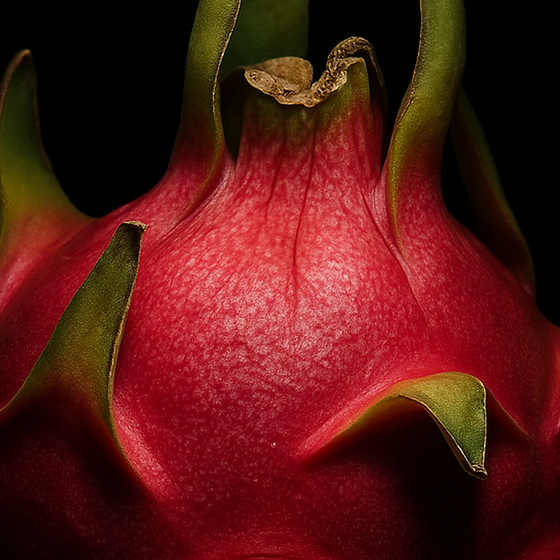
Pitahaya perfume ingredient
Heart
Selenicereus undatus
Definition

Pitahaya, or dragon fruit, is the fruit of several species in the cactus genus Selenicereus, particularly Selenicereus undatus. As a perfumery note it is an accord, a blend built to evoke the scent, and it is mild, juicy and subtly sweet.

FRUITY SWEET JUICY WATERY
Dragon fruit, pitaya, exotic pitaya, Hylocereus undatus
Type
Accord
Olfactive family
Fruity
Subfamily
Tropical fruits
Cluster
Tropical fruit notes
Source
Accord (a blend built to evoke the scent)
Chemical class
olfactory accord
Instruments
Pyramid
TTop
HHeart
BBase
Producing countries
Vietnam China Mexico Colombia Australia Nicaragua

Scent

Dragon fruit has a mild, juicy and subtly sweet tropical fruit note, light and watery with a faint berry tone.

The Full Story

Selenicereus undatus, the white-fleshed pitahaya, belongs to the family Cactaceae and is the most cultivated species of its genus. In 2017, the genus Hylocereus was brought into synonymy with Selenicereus.

The plant climbs by aerial roots and can reach a height of 10 meters or more, growing on rocks and trees. The flowers are scented and nocturnal. The fruit is oblong to oval and red, with white or, more uncommonly, pink pulp and edible black seeds. Besides S. undatus, S. costaricensis has red-skinned fruit with red flesh and S. megalanthus has yellow-skinned fruit with white flesh. The red and purple colors of some Selenicereus fruits are due to betacyanins, a family of pigments that includes betanin.

Origin and Production

Selenicereus undatus is native from Mexico to Honduras. By the turn of the 21st century, the cultivation of dragon fruit had expanded to other regions including China, Colombia, and most of Southeast Asia. Substantial dragon fruit cultivation occurs in Vietnam, China, Mexico, Colombia, several countries of Southeastern Asia, and Australia. Colombia grows Selenicereus megalanthus, and Vietnam produces Selenicereus undatus. The formation of the fruit from pollination to harvest takes 4 to 8 weeks, depending on the temperatures.

Chemistry and Scent Profile

In two pitaya species studied in Turkey, 51 volatile compounds were detected, more of them in the white-fleshed species. In the samples tested there, the volatiles of the flesh were complex mixtures of many components. In six Hylocereus cultivars grown in California, aldehydes accounted for more than 90% of the total volatile amount. The seed oils of red-fleshed and white-fleshed pitaya are similar in fatty acid composition, mainly oleic acid (22%) and linoleic acid (50%).

Culinary Uses

When halved, a raw dragon fruit can be eaten with a spoon. The flowers can be eaten as a vegetable. The juice serves to give flavor and color to drinks, pastries and sweets. The fruit is eaten fresh or made into juice, jellies, marmalades, jams, wine and other beverages. Raw dragon fruit is 84% water and 15% carbohydrates, with negligible protein and fat.

Extraction & Chemistry

Extraction method

The perfumery note is an accord, a blend built to evoke the scent of dragon fruit.

Botanical
Selenicereus undatus
Synonyms
Dragon fruit, pitaya, exotic pitaya, Hylocereus undatus
IFRA status
See note

No IFRA Standard for the material itself (51st Amendment)

In Perfumery

Pitahaya sits among the fruit notes, which range from pear and peach to berries and tropical flesh.

Role in the formula
01modifier
02signature note
03lifting agent
04freshness
Available as
accord

See Also

8 notes