


Roselle
Keywords: floral · fruity · fresh
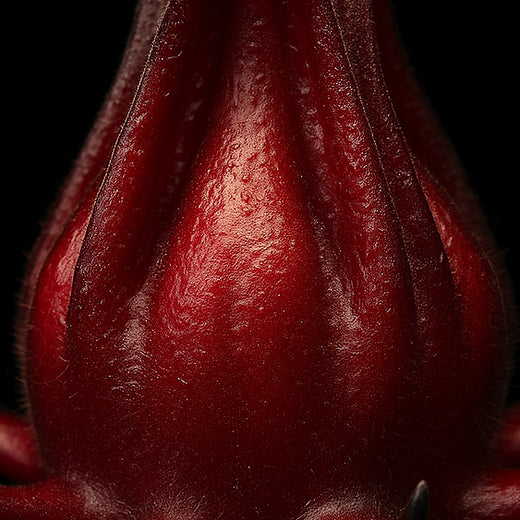
Roselle (Hibiscus sabdariffa) is a plant whose crimson calyces are steeped into an infusion with a tart, strong cranberry-like flavor. In perfume, hibiscus is a constructed note that smells floral, fruity and tangy.
- Olfactive family
- Florals · 779 entries of the glossary in this family Subfamily: Fresh florals · 104 entries in this subfamily Cluster: Rose-like florals · 144 entries in this cluster
- Material
- Fantasy/Concept Calyces
- Pyramid
- Heart · Volatility: Heart Note
- Strength
- N/A — no measured strength for a fantasy accord Not on the graded scale
- Also called
- sorrel, Florida cranberry, Jamaica sorrel, red sorrel, rosella
Family, subfamily and cluster: PREMIEREPEAU house classification, version 2026‑11.
Roselle · Facets
Entries of the glossary that carry each facet, of 3,979:
- floral 1,546
- sweet 1,988
- fruity 1,301
- fresh 1,387
Editorial note We own no rights to this material, its name or its trademark. This entry is independent editorial journalism, published under freedom of expression.
Roselle · Scent
The odour of the flower extract is described as floral, hibiscus and berry. A hibiscus accord has sweet, slightly tart facets reminiscent of passion fruit, cranberry and rose, with a subtle green undertone. The result is a scent that is floral, fresh and tropical, with a gentle musky backdrop.
Evolution over time
Roselle: scent over time.
- Immediately
N/A — no documented evolution for a fantasy accord
- After a few hours
N/A
- After a few days
N/A
Roselle · In Perfumery
The flower extract of Hibiscus sabdariffa is listed as a cosmetic ingredient with antioxidant, skin-conditioning and emollient functions. The calyces are also a source of pigment for cosmetic applications.
Pyramid
Roselle: Heart. Entries of the glossary stored at each place of the pyramid, of 4,006 (42 store no place):
- Top 718
- Top · Heart 497
- Heart 1,641
- Heart · Base 514
- Base 594
Role in the formula
Roselle: roles in the formula. Entries of the glossary that share each role, of 4,006:
- N/A — no documented formula role 361
Roselle · Terroir & Origins
- Producing countries
- China, Thailand, Sudan, Nigeria, Mexico, Egypt, Senegal, Tanzania, Mali, Jamaica
Roselle · Extraction & Chemistry
A handful of dried calyces is covered with four glasses of cold water, brought to the boil and simmered for three minutes, and the bright red liquid is strained off. The calyces are then barely covered with fresh cold water and boiled a second time for three minutes to draw out more, and this second liquid is added to the first. In Nigeria, zobo is made by boiling hibiscus leaves with ginger and cloves for less than an hour, and the solids are removed with a sieve. In Sudan the seeds have been pressed for oil.
Available as
Roselle: available as.
- synthetic accord
- fantasy note
- Appearance
- Fleshy calyces, deep crimson red when the fruit matures
Roselle · Did You Know?
In Egypt and Sudan, wedding celebrations are traditionally toasted with a glass of hibiscus tea. In East Africa it is called Sudanese tea, a name that comes from the fact that more karkady is drunk daily in Sudan than true tea.
Roselle · In Depth
The plant
Roselle is a species of flowering plant in the family Malvaceae, likely native to parts of Africa. The accepted name of the species is Sabdariffa gossypiifolia, and Hibiscus sabdariffa is among its synonyms. Roselle is an annual or perennial herb or woody-based subshrub, growing to 2–2.5 m (7–8 ft) tall.
The flowers are white to pale yellow with a dark red spot at the base of each petal. The calyx becomes fleshy and a deep crimson red as the fruit matures, which takes about six months. The calyces are not petals: they form around the seed-pods once the seeds begin to form.
Chemistry
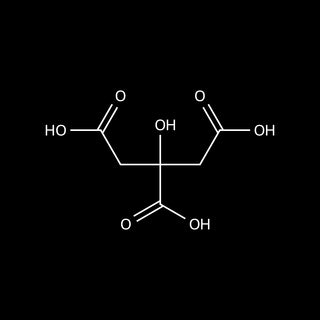
The flowers are rich in anthocyanins, as well as protocatechuic acid. The plant contains organic acids, polysaccharides, flavonoids and particularly anthocyanins, which provide the purple-red color. The dried calyces contain the flavonoids gossypetin, hibiscetine and sabdaretine. The calyces contain about 4% citric acid. Roselle seeds contain 17–20% oil.
Drinks and uses
Hibiscus tea, served hot, or roselle juice, served cold, is an infusion made from the crimson or deep magenta-colored sepals or calyces of the roselle flower. In Italy, hibiscus tea, known as carcadè or karkadè, is usually consumed hot, often with the addition of sugar and lemon juice or orange slices. In other European countries it is an ingredient in mixed herbal teas, especially with malva flowers or rose hips, to enhance the colouring.
The drink made out of the flowers is known as bissap in Burkina Faso and Senegal, zobo in Nigeria or sobolo in Ghana. In Sudan and Egypt, karkade is a popular drink made with dried roselle calyces. Agua de Jamaica is consumed in Mexico, Central America, and parts of South America and the Caribbean.
The fleshy calyces of cultivar group Sabdariffa are used in making beverages such as roselle syrup and roselle wine, and jams and jellies. The calyces can also be dried and stored for later use.
Other uses of the plant
Young shoots and leaves are used raw or cooked as a vegetable or condiment; they have a sour taste and are slightly mucilaginous. The plant is cultivated for its bast fibre, which is used to make cordage and as a substitute for jute in making burlap. Roselle can be a natural source of water-soluble red food dye.
Cultivation
The plant is a deep-rooted annual, requiring fertile sandy soil, warmth and plenty of water. The calyces must be picked about 15–20 days after flowering. The workers strip the calyces by hand and lay them out to dry in the sun for three to four days.
The main Egyptian plantations are in the dry, hot regions of Upper Egypt around Qena and Aswan and in the oasis of Fayoum. Most of Sudan’s crop is grown in the central province of Kordofan.
Explore all seven extraits in the Discovery Set.
Related: China Rose · Lingonberry · Wolfberry · Okra Seeds · Althaea
Roselle · History
Early domestication and spread
Roselle and kenaf may have been domesticated as early as 4000 BC in Sudan. In 1576, the Flemish botanist Matthias de L’Obel published his observations on karkady in Plantarum seu stirpium historia. In the 16th and early 17th centuries it was spread to Asia and the West Indies, where it has since become naturalized in many places.
Roselle in the New World
Seeds are thought to have been brought to the New World by African slaves or slave-traders, and the plant was known to be growing in Brazil in the 17th century. A Florida horticulturist wrote that fresh hibiscus calyces were being sold by the quart in southern Florida in 1907. They were known as Florida cranberry until about 1960, when urban sprawl, a hurricane and a freeze wiped out the commercial gardens.
Roselle · Technical Sheet
Identity
- Botanical
- Hibiscus sabdariffa
- Accepted name (Kew)
- Sabdariffa gossypiifolia (Mill.) M.M.Hanes & R.L.Barrett · POWO
- Taxonomy
- Malvales order › Malvaceae family › Hibiscus genus · GBIF
- Botanical records
- Hibiscus sabdariffa: POWO, Hibiscus sabdariffa · IPNI, Hibiscus sabdariffa · GBIF, Hibiscus sabdariffa · Wikidata, Hibiscus sabdariffa · Wikipedia, Hibiscus sabdariffa
- IPNI
- Hibiscus sabdariffa L., Sp. Pl. 2: 695 (1753) — Carl Linnaeus (1707–1778)
- Type
- Accord
- Category
- Flowers
In Nature
- Growth form
- Herb · POWO
- Sample origins in GC-MS studies
- Mexico (2 papers; one: J Food Sci Technol 2019, Mexico) · Iraq (1 paper; one: Nat Prod Res 2022, Iraq)
- Recorded altitude
- 0–1,050 m · median 250 m · 716 records with an altitude · GBIF
- Wild or cultivated
- 7 native · 195 introduced · 843 cultivated among 4,219 records (the rest carry no such mark) · GBIF
- Recorded in
- 88 of 512 squares of the world grid; a brighter dot holds more records · GBIF
- Also from this genus
- Hibiscus: Hibiscus · China Rose
- Also from this botanical family
- Malvaceae: Althaea · Ambrette · Ambrette (Musk Mallow) · Cacao Blossom · Cacao Butter · Cacao Pod · 9 more entries
In Print
- Timeline
- first described 1753 · earliest aroma paper in Europe PMC, 1992
- In English books
- most mentioned in the 1980s · Google Books Ngram
Classification
- Chemical class
- Natural plant material rich in anthocyanins, with organic acids, polysaccharides and flavonoids
Chemical data
- Formula
- Complex natural mixture (key constituents: anthocyanins; organic acids; citric acid)
- Most reported compounds
- Gossypol (3 papers; one: J Agric Food Chem 1984, Gossypol) · Protocatechuic Acid (3 papers; one: Chem Biol Interact 1996, Protocatechuic Acid) · Hibiscetin (2 papers; one: Proc Indian Acad Sci (Math Sci.) 1942, Hibiscetin) · Oleic Acid (1 paper; one: J Agric Food Chem 1984, Oleic Acid) · Lauric Acid (1 paper; one: J Agric Food Chem 1984, Lauric Acid) · LOTUS
- Structure
- Citric Acid:
Citric Acid
PubChem, Citric Acid - CAS
- 84775-96-2 (flower extract)
- EC
- 283-920-7
- INCI names (CosIng)
- HIBISCUS SABDARIFFA SEED OIL (SKIN CONDITIONING – EMOLLIENT)HIBISCUS SABDARIFFA CALLUS CULTURE CONDITIONED MEDIA EXTRACT (ANTIMICROBIAL, ANTIOXIDANT, HAIR CONDITIONING, SKIN PROTECTING, SKIN CONDITIONING – MISCELLANEOUS)HIBISCUS SABDARIFFA CALLUS EXTRACT (ANTIOXIDANT, SKIN CONDITIONING)HIBISCUS SABDARIFFA FLOWER EXTRACT (SKIN CONDITIONING)HIBISCUS SABDARIFFA FRUIT EXTRACT (SKIN CONDITIONING)HIBISCUS SABDARIFFA LEAF EXTRACT (ANTIOXIDANT, SKIN CONDITIONING)HIBISCUS SABDARIFFA SEED EXTRACT (SKIN CONDITIONING – MISCELLANEOUS)HIBISCUS SABDARIFFA FLOWER WATER (SKIN CONDITIONING)
Labelling
- EU allergens reported
- Eugenol
Physical properties
- Specific gravity
- 1.000 to 1.050 at 25 °C (est)
Performance and rules
- IFRA status
- No IFRA Standard for the material itself (51st Amendment)
Roselle · See Also
Entries related to Roselle, by their place in the pyramid. “shared” marks a scent word Roselle has too.
Top notes

Citronellyl Formate
floral (shared) · rosy · citrus Florals / Same cluster / Synthetic

Heart notes

Rose
floral (shared) · honeyed · waxy Florals / Same cluster / Natural
Blackberry Blossom
floral (shared) · fruity (shared) · fresh (shared) Florals / Same subfamily / Fantasy/Concept
Tuberose
floral (shared) · narcotic · creamy Florals / Natural
Violet
floral (shared) · violet Florals / Natural & Synthetic
Jasmine
floral (shared) Florals / Natural


Base notes

Rose Mallow
floral (shared) · sweet (shared) · musk-like Florals / Fantasy/Concept

Other entries · Place in the pyramid not stored

Carnation
floral (shared) · spicy · clove Florals / Natural

Roselle · Sources
- MDPI Physiological Effects and Human Health Benefits of Hibiscus sabdariffa: A Review of Clinical Trials
- Purdue University Hibiscus sabdariffa
- IFRA Standards, 51st Amendment
- PlantUse Hibiscus sabdariffa (PROSEA)
- World Flora Online Sabdariffa rubra Kostel.
- Wikipedia Roselle (plant)
- Wikipedia Hibiscus tea
Cite as PREMIEREPEAU Glossary, “Roselle”, https://premierepeau.com/
