


Sugi
Keywords: pine · woody · resiny
Sugi is a perfumery material from Cryptomeria japonica (Cupressaceae): sugi leaf oil. The leaf oil has a fresh, pine-like aroma.
- Olfactive family
- Woods · 363 entries of the glossary in this family Subfamily: Coniferous woods · 31 entries in this subfamily Cluster: Cedar-like dry woods · 29 entries in this cluster
- Material
- Natural Foliage of Cryptomeria japonica
- Pyramid
- Heart Note
- Strength
- Strong Step 4 of 5 · shared by 507 of 2,161 graded entries Graded entries at each step, from 1 to 5: 4, 117, 1,469, 507, 40. 24 more sit between two steps.
- Also called
- Japanese cedar leaf oil, Cryptomeria japonica leaf oil, Japanese cedar, Japanese redwood
Sugi · Facets
Entries of the glossary that carry each facet, of 3,979:
- fresh 1,392
- woody 794
- pine 63
- warm 1,109
- terpenic 29
- sweet 1,990
Sugi · Scent
Sugi leaf essential oil has a fresh, pine-like aroma with a light, warm terpene-like note. Sugi wood essential oil has a soft delicate, woody note with a sweet-resiny woody undertone.
Evolution over time
Sugi: scent over time.
- Immediately
Fresh, pine-like aroma.
Scent words: fresh - After a few hours
Pine-like aroma with a light, warm terpene-like note.
Scent words: warm - After a few days
A light, warm terpene-like note.
Scent words: warm
Sugi · In Perfumery
Cryptomeria japonica leaf oil is an essential oil with a perfuming function, used for perfume and aromatic raw materials. It also has a masking function, reducing or inhibiting the odour or basic taste of a product.
Pyramid
Sugi: Heart. Entries of the glossary stored at each place of the pyramid, of 4,000 (35 store no place):
- Top 718
- Top · Heart 501
- Heart 1,646
- Heart · Base 512
- Base 588
Role in the formula
Sugi: roles in the formula. Entries of the glossary that share each role, of 4,000:
- Perfuming agent 43
- Freshness 720
- Modifier 1,168
Sugi · Terroir & Origins
- Producing countries
- Portugal (Azores)
Sugi · Extraction & Chemistry
In the Azores, the essential oil is obtained by hydrodistillation of fresh Cryptomeria japonica foliage. The foliage comes from biomass residues of forest operations and the wood industry. The yield is approximately 1% v/w of dry matter. The wood owes its pleasant odour to a volatile oil, which can be obtained with a yield of 1.5 per cent by steam distillation.
- Appearance
- Yellowish
Sugi · Did You Know?
Jōmon Sugi, on Yakushima, is the oldest and largest of the island's old-growth cryptomeria trees. It is estimated to be between 2,170 and 7,200 years old.
Sugi · In Depth
The tree
Sugi is the Japanese name for Cryptomeria japonica, a conifer in the cypress family Cupressaceae. The tree is also called Japanese cedar or Japanese redwood in English. Cryptomeria is a monotypic genus with only one species.
It is a very large coniferous tree, reaching up to 60 m tall and 4 m in trunk diameter, with red-brown bark that peels in vertical strips. The leaves are arranged spirally, needle-like and 0.5 to 1 cm long.
Wood
The timber is extremely fragrant, weather and insect resistant, soft and of low density. The heartwood is reddish-pink in colour, lightweight, waterproof and resistant to decay. It is used in Japan for all types of construction work as well as interior panelling.
Leaf oil composition
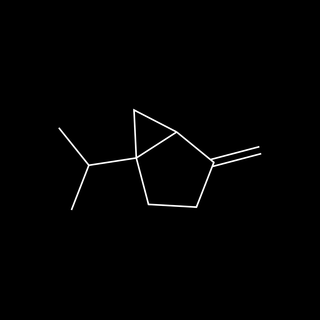
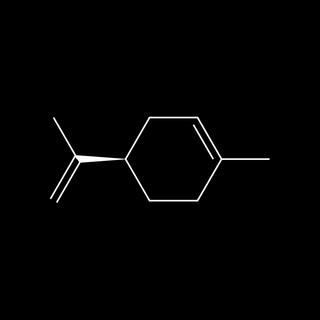
Essential oil from fresh Azorean foliage collected in autumn had phyllocladene (19%), elemol (16%), α-pinene (11.2%), sabinene (8.1%), α- and β-eudesmol together (7.8%) and limonene (7.4%) as its major compounds. The spring oil had kaur-16-ene (23%), elemol (20.8%), α- and β-eudesmol together (12.6%), α-pinene (6.5%), γ-eudesmol (6%) and phyllocladene (5.1%).
Typically, the major component of Azorean foliage oil is the monoterpene α-pinene. The season of harvest strongly influences the quantitative composition of the oil.
Registration
Cryptomeria japonica leaf oil has the EINECS number 294-953-1.
Sugi · History
Cryptomeria was introduced to the Azores in the mid 19th century for wood production. A daimyō who was too poor to donate a stone lantern at the funeral of the shōgun Tokugawa Ieyasu asked instead to plant an avenue of sugi. The offer was accepted, and the Cedar Avenue of Nikkō, which still exists, is over 65 km long.
Sugi · Technical Sheet
Identity
- Botanical
- Cryptomeria japonica
- IPNI
- Cryptomeria japonica (L.f.) D.Don, Ann. Nat. Hist. 1(3): 234 (1838) — David Don (1799-1841)
- Type
- Ingredient
- Category
- Woods and mosses
In Nature
In Print
- Timeline
- first described 1838 · earliest aroma paper in Europe PMC, 1981
- In English books
- most mentioned in the 1850s · Google Books Ngram
Classification
- Chemical class
- Essential oil
Chemical data
- CAS
- 91771-60-7
- EC
- 294-953-1

Labelling
- EU allergens reported
- Limonene · Linalool · Geraniol · Citronellol · Benzyl Alcohol · Benzyl Benzoate · Linalyl Acetate · Pinene · Terpineol · Alpha-Terpinene · Terpinolene · Beta-Caryophyllene · Camphor · Anethole
Physical properties
- Specific gravity
- around 0.9 g/mL
Performance and rules
- Available as
- essential oil
- IFRA status
- No IFRA Standard for the material itself (51st Amendment)
Sugi · See Also
Entries related to Sugi, by their place in the pyramid. « shared » marks a scent word Sugi has too.
Top notes

Conifer
woody (shared) · pine (shared) · herbal Woods / Top · Heart / Same subfamily / Natural
Bagas de Zimbro
fresh (shared) · woody (shared) · green Aromatic / Natural


Sugi · Sources
- GBIF Cryptomeria japonica
- Plants (Basel, Switzerland) Essential Oil Composition and Anti-Cholinesterase Properties of Cryptomeria japonica Foliage Harvested in São Miguel Island (Azores) in Two Different Seasons
- IFRA Standards, 51st Amendment
- Chest of Books 78 Oil Of Cryptomeria Japonica
- Wikipedia Cryptomeria
- PubChem substance 135276370: Cryptomeria japonica, ext.
- Good Scents The Good Scents Company
- Yamagata University Academic Repository (Yamagata University) 山形県上倉山のクロベ(Thuja standishii Carr.)葉のヘキサン抽出成分について (2021)
- Wikipedia Jōmon Sugi
- Wikipedia (Japanese) スギ
Cite as PREMIEREPEAU Glossary, “Sugi”, https://premierepeau.com/pages/glossary-terms/sugi Updated 2026-11-17
