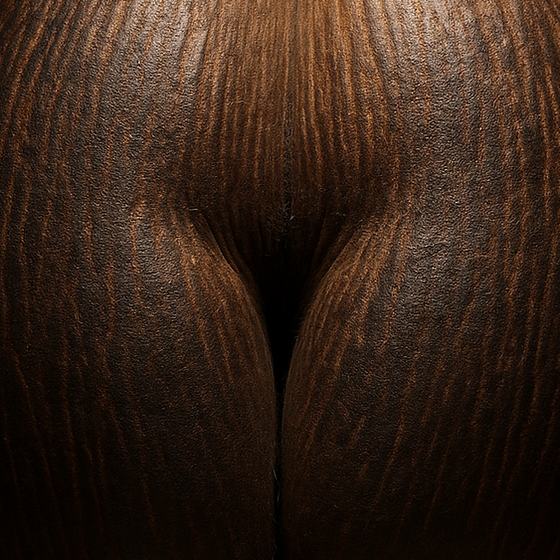
Lodoicea maldivica is the sole species of the genus Lodoicea, a monotypic genus in the palm family. The name coco de mer is French and means "coconut of the sea". The coco de mer palm has separate male and female trees, unlike the coconut palm. The fruit is bilobed and flattened, and it contains usually one but occasionally two to four seeds. The mature fruit is 40-50 cm in diameter and weighs 25-45 kg. The mature seeds weigh 10-25 kg and are the world's heaviest. On germinating, the seed produces the longest known cotyledon, up to 4 m.
Explore all seven extraits in the Discovery Set.
The Kernel
The kernel was analysed by HS-SPME and GC/MS to determine volatile aroma, sterol and fatty acid composition profiles in the internal and external pulp of two coconuts. No qualitative differences in flavour composition were observed between the two coconuts or the two pulp parts. Palmitic acid was the predominant fatty acid, with an average contribution of about 49.0%. It was followed by pentadecanoic acid at 16.5%, stearic acid at 11.6% and myristic acid at 9.9%. The averaged total phytosterols were 24.5 μg/g of dry net matter in the external portion and 26.9 μg/g in the internal portion.
Habitat and Threats
The main populations are found within the Praslin and Curieuse National Parks. The Vallée de Mai Nature Reserve on Praslin is a palm forest whose flagship species is the island endemic coco de mer, together with five other endemic palms. In 1983 the reserve was inscribed as a UNESCO World Heritage Site, and at just 19.5 hectares it ranks as one of the world's smallest natural properties on the list. The collection of nuts has virtually stopped all natural regeneration of populations, with the exception of the introduced population on Silhouette. Habitat loss is one of the major threats to the remaining populations, and there have been numerous fires on the islands of Praslin and Curieuse. The IUCN classifies Lodoicea maldivica as endangered, with only about 8,000 wild mature trees left as of 2019. It is in CITES Appendix III. The trade in nuts is controlled by the Coco-de-mer (Management) Decree of 1995. The palm has been lost from the wild on three Seychelles islands within its former range.
Uses
The species is grown as an ornamental tree in many areas in the tropics. The tough outer seed coat has been used to make bowls, such as Sufi/Dervish beggar-alms kashkul bowls.
The Mythology
Before the Seychelles were discovered and settled, nuts of this species were sometimes carried by ocean currents to distant shores, such as those of the Maldives, where the tree was unknown. In the Maldives the nuts were gathered from the beaches and valued as an important trade and medicinal item. Until the true source of the nut was discovered in 1768 by Dufresne, many believed it to grow on a mythical tree at the bottom of the sea. In the sixteenth century, European nobles would often have the shells of these nuts polished and decorated with valuable jewels as collectibles for their private galleries. General Charles George Gordon, who visited the Seychelles in 1881, believed that the Vallée de Mai was the Garden of Eden and that the coco de mer was the forbidden fruit. He considered it the forbidden fruit because of its reputed aphrodisiac quality.
—
Related: Acerola · Akebia Fruit · Allyl Amyl Glycolate · Arctic Bramble · Argan · Berries · Black Sapote · Buriti