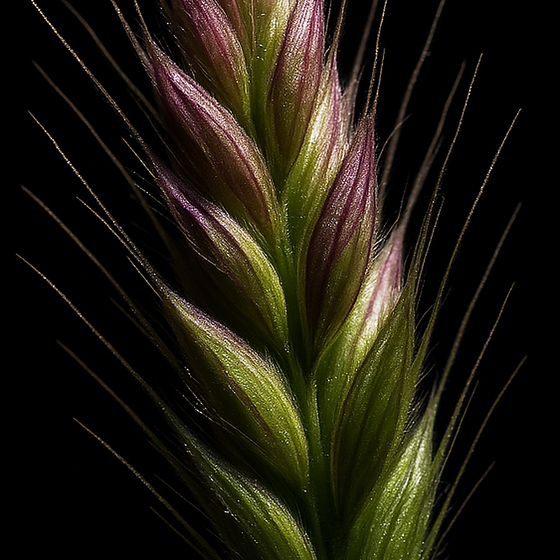
Palmaroza

PrirodnaZELENE NOTE, BILJE I FUŽERIcvetni · citrusni · travnat
Srednje notePiramida
3/5Jačina
—Trajnost
6Poreklo
Uzorak
Palmaroza kao sirovina za parfeme
Srednje note
Cymbopogon martinii
Definicija

Palmarosa is an essential oil obtained from Cymbopogon martinii, a species of grass. Its scent is sweet and rose-like.

Herbacé
90
Vert
84
Frais
65
Aromatique
53
Boisé
54
Terreux
60
Indian geranium, rosha, rosha grass, palmarosa grass, motia
Type
Sirovina
Olfactive family
Cvetni
Source
leaves, stems and flowering tops
Chemical class
essential oil rich in monoterpenic alcohols
Instrumenti
Piramida
GGornje note
SSrednje note
BBazne note
3/5Jačina
Srednja
jačina mirisa
Trajnost na mirisnoj traci
great tenacity in soap perfumes
Zemlje proizvođači
Indija Indonezija Brazil Gvatemala Honduras Madagaskar

Miris

The aroma of the oil is described as sweet, floral, citrus, grassy, citronella and geranium. The oil has a sweet, floral-rosy odour with variable top notes and undertones depending on the quality and age of the oil. Notes of rye bread, tea and clary sage have also been reported. The oil of var. martini, the palmarosa grass, has a floral, rosy smell.

Teroar i prerada

Detaljno

Cymbopogon martinii is a species of grass in the genus Cymbopogon, native to India and Indochina but widely cultivated in many places for its aromatic oil. It is best known by the common name palmarosa, meaning palm rose, because it smells sweet and rose-like. The grass grows fairly tall, from 1.3 to 3 m in height, with a pale green color and a strong thin stem. It grows slowly, taking three months to flower, and can be harvested once it has flowered. Flowering in India occurs in November-December.

Two forms of the grass, motia and sofia, were traditionally distinguished in India and were much later given the status of botanical varieties. Var. martini is palmarosa grass or motia, and var. sofia is gingergrass or sofia. The two varieties are almost indistinguishable morphologically. The oil of var. martini has a geraniol content up to 95%, while the oil of var. sofia has a turpentine-like odour and a geraniol content up to 65%. A practical way to tell the varieties apart is to move an inflorescence leaf between the fingers from base to tip: var. sofia feels rough and sticky, var. martini smooth and clean. Spontaneous hybrids are common where their natural habitats overlap.

Palmarosa oil consists mainly of geraniol and geranyl acetate, with smaller amounts of linalool, farnesol, nerol, humulene and terpineols. Geraniol is a monoterpenoid and an alcohol, and a primary component of palmarosa oil. Geraniol has a molar mass of 154.253 g/mol and a boiling point of 230 °C. Geraniol has low solubility in water but is soluble in common organic solvents. In one analysed sample, geraniol made up 82.83% of the volatile fraction and geranyl acetate 7.21%. In another analysis, the leaf oil contained 76.6% geraniol and 15.2% geranyl acetate, and the root oil 87.9% geraniol and 4.4% geranyl acetate. Palmarosa oil from Indonesia has a significantly higher geranyl acetate content than Indian oil. The difference is due not only to growing conditions but also to the use of more modern distilleries. Oil yield and geraniol content are highest under long days.

India is the principal producer and exporter of palmarosa oil. In India it is mainly produced in Assam, Andhra Pradesh, Madhya Pradesh and Maharashtra. Gingergrass oil is of only minor importance, its annual world production being less than 2 t. Palmarosa can be harvested three to four times per year. Seed is sown in nursery beds, and seedlings are ready for transplanting in 6-8 weeks when 15-20 cm tall. Palmarosa grass does not tolerate acid soils or waterlogging. Well managed plantations of var. martini in India produce annual herbage yields of 10-15 t/ha, giving 50-100 kg oil. Var. martini has a life span in cultivation of 10-15 years, but many plantations become unprofitable after 6-7 years.

Palmarosa oil may be an effective insect repellent when applied to stored grain and beans. Palmarosa oil is also an antifungal that fights against Aspergillus niger, Chaetomium globosum and Penicillium funiculosum. In traditional medicine the plant and its oils are used to treat rheumatism, hair loss, arthritis, lumbago and spasms. In the United States, palmarosa oil is generally recognized as safe.

Explore all seven extraits in the Discovery Set.

—

Related: Acronychia Pedunculata · Adoxal · Agave · Algae · Aloe Vera · Aromatic Notes · Asparagus · Avocado

Zanimljivosti

In nineteen commercial samples of Rosa damascena essential oil, the δ13C values of specific components were in the usual range for C3 plants, except for geranyl acetate, which reached up to -18‰. The raised geranyl acetate values in those rose oils were explained by the addition of palmarosa, a cheaper natural oil from a C4 plant, which was found in most of the essential oils.

Dobijanje i hemija

Način dobijanja

Palmarosa oil is generally distilled, more frequently by steam or hydro-distillation, from the leaves, stems, flowers, bark or roots, or other elements of the plant. One commercial oil was obtained by steam distillation from the aerial parts of a cultivar of Cymbopogon martini var. motia from India. The oil is preferably obtained from the flowering tops. All aboveground parts of the plant contain essential oil, the oil content of the flowers being higher than that of the stems and leaves. The oil content in high-yielding selections grown under optimum conditions can reach 0.5-1.5%, while the average yield from traditional stills is only 0.2-0.3%, both on a fresh weight basis. Stems and leaves are distilled for two to three hours, and the leftover grass residue is turned into manure or composted. Harvesting is done by hand or mechanically. The height of cutting is generally 20 cm above the ground. Harvesting during the rainy season gives high herbage and oil yields but low geraniol content, while during the dry season herbage and oil yield are lower and geraniol content is higher.

Formula
Complex natural mixture (key constituents: geraniol C₁₀H₁₈O; geranyl acetate; linalool; farnesol)
CAS
8014-19-5
Botanički naziv
Cymbopogon martinii
Izgled
Pale yellow or pale olive liquid
Jačina mirisa
srednji
Trajnost
great tenacity in soap perfumes
Sinonimi
Indian geranium, rosha, rosha grass, palmarosa grass, motia
Status prema standardima IFRA
Pogledajte napomenu

No IFRA Standard for the material itself (51st Amendment)

Fizička svojstva
Tačka paljenja
212 °F (100 °C), TCC
Relativna gustina
0.879-0.892
Indeks prelamanja
1.470-1.476 at 20 °C

U parfemima

Palmarosa oil has a scent similar to that of roses and is added to soaps and cosmetics. It is used for rose-smelling perfumes and cosmetics. In soap perfumes it shows great tenacity, much greater than commercial geraniol obtained from other sources, for example citronella oil. It blends well with most soap perfume compounds. It forms an excellent perfume base with geranium oil and oakmoss absolute. Its persistent, rose-like fragrance gives the oil considerable commercial relevance in the perfumery, cosmetics, agri-food and pharmaceutical industries. It is considered a valuable product because of its high geraniol content.

Uloga u formuli
01pojačivač difuzije
02modifikator
03nota potpisa
04sredstvo za podizanje
05sirovina za stapanje
06svežina
Oblici na tržištu
eterično ulje

Pogledajte i

7 nota