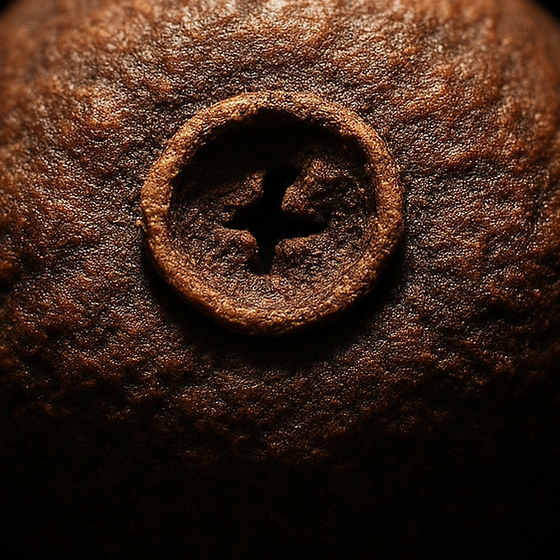
Pimento is the dried unripe berry of Pimenta dioica. The tree is native to the Greater Antilles, southern Mexico and Central America. Pimenta dioica belongs to the Myrtaceae family. The tree is a small dioecious evergreen, 7-10(-15) m tall and profusely branched. The berry is subglobose, 4-6 mm across, green when unripe and turning glossy purple to black on ripening. It is the only major spice grown exclusively in the Western Hemisphere. Pimento is not a mixture of spices, despite a common misconception. The English coined the name allspice as early as 1621, valuing it as a spice that combined the flavours of cinnamon, nutmeg and clove. Early Spanish explorers mistook the fruits for those of pepper (Piper nigrum) because of their similarity in shape and flavour, and named them pimienta. Pimento is entirely different from pimiento, a form of red Capsicum pepper.
Jamaica is the largest producer and exporter of pimento, accounting for 70% of the world exports. The natural habitat of pimento in Jamaica is limestone forest. The annual world trade of pimento averages 3000-4000 t valued at US$ 5-7 million. The major importing countries are the United States, Germany, United Kingdom, Sweden, Finland and Canada. Spanish explorers discovered its use as a spice in the Caribbean Islands in the 16th century. Pimento leaf oil production averages 30-60 t a year and is mainly exported to the United States and the United Kingdom. The fruits are picked when green and unripe, and are traditionally dried in the sun. When dry, they are brown and resemble large, smooth peppercorns.
The characteristic scent of pimento is attributed to a yellow to brownish essential oil found mainly in the pericarp. Some 50 constituents of the oil have been identified. The major ones are eugenol at 50-80%, methyl eugenol at 3-28%, myrcene at 1-9%, β-caryophyllene at 4-6%, 1,8-cineole at 1-3% and humulene at 1-2%. Essential oil from Jamaican pimento is considered to be of the highest quality, having the highest eugenol content. Pimenta dioica from Jamaica showed eugenol at 68-78%, methyl eugenol at 2.9-13% and caryophyllene at 3.30-4.90%. In Guatemalan fruit oil, eugenol was the major component at 65.9% and β-myrcene the second at 10.1%. Leaf oil also has eugenol as its major component, at 65-96%, which is somewhat higher than in the berry oil. Methyl eugenol is the methyl ether of eugenol. Eugenol has a pleasant, spicy, clove-like scent. Eugenol is toxic in large amounts and can cause contact dermatitis. Pimento berry oil is sometimes adulterated with eugenol from cheaper sources. A mixture of pimento leaf oil with clove stem and leaf oils can serve as a relatively inexpensive substitute for the berry oil.
Allspice is one of the most important ingredients of West Indian cuisine. Under the name pimento, it is used in Jamaican jerk seasoning. Traditionally its wood was used to smoke jerk in Jamaica. In parts of the West Indies, an allspice liqueur is produced under the name pimento dram. The end-uses of the total pimento production divide roughly into domestic use 5-10%, food industry 65-70%, pimento berry oil 20-25% and oleoresin 1-2%. Essential oil from the leaves is used as a flavouring agent in meat products and confectionery. The maximum permitted level of pimento berry oil in food products is about 0.025%. The powdered fruit is used in traditional medicine to treat flatulence, dyspepsia and diarrhoea.
This note in PREMIEREPEAU. Gravitas Capitale. Sample all seven extraits in the Discovery Set.
—
Related: Bengal Pepper · Black Pepper Oil · Cubeb Or Tailed Pepper · Ghost Pepper · Guinea Pepper · Japanese Pepper · Pepper · Peppertree