


List mandarine
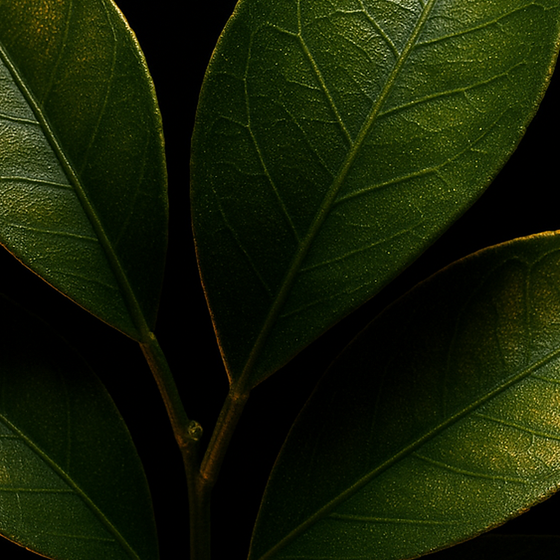
Bitter-green and slightly metallic, like snapping a citrus twig. Tangerine leaf sits between petitgrain and the zest — greener than the peel, less floral than neroli.
- Type
- Sirovina
- Olfactive family
- Aromatični
- Source
- leaves and flowering tops
- Chemical class
- complex natural (essential oil)
Miris
Teroar i prerada
Detaljno
Zanimljivosti
The word 'petitgrain' — used for oils distilled from citrus leaves — originally referred to the small, unripe fruits (petit grains) that fell from bitter orange trees during pruning and were distilled along with the leaves.
Dobijanje i hemija
Način dobijanja
Steam distillation of leaves and twigs (petitgrain-type extraction) from Citrus reticulata. The oil is produced primarily in Italy (Sicily, Calabria) and southern Spain. Yield is approximately 0.2-0.5% from fresh leaf material. The resulting oil is pale yellow to greenish, with a characteristic bitter-green, slightly floral aroma.
- Formula
- Complex mixture — key: methyl N-methylanthranilate (C₉H₁₁NO₂), limonene (C₁₀H₁₆)
- CAS
- 8008-31-9 (tangerine/mandarin petitgrain oil)
- Botanički naziv
- Citrus reticulata
- Izgled
- Pale yellow to amber liquid
- Jačina mirisa
- Srednji
- Sinonimi
- MANDARIN LEAVES
No IFRA Standard for the material itself (51st Amendment)
- Nota
- Tangerine leaf oil (petitgrain mandarin). Key component: methyl N-methylanthranilate (CAS 85-91-6). Specific gravity: 0.880-0.920 @ 25 °C. Refractive index: 1.460-1.480 @ 20 °C.
U parfemima
Tangerine leaf operates as a top-to-heart modifier in citrus and aromatic compositions. It provides the green, bitter-stemmy quality that separates a naturalistic citrus accord from a one-dimensional peel note. Functionally similar to petitgrain mandarine (steam-distilled from Citrus reticulata leaves and twigs), it bridges bright citrus openings to floral or woody hearts without the sweetness of the fruit itself. In eaux de cologne and hesperidic structures, it replaces or supplements petitgrain bigarade when a less bitter, more tangerine-specific green is needed. It works well alongside linalool, linalyl acetate, and methyl anthranilate — the molecule responsible for the grape-like sweetness in mandarin peel oil.
Pogledajte i
7 nota