


Самшит
НатуральнийДЕРЕВИНАgreen · catty · woody
Верхні нотиПіраміда
—Сила
—Стійкість
3Походження
Зразок
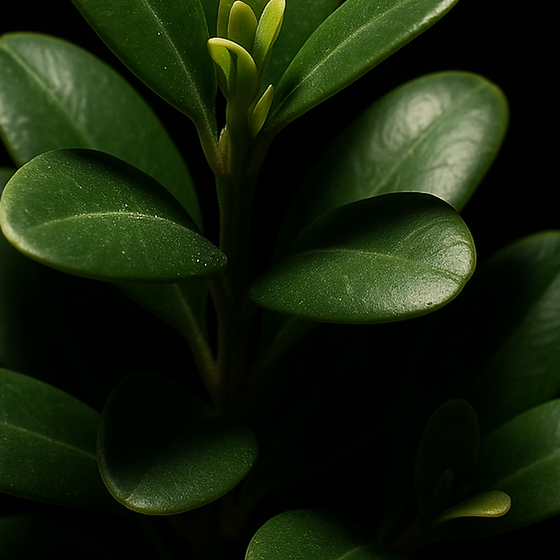
Buxus sempervirens
Визначення
Buxus is the genus of box, or boxwood, a group of evergreen shrubs and small trees. The genus has about seventy species, and the name box refers especially to Buxus sempervirens, the common box.
ЗЕЛЕНИЙ КОТЯЧИЙ СІРЧАНИЙ ДЕРЕВНИЙ
Boxwood, box, common box, European box
- Type
- Складник
- Olfactive family
- Деревні
Інструменти
Піраміда
ВВерхні ноти
СНоти серця
ББазові ноти
Країни-виробники
Western and southern Europe northwest Africa southwest Asia
Запах
В ароматах PREMIEREPEAU
Докладно
Цікавий факт
Digging sticks made by Neanderthals more than 170,000 years ago in Italy were made from boxwood. Catholic households in climates where palms are scarce often use boxwood twigs instead to adorn their crosses on Palm Sunday.
Отримання й хімія
- Формула
- Complex natural mixture (key constituents: cyclobuxine C₂₅H₄₂N₂O)
- Ботанічна назва
- Buxus sempervirens
- Зовнішній вигляд
- Heartwood basically yellow to white or grey
- Синоніми
- Boxwood, box, common box, European box
Статус IFRA
Див. приміткуNo IFRA Standard for the material itself (51st Amendment)
Фізичні властивості
- Відносна густина
- 0.79-0.92-0.97 g/cm3
Див. також
5 ноти