


Ягоди бузини
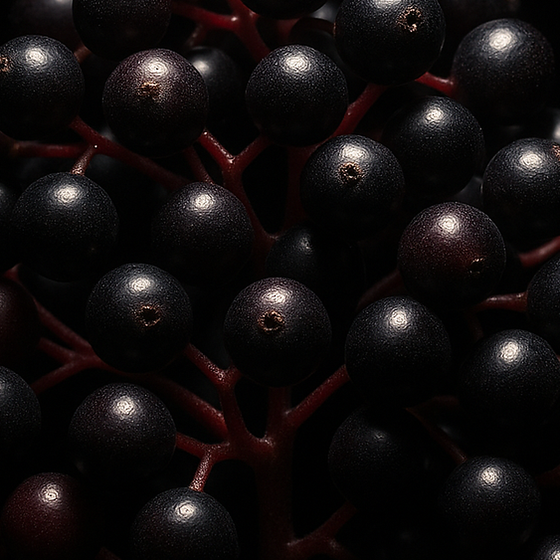
Elderberry is the fruit of Sambucus nigra, the European elder. The dark colour of elderberries results from their rich phenolic content, particularly from anthocyanins.
- Type
- Складник
- Olfactive family
- Фруктові
- Source
- fruit
Запах
Теруар і післязбиральна обробка
Докладно
Отримання й хімія
Спосіб отримання
Essential oils and volatile organic compounds have been extracted from different organs of S. nigra, including unripe and ripe fruit, for analysis.
- Формула
- Complex natural mixture (key constituents: phenylacetaldehyde; benzaldehyde; β-damascenone; linalyl anthranilate)
- Ботанічна назва
- Sambucus nigra
- Зовнішній вигляд
- Glossy, dark purple to black drupe
- Синоніми
- elder, black elder, European elder
No IFRA Standard for the material itself (51st Amendment)
У парфумерії
Elderflower extract is used in very low doses, where it brings power to a composition. It combines well in many accords and gives honeyed and tobacco effects on the top notes, and as it evolves it brings more agrarian and spicy characters such as chamomile or woody curry notes. In fine fragrance, elderflower absolute can enhance the herbal and sweet facets in aromatic and ambery accords.
Див. також
7 ноти