


Hedione
Редакційна приміткаМи не маємо жодних прав на цей матеріал, його назву чи торговельну марку. Ця стаття глосарію є незалежною редакційною журналістикою й опублікована на підставі свободи вираження поглядів.
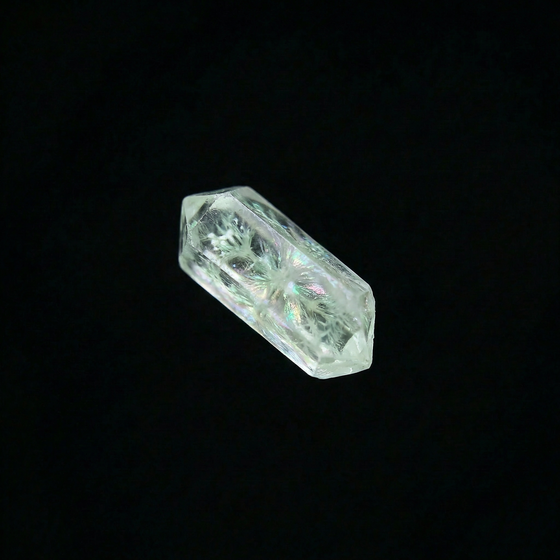
Hedione is methyl dihydrojasmonate, an aroma compound with an odor similar to that of jasmine. It is a synthetic relative of methyl jasmonate, a naturally occurring compound in floral scents such as jasmine, tuberose and magnolia.
- Type
- Складник
- Olfactive family
- Квіткові
- Source
- synthetic molecule
Запах
Докладно
Цікавий факт
Odor perception of hedione in humans is very different from that of most other odors, since hedione acts as a ligand for the vomeronasal type-1 receptor 1 (VN1R1) rather than an olfactory receptor. In brain imaging, hedione activated a specific hypothalamic region more strongly in women than in men. Hedione is also called the scent of success. Mice have about 300 genes for pheromone receptors, while in humans probably only five are still functional.
Отримання й хімія
Спосіб отримання
Some of the earliest syntheses were based on the selective hydrogenation of methyl jasmonate, which was obtained from natural jasmine oil. Because methyl jasmonate made up less than 0.8% of the oil, better routes were soon developed. Modern synthesis proceeds from cyclopentanone: condensation with pentanal, C=C bond isomerisation to give the 2-pentyl-cyclopentenone derivative, Michael reaction with dimethyl malonate, then decarboxylation. A simplified synthesis starts from cyclopentanone, a more affordable byproduct of the synthesis of adiponitrile, an intermediate in the nylon-6 process. The Michael reaction is performed directly with dimethyl malonate, and decarbomethoxylation avoids a final reesterification. Non-epimerizing hydrogenation conditions produce Hedione HC, the high-cis grade, directly after workup. A robust continuous process led to fully automated manufacturing units, first in La Plaine in 1983, then in Port Newark in 1988.
- Формула
- C₁₃H₂₂O₃
- CAS
- 24851-98-7
- Зовнішній вигляд
- clear to pale yellow oily liquid
- Сила запаху
- Відносно низька
- Синоніми
- methyl dihydrojasmonate, Kharismal, Cepionate, methyl 2-(3-oxo-2-pentylcyclopentyl)acetate
No IFRA Standard for the material itself (51st Amendment)
- Температура кипіння
- 109-112 °C (0.2 mm Hg)
- Температура спалаху
- 113 °C (235 °F)
- Показник заломлення
- 1.454-1.464
У парфумерії
Methyl dihydrojasmonate is used in fine fragrances as well as in cosmetics, toiletries and detergents. Perfumers needed a few years to learn how to integrate its properties into compositions. They realized that hedione itself had relatively low odor intensity but provided a synergistic effect. It made perfumes round, floral and diffusive, and gave some of them more ability to fill a room with scent than perfumes without hedione. Added to a classically hesperidic construction, hedione gave a dewy, lemony magnolia-jasmine dimension that was not directly floral. This use is considered the start of a new trend in perfumery towards transparency and projection. The initial price of hedione was about 1,000 CHF/kg, so it was first confined to fine fragrances. The high price partly explains why the first fragrance to use it contained only 2.5%. As the market price kept falling, perfumers could use increasing quantities in their compositions. Its use also extended to other segments, such as body and home care products. Later fragrances used it at 12.6% (1971), 8% (1972), 18% (1976), 26% (1993) and 65% (1998).
Див. також
8 ноти