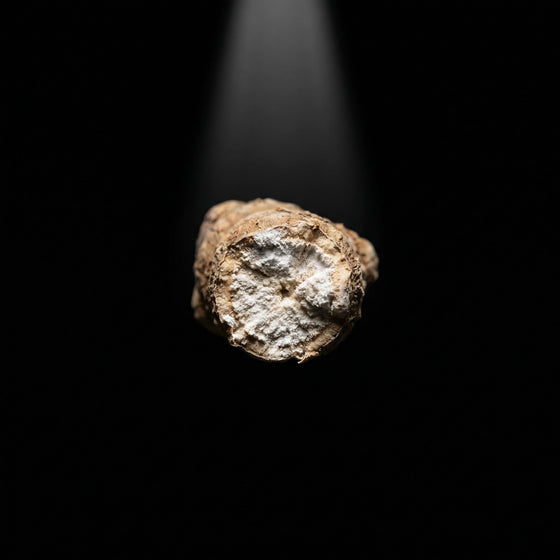
Ірис

НатуральнийКВІТИпудровий · землистий · фіалка
Базові нотиПіраміда
3/5Сила
—Стійкість
2Походження
Зразок
Ірис як парфумерна сировина
Базові ноти
Iris pallida Iris germanica
Визначення

The scent of orris, the root of Iris germanica and Iris pallida, differs from that of the flower. Once the root is prepared, its scent recalls violets.

Poudré
100
Violet
85
Terreux
60
Minéral
75
Boisé
40
Floral
55
Orris butter, beurre d'iris, butter of iris, orris oil, iris oil
Type
Складник
Olfactive family
Квіткові
Source
rhizomes (orris root)
Chemical class
complex natural
Інструменти
Піраміда
ВВерхні ноти
СНоти серця
ББазові ноти
3/5Сила
Середня
інтенсивність запаху
Країни-виробники
Італія (Тоскана, Сан-Поло, Вальдарно) Марокко

Запах

Orris smells tenaciously flowery, heavy and woody. The dried rhizome has an agreeable smell that closely approaches that of violets. The irones used in perfumery have a violet-like and powdery fragrance. Natural orris has mineral and fatty undertones.

Теруар і походження

Докладно

Iris is one of perfumery's most prized raw materials — central to PREMIEREPEAU's Doppel Däncers, which sets French Pallida against Florentine Pallida across pink pepper and ambrette.

Orris root comes from Iris germanica and Iris pallida. Iris pallida is native to the Dalmatian coast in Croatia but is widely naturalised elsewhere. Iris pallida is also grown commercially for the extraction of essential oils from its rhizome, which is the orris root. In Italy, Iris pallida is produced only in Tuscany, in two limited hilly areas: Chianti near Florence and Pratomagno near Arezzo. It is usually complementary to olive oil and wine production. At a large plantation at San Polo, a good harvest gives about a million kilograms of fresh roots, which yield roughly 300 tons of dry root after peeling and drying.

Iris cultivation may have a biennial or triennial production cycle. Harvest begins after two to three years of growth. Fresh rhizomes are extremely acrid, and this acridity almost entirely disappears on drying. In the fresh state the rhizomes are practically odourless, and the characteristic violet odour develops gradually during drying. The violet odour does not reach its maximum for at least two years and intensifies even after that. After harvest, time is needed for iridals to oxidize into irones. Distillers sometimes extract rhizomes that are not fully aged, in which the irones have not yet reached their maximum concentration.

The chief constituent of orris root is oil of orris, at 0.1 to 0.2 per cent. Oil of orris is a yellowish-white to yellow mass that contains about 85 per cent of odourless myristic acid. Other components of the root include fat, resin, starch, mucilage, a bitter extractive and a glucoside called iridin or irisin. The oil almost exclusively contains irones and odourless fatty acids, so its commercial value is determined by its irone concentration. Irone is the chief odorous constituent of dried iris rhizome. Four main irones have been described: trans-α, cis-α, trans-γ and β-irone. The isomeric distribution of the irones depends on the iris species. Of more than 300 species of Iris, only Iris pallida and Iris germanica are currently used to produce natural irones. Alpha-irone has the formula C₁₄H₂₂O and a molecular weight of 206.32.

Iris pallida rhizomes now go mainly to the French perfumery industry, the Italian alcoholic drinks industry and the German children dummy industry. Orris root is a scented substance used in perfumes, soaps, tooth cleanser and clothes washing powder. Orris root powder is also used in the baking, printing and textile industries. The rhizomes are also used to make rosary beads and beads for children's teething necklaces. In cuisine, orris root is often included in ras el hanout, a blend of herbs and spices used across the Middle East and North Africa, and it has been used in tinctures to flavour syrups. There are several varieties of orris in commerce, differing chiefly in colour and the care with which they have been peeled. Florentine orris, from Iris florentina, is carefully peeled, nearly white, plump and very fragrant. Morocco orris, obtained from Iris germanica, is darker and less fragrant.

Iris root is the structural heart of Doppel Dancers, where orris butter meets violet leaf and powdery skin musks.

This note in PREMIEREPEAU. Doppel Dancers. Sample all seven extraits in the Discovery Set.

Цікавий факт

The name irone combines iris and ketone, while ionone merges ion, the Greek word for violet, with ketone. Most of the cheaper violet perfumes on the market contain no trace of true violet and are made entirely with artificial ionone.

Отримання й хімія

Спосіб отримання

After cropping, the rhizomes are cleaned of roots and washed. For white-type orris the rhizomes are peeled by hand and then dried and aged for two to three years. For black-type orris the washed rhizomes are sliced and dried outside. For potpourri the powder is used without further processing, while for other uses the ground root is dissolved in water and then distilled. Distilling the dried and crushed rhizomes gives an essential oil. One ton of iris root produces two kilos of essential oil, also called orris root butter or butter of iris. The myristic acid of the oil appears to be liberated from a fat in the rhizome during steam distillation. Otto of orris contains the odorous principles of the concrete oil of the rhizome without the solid, fatty, odourless constituents. Orris rhizome absolute, concrete butter and resinoid are each made from Iris pallida and from Iris germanica. An orris rhizome oil CO2 extract also exists.

Формула
Complex natural mixture (key constituents: alpha-irone C₁₄H₂₂O; myristic acid)
CAS
8002-73-1
Ботанічна назва
Iris pallida Iris germanica
Зовнішній вигляд
Pale yellow oily liquid (absolute); yellow paste to solid (concrete butter)
Сила запаху
середня
Синоніми
Orris butter, beurre d'iris, butter of iris, orris oil, iris oil
Статус IFRA
Див. примітку

No IFRA Standard for the material itself (51st Amendment)

Фізичні властивості
Температура спалаху
> 93.33 °C (> 200 °F) TCC (absolute)
Відносна густина
0.93000 to 0.95000 @ 25 °C (absolute)
Показник заломлення
1.46000 to 1.51000 @ 20 °C (absolute)

У парфумерії

Orris root is commonly used as a fixative and base note in perfumery and as a botanical in gin. Perfumers use the orris fractions obtained by distillation as base notes and, above all, as natural fixatives that enhance other aromas. The absolute, the most expensive Iris pallida product, is mostly used as a bottom note in perfume formulations. Orris butter is the most expensive substance used in the fragrance industry. In typical iris perfumes, orris prevails over the other components. In PREMIEREPEAU's Doppel Dancers (/products/doppel-dancers-iris-skin-perfume), iris is the structural center — its mineral coolness and intimate powderiness define the entire architecture. Orris oil is also used to give flavor and scent to foods, gins and perfumes. Orris root powder is used in making gins and cordials as a very potent natural fixative for the other components.

Роль у формулі
01фіксатор
02базова нота
03фірмова нота
04сполучний компонент
Форми випуску
конкрет абсолют ефірна олія резиноїд

Див. також

9 ноти