


Троянда
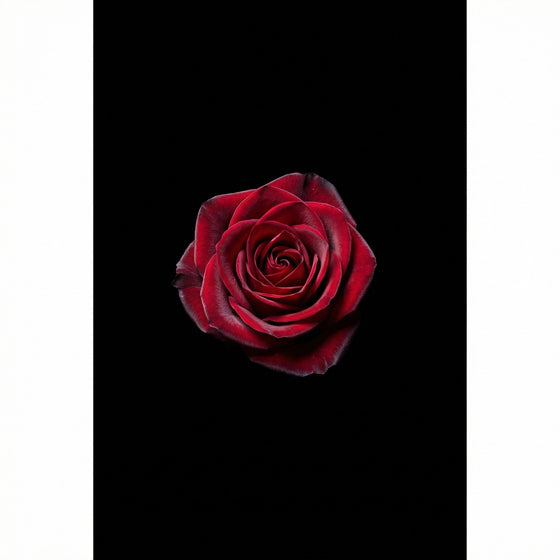
Bulgarian rose oil has an intense, warm, deep floral, waxy odour, slightly spicy and very rich, with traces of honey.
- Type
- Складник
- Olfactive family
- Квіткові
- Source
- flowers
- Chemical class
- complex natural (essential oil)
Запах
Теруар і походження
Докладно
Цікавий факт
In the rose oil whose composition is tabulated by odour units, beta-damascenone makes up only 0.14% of the oil yet accounts for 70.0% of the relative odour units. Its odour threshold there is 0.009 ppb, against 40 ppb for citronellol, which makes up 38% of that oil. Beta-ionone is just 0.03% of the same oil but carries 19.2% of the relative odour units. Rose attar forms white crystals at normal room temperature, and they disappear when the oil is gently warmed.
Отримання й хімія
Спосіб отримання
Rose ottos are extracted through steam distillation, while rose absolutes are obtained through solvent extraction. Steam distillation produces an essential oil called rose otto or attar of roses. Solvent extraction results in an absolute called rose absolute. Supercritical carbon dioxide extraction yields a concrete that may be marketed as a concrete, absolute or CO₂ extract. Rose oil is produced by a two-stage distillation process because many of the aroma compounds of roses are water-soluble. In the first stage, large stills, traditionally of copper, are filled with roses and water, and the still is fired for 60–105 minutes. The vaporized water and rose oil exit the still, enter a condensing apparatus and are then collected in a flask. This distillation yields a very concentrated oil, the direct oil, which makes up about 20% of the final product of the whole process. The water that condenses with the oil is drained off and redistilled, a step called cohobation, to obtain the water-soluble fractions of the rose oil, such as phenethyl alcohol, which are a vital component of the aroma. These water-soluble fractions make up the large bulk, 80%, of the oil. The two oils are combined and make the final rose attar. Depending on extraction method and plant species, the typical yield can be approximately 1:3,000. Water distillation yields 0.01–0.04% of essential oil. Annual damask rose flower yield averages 1–3.5 t/ha, and 2–4 t of flowers are required to produce 1 kg of oil. Solvent extraction of rose flowers is now frequently used. Rose concrete is obtained by extraction of rose flowers, often with hexane, and rose absolute by extraction of the concrete with alcohol. In Morocco, 1.8 kg of concrete or 0.9 kg of absolute is obtained from 1,000 kg of Rosa centifolia flowers. Like solvent extraction, CO₂ extraction takes place at a low temperature and leaves the aromatics unaltered by heat. It extracts a wide range of compounds, rendering an essence more faithful to the original. Because CO₂ is a gas at normal atmospheric pressure, it leaves no trace of itself in the final product. The equipment for CO₂ extraction is expensive. Harvesting of flowers is done by hand in the morning before sunrise, and the material is distilled the same day. Picking should be done between 5 and 10 a.m., when the flowers open and oil content is highest. Whole, fully open flowers should be selected because they have the highest oil content, not buds or previous day flowers. Whole flowers are picked for rose oil, and young buds are selected for the highest yield of concrete. An experienced worker can pick 3–6 kg per hour. Damask rose flowers should be transported to the distillery without delay.
- Формула
- Complex natural mixture (key constituents: citronellol; geraniol; nerol; nonadecane; phenylethyl alcohol C₈H₁₀O; beta-damascenone C₁₃H₁₈O)
- CAS
- 8007-01-0
- Ботанічна назва
- Rosa damascena Rosa centifolia
- Зовнішній вигляд
- Pale yellow to yellow-green (Bulgarian rose oil)
- Сила запаху
- Середня (отто) · Від середньої до сильної (абсолют)
- Стійкість
- Dry-out lasting about 5 days
- Синоніми
- rose oil, rose otto, attar of roses, otto of roses, rose essence
No IFRA Standard for the material itself (51st Amendment)
У парфумерії
Rose oils are used in perfumery, and the absolute is used more commonly there than the otto. Even with their high price and the advent of organic synthesis, rose oils are perhaps still the most used essential oil in perfumery. Several formulations to compound synthetic rose fragrances have been published, some modified to match the odour of rose oil of different origins. Phenethyl alcohol, a component of rose oil, is a common ingredient in flavours and perfumery, particularly when the odour of rose is desired. Beta-damascenone is an important fragrance chemical used in perfumery. The flowers of the Damask rose are commercially harvested for rose oil used in perfumery and for making rose water and rose concrete. The flowers of Rosa × centifolia are commercially harvested for the production of rose oil, which is commonly used in perfumery.
Див. також
9 ноти