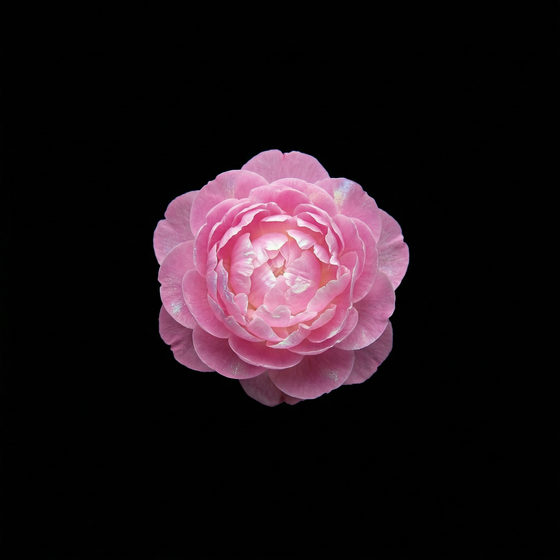
Півонія

АкордКВІТИквітковий · свіжий · росяний

Сім ароматівОдин із них дивиться на вас

Ноти серцяПіраміда
—Сила
—Стійкість
1Походження
Зразок
Півонія як парфумерна сировина
Ноти серця
Paeonia lactiflora / Paeonia × suffruticosa
Фантазійний/концептуальний
Визначення

Peony is any flowering plant of the genus Paeonia, the only genus in the family Paeoniaceae. The characteristic aroma substances of herbaceous peony are linalool, geraniol, citronellol and phenylethyl alcohol.

КВІТКОВИЙ ЗЕЛЕНИЙ СОЛОДКИЙ ПУДРОВИЙ СВІЖИЙ ВЕРШКОВИЙ
paeony
Type
Акорд
Olfactive family
Квіткові
Source
flowers
Chemical class
terpenoids, benzenoids/phenylpropanoids and fatty acid derivatives
Інструменти
Піраміда
ВВерхні ноти
СНоти серця
ББазові ноти
Країни-виробники
Китай (Лоян, Хецзе, вирощування, без екстракції для парфумерії)

Запах

The flowers of peonies are often fragrant. The strongly scented herbaceous peony cultivars divide into three scent types: rose, lily and mixed. The major volatile compounds of herbaceous peony fall into seven odour groups: herbal, woody, spicy, floral-rose, floral-lily, fruity-sweet and fruity-citrus. Most of the fatty acid derivatives in herbaceous peony release a grass fragrance, which is not considered a component of flower fragrance.

Докладно

Paeonia belongs to the order Saxifragales. Scientists differ on the number of species, from 25 to 40, but the current consensus describes 33 known species. Most are herbaceous perennial plants 0.25-1 metre tall, but some are woody shrubs 0.25-3.5 metres tall. They have large, often fragrant flowers, in colours ranging from purple and pink to red, white or yellow, in late spring and early summer. The flowers have a short blooming season, usually lasting for only 7-10 days.

Paeonia lactiflora, the Chinese peony, is native to central and eastern Asia, from eastern Tibet across northern China to eastern Siberia. Paeonia × suffruticosa is a perennial deciduous shrub with stems up to 2 m. It is the name used for most tree peony cultivars, but it is not a naturally occurring species. Currently there are about 600 Chinese tree peony cultivars.

Sensory evaluation of 87 herbaceous peony cultivars gave 16 cultivars with a strong scent, and their volatile components were identified by SPME-GC/MS. Terpenoids made up the largest share of the volatile components (60.94%), followed by fatty acid derivatives (24.57%) and benzenoids/phenylpropanoids (14.49%). Linalool and citronellol are the main aroma contributors, by odor activity value, in most strong-scented herbaceous peony cultivars, and geraniol and 2-PE in a few. The only strongly aromatic cultivar of the Itoh group, 'Lollipop', is mainly composed of linalool and phenylethyl alcohol. Hexanal and 2-hexenal were detected in all 17 cultivars studied. Geraniol was detected in 15 cultivars, and linalool and citral in 13. The sensory difference of flower fragrance among herbaceous peony cultivars is mainly due to the different contents of terpenoids and benzenoids/phenylpropanoids. Genes related to the biosynthesis of 2-PE, PlAADC1, PlPAR1 and PlMAO1, were detected in herbaceous peony petals, and a synthetic pathway for 2-PE was speculated.

Studies of fresh P. suffruticosa flowers have mostly focused on emitted volatiles, using headspace GC-MS or HS-SPME/GC-MS. The floral volatiles of tree peony cultivars mainly include (Z)-β-ocimene, α-pinene, citronellol, linalool, geraniol, neryl acetate, 2-phenylethanol and 1,3,5-trimethoxybenzene, among others. Results of studies on these volatiles vary considerably, most probably because of variations in cultivars. (Z)-3-hexen-1-ol and 1-hexanol are also found to be characteristic volatile components emitted from the buds. The main essential oil components of certain cultivars are heptadecane, heneicosane, 1,3,5-trimethoxybenzene, cis-linalool oxide (furanoid), trans-linalool oxide (furanoid) and α-terpineol, among others. Non-terpene oxygenated compounds were significantly higher in hydrolate extracts (24.2-96.6%) than in essential oils (11.7-62.5%) from the same cultivars. 2-Phenylethanol was not detected in the hydrolate extract of the cultivar 'BXT', whose chemotype was geraniol + citronellol + nerol (59.9%).

Phenethyl alcohol, or 2-phenylethanol, has the chemical formula C₈H₁₀O. It occurs widely in nature, being found in a variety of essential oils. Geraniol is a monoterpenoid alcohol and a primary component of rose oil. Citronellol, or dihydrogeraniol, is a natural acyclic monoterpenoid.

Цікавий факт

Among eight tree peony cultivars, the hydrolate extract of 'WLPS' had the highest percentage of 2-phenylethanol (64.4%), a compound that also predominates in rose hydrolates. In China, P. lactiflora is likened to "the Minister of Flowers" (花相), while Paeonia × suffruticosa is known as "the King of Flowers" (花王).

Отримання й хімія

Спосіб отримання

Products derived from the flowers of P. suffruticosa include the concrete, the absolute and the essential oil. Only the product obtained by hydro-, steam or dry distillation can be termed an essential oil, with the exception of cold expression for citrus fruits. Hydrolate extract is the fraction recovered from the aqueous distillate generated during hydro- or steam distillation.

Ботанічна назва
Paeonia lactiflora / Paeonia × suffruticosa
Синоніми
paeony
Статус IFRA
Див. примітку

No IFRA Standard for the material itself (51st Amendment)

У парфумерії

Of the products derived from P. suffruticosa flowers, the essential oil is the most valued and used in perfumes and cosmetics. Hydrolate extracts of P. suffruticosa from different cultivars could find uses in fragrances and cosmetics. The hydrolate extract of the cultivar 'SHT' has an organoleptic quality similar to Chinese rose oil. The hydrolate extract of the cultivar 'WLPS', rich in 2-phenylethanol, could serve as an alternative to rose hydrolate, which is less productive in China. The hydrolate extract of the cultivar 'BXT', with only 0.5% hydrocarbons, could be an alternative to expensive rose oil. Hydrolate extracts of P. suffruticosa are rich in oxygenated compounds, which correspond to higher organoleptic quality, so they could be good alternatives to the essential oils.

Роль у формулі
01підсилювач дифузії
02модифікатор
03фірмова нота
04компонент піднесення
05сполучний компонент
06свіжість
Форми випуску
реконструйований акорд гідролат (обмежена доступність)

Див. також

6 ноти