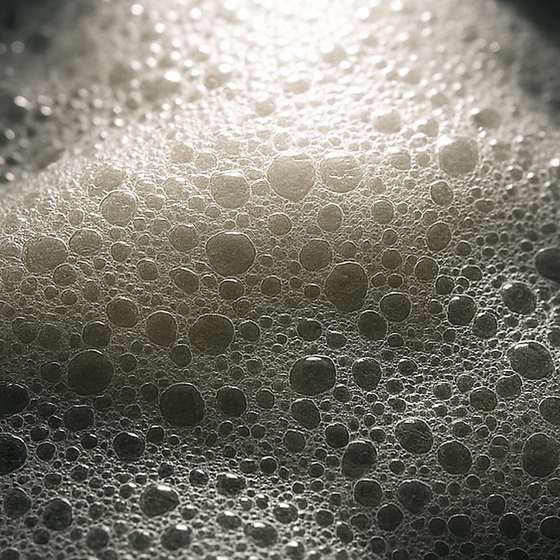
Морська піна

АкордНАТУРАЛЬНІ Й СИНТЕТИЧНІ, ПОПУЛЯРНІ Й НЕЗВИЧНІсвіжий · акватичний · зелений

Сім ароматівОдин із них дивиться на вас

Ноти серцяПіраміда
—Сила
—Стійкість
—Походження
Зразок
Морська піна як парфумерна сировина
Ноти серця
Фантазійний/концептуальний
Визначення

Sea foam is a type of foam created by the agitation of seawater, particularly when it contains higher concentrations of dissolved organic matter.

КВІТКОВИЙ ЗЕЛЕНИЙ ТРАВ’ЯНИЙ АКВАТИЧНИЙ ПРОХОЛОДНИЙ СВІЖИЙ МІНЕРАЛЬНИЙ СОЛОНИЙ
Ocean foam, beach foam
Type
Акорд
Olfactive family
Акватичні
Source
Agitated seawater
Інструменти
Піраміда
ВВерхні ноти
СНоти серця
ББазові ноти

Запах

Calone has an intense "sea-breeze" note with slight floral and fruit overtones. It is described as fresh, watery, clean, melon, green, marine and ozone. Calone also has a fresh, ozonic marine odor with watermelon, green and oyster-like nuances. The aroma of helional is described as watery, fresh, green, ozone, cyclamen and hay. Dimethyl sulfide, a component of the smell of the sea, has a characteristic odor commonly described as cabbage-like.

Докладно

What sea foam is

The dissolved organic matter in sea foam includes proteins, lignins and lipids, derived from sources such as the offshore breakdown of algal blooms. These compounds can act as surfactants or foaming agents. Sea foam varies depending on location and the potential influence of the surrounding marine, freshwater, and/or terrestrial environments.

Composition and persistence

Sea foam is generally a mixture of decomposed organic materials, such as zooplankton, phytoplankton and algae, though each occurrence varies in its specific contents. In some areas it is made up primarily of protein, along with lipids and carbohydrates. Metastable foams can have a lifetime of several hours to several days. Their duration is sometimes attributed to small particles of silica, calcium, or iron which contribute to foam stability and longevity.

Sea spray and the smell of the sea

Sea spray consists of aerosol particles formed from the ocean, primarily by ejection into Earth's atmosphere through bursting bubbles at the air-sea interface. It contains both organic matter and inorganic salts. Dimethyl sulfide is produced by marine planktonic microorganisms such as the coccolithophores. It contributes to the characteristic odor of sea air. Dimethyl sulfide is a component of the smell of the sea, alongside chemical derivatives of it and algal pheromones such as dictyopterenes.

Related aroma chemicals

Calone, or methylbenzodioxepinone, is trade-named Calone 1951 and is known in the fragrance industry as watermelon ketone. It is a white solid derived from 4-methylcatechol. Its melting point is 35-41 °C. Calone is similar in structure to brown algae pheromones like ectocarpene. Helional, commonly derived from heliotropin, is an aldehyde with a hydrocinnamaldehyde motif. Dihydromyrcenol, C₁₀H₂₀O, is a synthetic organic compound that has not been reported to be found in nature. It is a colorless viscous liquid that boils at 194-197 °C. Worldwide use of dihydromyrcenol exceeded 1000 metric tons per year as of 2004.

History

Calone was discovered by Pfizer in 1966. It has been used as a scent component since the 1980s for its watery, fresh, ozone accords, and as a more dominant note in several perfumes of the marine trend, beginning in the 1990s. A men's fragrance introduced in 1988 lists sea water, mint and rosemary among its top notes.

Explore all seven extraits in the Discovery Set.

—

Related: Aqual · Aquozone · Calone · Calone 1951 · Coral Limestone · Crustaceans · Diving Suit · Fish

Отримання й хімія

Спосіб отримання

Sea foam is formed under conditions that are similar to the formation of sea spray. As breaking waves churn seawater in the surf zone next to the shore, the surfactants trap air and form persistent bubbles that stick to each other through surface tension. The physical processes that contribute to sea foam formation are breaking surface waves, bubble entrainment and whitecap formation. Helional is most commonly made by a crossed-aldol condensation between piperonal (heliotropin) and propanal, followed by selective hydrogenation of the intermediate alkene. Dihydromyrcenol can be obtained from citronellene, a pyrolysis product of cis-pinane, via hydroxylation.

Формула
Calone (methylbenzodioxepinone) C₁₀H₁₀O₃
CAS
Calone: 28940-11-6
Синоніми
Ocean foam, beach foam
Статус IFRA
Див. примітку

No IFRA Standard for the material itself (51st Amendment)

У парфумерії

Calone is used to give the olfactory impression of a fresh seashore through its marine and ozone nuances. Helional is used as a perfume in soap and laundry detergent. Dihydromyrcenol is extensively used in the fragrance industry for its fresh lime and citrus-like odor.

Роль у формулі
01модифікатор
02кістяк
03сполучний компонент
04формувач об’єму
05свіжість
Форми випуску
парфумерний акорд

Див. також

6 ноти