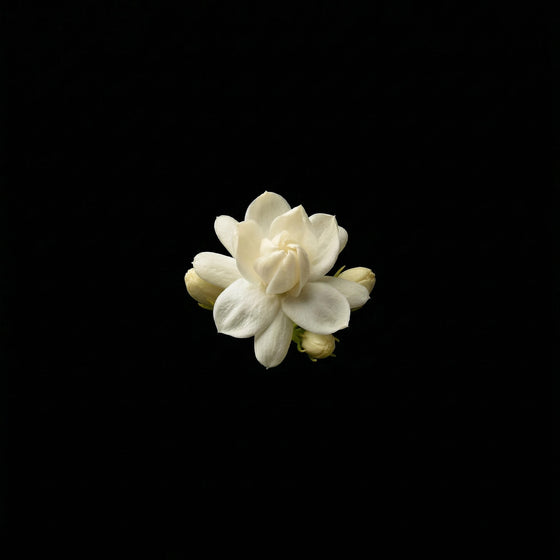
Тубероза

НатуральнийБІЛІ КВІТИквітковий · наркотичний · вершковий
Ноти серцяПіраміда
—Сила
—Стійкість
—Походження
Зразок
Тубероза як парфумерна сировина
Ноти серця
Polianthes tuberosa L.; syn. Agave amica (Medik.) Thiede & Govaerts
Визначення

Tuberose is the strongly fragrant, pure white and waxy flower of Polianthes tuberosa, a plant native to Mexico. Extracts of the plant are used as a note in perfumery.

КВІТКОВИЙ ЗЕЛЕНИЙ СОЛОДКИЙ ТЕПЛИЙ ВЕРШКОВИЙ ДУРМАННИЙ
Polianthes tuberosa, Agave amica, Tuberosa amica
Type
Складник
Olfactive family
Квіткові
Source
flower
Chemical class
complex natural mixture (mainly benzenoids, with some terpenes)
Інструменти
Піраміда
ВВерхні ноти
СНоти серця
ББазові ноти
—Сила
Інтенсивна
Інтенсивна

Запах

The fragrance of the tuberose is overwhelming. The flowers are strongly fragrant, and the plant emits an intense fragrance made up of floral volatiles.

Теруар і походження

Докладно

Tuberose — fleshy, narcotic, indolic — is worked against type in PREMIEREPEAU's Gravitas Capitale, where it is held back from blooming, woven through citron and shishito pepper.

This note in PREMIEREPEAU. Gravitas Capitale. Sample all seven extraits in the Discovery Set.

Botany

Tuberose (Polianthes tuberosa) is a perennial plant in the family Asparagaceae, subfamily Agavoideae. The plant is herbaceous and grows from underground tubers or tuberous roots. It produces offsets. Its common name derives from the Latin tuberosa through French tubéreuse, meaning swollen or tuberous in reference to its root system. The leaves are dull green, about 30-50 cm (1-1.5 ft) long and up to 13 mm (0.5 in) wide at the base, and slightly succulent. The inflorescence is a spike up to 3 ft (1 m) high, with pure white waxy flowers. The flowers are tubular, with a tube up to 2.5 in (6 cm) long that separates into six flaring segments at the end. Orange-flowered forms of the species have been reported.

The species is believed to be native to central and southern Mexico. It is no longer found in the wild, probably as a result of being domesticated by the Aztecs. It is currently grown in many tropical and temperate countries.

Carl Linnaeus first described the species in 1753. In 1790 Friedrich Kasimir Medikus moved it to the genus Tuberosa as Tuberosa amica. Morphological and molecular phylogenetic studies concluded that Polianthes is embedded within the larger genus Agave. Thiede and Govaerts published the combination Agave amica in 2017, which is the correct name for the species within Agave. In 2024 Vázquez-García et al. reinstated the genera Manfreda, Polianthes and Prochnyanthes, which together form a distinct clade.

Cultivation

Polianthes tuberosa is the only species of its genus in commercial cultivation. Tuberoses can be overwintered outdoors in hardiness zones 8-10. In colder zones they are grown as summer annuals, in pots or mixed-flower borders. To flower, the plants require around 4 months of warm temperatures from the time the rhizome is planted. Gardeners usually start the rhizomes in pots in greenhouses from late winter or early spring and move them outdoors in late spring, once the danger of frost has passed. Once the foliage begins to yellow in October, the leaves are clipped and the rhizomes are dug up and stored in a cool, dry, dark place for the winter.

The most popular variety is the double-flowered cultivar 'The Pearl', which grows to 2.5 ft (76 cm) tall and has pale pink buds opening to cream. The more common variety, 'Mexican Single', is less decorative but makes a longer lasting cut flower.

Arrival in Europe

The fragrance of the tuberose has been distilled for use in perfumery since the 17th century, when the flower was first transported to Europe. The French Queen Marie Antoinette used a perfume containing tuberose, orange blossom, sandalwood, jasmine, iris and cedar.

Chemistry

The floral volatiles of Polianthes tuberosa are mainly benzenoids, with some terpenes. The benzenoids include methyl benzoate, methyl salicylate, methyl isoeugenol and benzyl benzoate, and the terpenes include 1,8-cineol, farnesene and germacrene D. Low levels of benzenoids and terpenes occur in green flower buds and gradually increase at flower anthesis.

In the headspace of whole flowers at the anthesis stage, the volatiles include methyl benzoate (17.07%), 1,8-cineole (10.00%), methyl salicylate (9.83%), germacrene D (7.68%), indole (6.65%), α-farnesene (4.92%), methyl anthranilate (4.29%) and methyl isoeugenol (3.56%). In the absolute of a single-petalled cultivar, methyl isoeugenol (40.37%) and indole (1.88%) were the major constituents, whereas methyl palmitate (24.46%) was the major component in the absolute of a double-petalled cultivar.

In supercritical extracts, characteristic tuberose compounds such as methyl isoeugenol, benzyl benzoate, methyl anthranilate, pentacosene and heptacosene were obtained mainly at 18 MPa and 333 K. Geraniol, farnesol and methyl eugenol were also obtained, and these extracts could be used in the development of cosmeceutical products. Analysis of the extracts identified 37 compounds. Extracts obtained at 18 MPa contain methyl eugenol, isoeugenol and benzyl benzoate, which could be used as antimicrobial agents.

Other uses

In Indonesia, tuberose flowers are also used in cooking. In Hawaii, they are one of the main flowers used in the construction of leis.

Отримання й хімія

Спосіб отримання

In cold enfleurage, a glass plate called a chassis is coated with a layer of animal fat, usually lard or tallow, which is left to set. Petals or whole flowers are then laid on the fat, and their scent diffuses into it over 1-3 days. The spent flowers are replaced with fresh ones until the fat reaches the desired degree of fragrance saturation. The pomade could be washed or soaked in ethyl alcohol to draw the fragrant molecules into the alcohol. The alcohol was then separated from the fat and waxes and allowed to evaporate, leaving the absolute. Enfleurage was the sole method of extracting the fragrant compounds of delicate flowers such as jasmine and tuberose, which would be destroyed or denatured by the high temperatures that other extraction methods require. It is now largely obsolete, superseded by more efficient techniques such as solvent extraction and supercritical carbon dioxide extraction. Plant material can also be extracted with nonpolar hydrocarbons such as hexane to give a concrete. Extraction of the concrete with ethanol gives an absolute free of waxes and fats. Supercritical carbon dioxide extraction of flowers of the double-flowered variety gave a yield of 2.5%. Pressures of 18, 28 and 38 MPa and temperatures of 313, 323 and 333 K were tested, and a significant variation in chemical composition was found.

CAS
8024-05-3
Ботанічна назва
Polianthes tuberosa L.; syn. Agave amica (Medik.) Thiede & Govaerts
Зовнішній вигляд
pure white waxy flowers
Сила запаху
Інтенсивна
Синоніми
Polianthes tuberosa, Agave amica, Tuberosa amica
Статус IFRA
Див. примітку

No IFRA Standard for the material itself (51st Amendment)

Фізичні властивості
Температура спалаху
> 200 °F (TCC)
Відносна густина
0.920-0.980 at 25 °C
Показник заломлення
1.480-1.520 at 20 °C

У парфумерії

It remains a popular floral note for perfumes, either in stand-alone tuberose fragrances or in mixed floral scents. It generally must be used in moderation because the essence is overpowering and can become sickly to the wearer. The characteristic tuberose compounds of supercritical extracts could be used in the perfume or fragrance industry. PREMIEREPEAU works it against type in Gravitas Capitale, where it is held back from blooming, woven through citron and shishito.

Роль у формулі
01фірмова нота
02формувач об’єму
03підсилювач дифузії
04модифікатор
Форми випуску
абсолют конкрет абсолют анфлеражу CO₂-екстракт

Див. також

8 ноти