


Norway Spruce
Keywords: coniferous · fresh · balsamic
Norway spruce (Picea abies) is a large, fast-growing evergreen coniferous tree of the family Pinaceae. Spruce needle oil is an essential oil obtained from the needles, twig tips or branches of Picea and Abies species.
- Olfactive family
- Woods · 363 entries of the glossary in this family Subfamily: Coniferous woods · 31 entries in this subfamily Cluster: Camphoraceous aromatics · 114 entries in this cluster
- Material
- Natural Needles, twig tips or branches
- Pyramid
- Top · Heart · Volatility: Top · Heart Note
- Also called
- Oleum Piceae, spruce needle oil, European spruce
Norway Spruce · Facets
Entries of the glossary that carry each facet, of 3,979:
- coniferous 21
- pine 63
- green 1,442
- fresh 1,390
- woody 790
- balsamic 344
Norway Spruce · In Perfumery
Spruce needle oil is used in room sprays.
Pyramid
Norway Spruce: Top · Heart. Entries of the glossary stored at each place of the pyramid, of 4,000 (35 store no place):
- Top 718
- Top · Heart 496
- Heart 1,644
- Heart · Base 513
- Base 594
Role in the formula
Norway Spruce: roles in the formula. Entries of the glossary that share each role, of 4,000:
- Fragrance ingredient 51
- Perfuming agent 43
- Freshness 720
Norway Spruce · Extraction & Chemistry
Spruce needle oil is obtained by steam distillation from the needles, twig tips or branches. Distillation yields two products, an essential oil and a hydrosol. Branch samples of 50 g were distilled for 4 h with 500 mL of demineralized water in a Clevenger-type apparatus. Grinding the annual shoots before distillation raised the yield 2.5 times without significantly changing the composition of the oil.
Norway Spruce · Did You Know?
The tallest measured Norway spruce is 62.71 m tall and grows near Ribnica na Pohorju, Slovenia. The species was also the first gymnosperm to have its genome sequenced.
Norway Spruce · In Depth
The tree
Norway spruce is a species of spruce native to Northern, Central and Eastern Europe. It is a large, fast-growing evergreen coniferous tree growing 35–55 m tall. The leaves are needle-like, 15–25 mm long, quadrangular in cross-section and dark green on all four sides. The Latin specific epithet abies means “like a fir tree”.
Where the oil comes from
Picea abies accumulates volatile compounds in all parts of the plant, with the highest abundance in needles. The needles are the part least used in the wood industry and the part of the plant with the largest volume.
Chemistry
The essential oil contains 10–25% alpha-pinene, 5–28% camphene, 4–30% limonene, 5–35% bornyl acetate and 1–5% borneol. Analysis of 32 samples found a total of 246 different compounds. The composition varies greatly with season but not with short-distance geographic origin or the preparation of the distilled material.
Bornyl acetate is a desired component of the oil and β-pinene is not, so better quality oil can be obtained from annual shoots alone, but this requires more manual labor. The essential oil from the vegetative buds of Romanian spruce has D-limonene as its largest component, at 40.43%.
Uses
Spruce needle oil is used medicinally, internally and externally, for catarrhal diseases of the upper and lower respiratory tract, and externally for rheumatic and neuralgic complaints. For inhalation, a few drops are put into hot water and the vapours are inhaled. The Norway spruce is used in forestry for softwood timber and for paper production. Its resin has been used in Nordic folk medicine for treating wounds and skin disorders.
Norway Spruce · History
The scientific name Picea derives from the Latin “pix”, pitch, which was obtained from the resin of Picea abies.
Norway Spruce · Technical Sheet
Identity
- Botanical
- Picea abies
- Botanical records
- Picea abies: POWO, Picea abies · IPNI, Picea abies · GBIF, Picea abies · Wikidata, Picea abies · Wikipedia, Picea abies · IUCN Least concern (LC), Picea abies
- IPNI
- Picea abies (L.) H.Karst., Deut. Fl. [Karsten] 2–3: 325 (1881) — Gustav Karl Wilhelm Hermann Karsten (1817–1908)
- Type
- Ingredient
- Category
- Woods and mosses
In Nature
- Recorded altitude
- 400–1,500 m · median 800 m · 188,876 records with an altitude · GBIF
- Wild or cultivated
- 82,765 native · 35,620 introduced · 4,522 cultivated among 1,026,915 records (the rest carry no such mark) · GBIF
- Recorded in
- 66 of 512 squares of the world grid; a brighter dot holds more records · GBIF
- Also from this genus
- Picea: Black Spruce · Spruce
- Also from this botanical family
- Pinaceae: Aleppo Pine · Arolla Pine · Austrian Pine · Black Hemlock or Tsuga · Canadian Balsam · Cedar Roots · 17 more entries
In Print
- Timeline
- first described 1881 · earliest aroma paper in Europe PMC, 1977
- In English books
- most mentioned in the 1990s · Google Books Ngram
Classification
- Chemical class
- Essential oil
Chemical data
- Formula
- Complex natural mixture (key constituents: bornyl acetate C₁₂H₂₀O₂; camphene C₁₀H₁₆; limonene C₁₀H₁₆; α-pinene C₁₀H₁₆)
- Structure
- Camphene, Limonene, Alpha-Pinene:
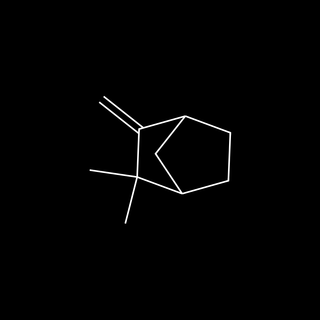
Camphene
PubChem, Camphene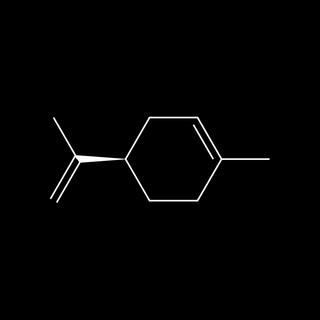
Limonene
PubChem, Limonene
Alpha-Pinene
PubChem, Alpha-Pinene
Labelling
- EU allergens reported
- Limonene · Eugenol · Isoeugenol · Benzyl Alcohol · Pinene · Terpineol · Alpha-Terpinene · Terpinolene · Beta-Caryophyllene · Camphor · Carvone · Methyl Salicylate · Vanillin
Performance and rules
- Available as
- essential oil
- IFRA status
- No IFRA Standard for the material itself (51st Amendment)
Norway Spruce · See Also
Entries related to Norway Spruce, by their place in the pyramid. “shared” marks a scent word Norway Spruce has too.
Top notes

Black Spruce
woody (shared) · fresh (shared) · balsamic (shared) Woods / Top · Heart / Natural
Alpha-Pinene
piney · fresh (shared) · herbal Aromatic / Natural


Heart notes

Spruce
fresh (shared) · woody (shared) · amber Woods / Same subfamily / Natural

Base notes

Cedarwood
woody (shared) · dry · clean Woods / Natural

Norway Spruce · Sources
- GBIF Picea abies
- Plants (Basel, Switzerland) Volatile Compounds in Norway Spruce (Picea abies) Significantly Vary with Season
- Molecules (Basel, Switzerland) Phytochemical Characterization, Antioxidant, and Antimicrobial Activity of the Vegetative Buds from Romanian Spruce, Picea abies (L.) H. Karst
- Robert J. Dolezal The Complete Guide to Choosing Landscape Plants (2002)
- IFRA Standards, 51st Amendment
- Wikipedia Picea abies
- Wikipedia Spruce
- Altmeyers Encyclopedia Piceae aetheroleum
Cite as PREMIEREPEAU Glossary, “Norway Spruce”, https://premierepeau.com/
