


Velebilje
PrirodnaPOPULARNO I NEOBIČNOplant · faintly scented
Srednje notePiramida
—Jačina
—Trajnost
—Poreklo
Uzorak
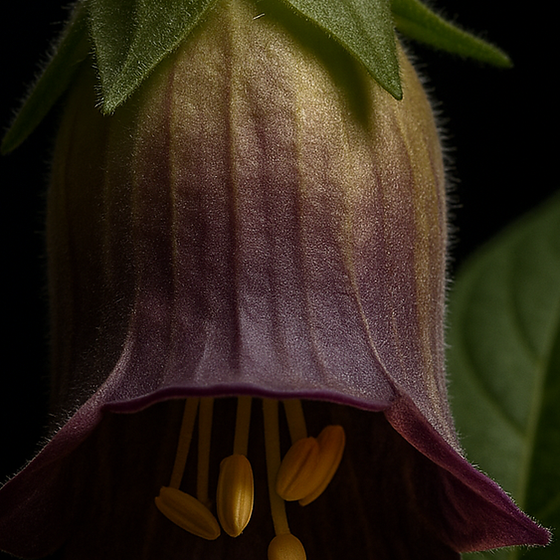
Atropa belladonna
Definicija
Belladonna is the common name of Atropa belladonna, the deadly nightshade, a perennial herbaceous plant of the nightshade family. Its leaves and berries are highly toxic.
FAINT
Deadly nightshade, dwale, banewort, devil's cherries, naughty man's cherries, divale, black cherry, devil's herb, great morel, dwayberry
- Type
- Sirovina
- Olfactive family
- Cvetni
- Source
- Plant
- Chemical class
- Tropane alkaloid-containing plant
Instrumenti
Piramida
GGornje note
SSrednje note
BBazne note
Miris
U parfemima kuće PREMIEREPEAU
Detaljno
Zanimljivosti
Optometrists and ophthalmologists use atropine for pupil dilation in eye examinations, though the dose used is small. Children have been poisoned by eating as few as three berries.
Dobijanje i hemija
- Formula
- Complex natural mixture (key constituents: atropine C₁₇H₂₃NO₃; scopolamine; hyoscyamine)
- CAS
- 8007-93-0
- Botanički naziv
- Atropa belladonna
- Izgled
- Herbaceous perennial with dull purple bell-shaped flowers and shiny black berries
- Sinonimi
- Deadly nightshade, dwale, banewort, devil's cherries, naughty man's cherries, divale, black cherry, devil's herb, great morel, dwayberry
Status prema standardima IFRA
Pogledajte napomenuNo IFRA Standard for the material itself (51st Amendment)
U parfemima
Belladonna's flowers are only faintly scented, and the IFRA Standards library holds no standard for it.
Uloga u formuli
01modifikator
02nota potpisa
03sirovina za stapanje
Oblici na tržištu
sintetički akord fantazijska nota
Pogledajte i
6 nota