Cvet kane

SintetičkaCVETOVIcvetni · bogat · tropski

Sedam parfemaJedan od njih vas posmatra

Srednje notePiramida
—Jačina
—Trajnost
5Poreklo
Uzorak
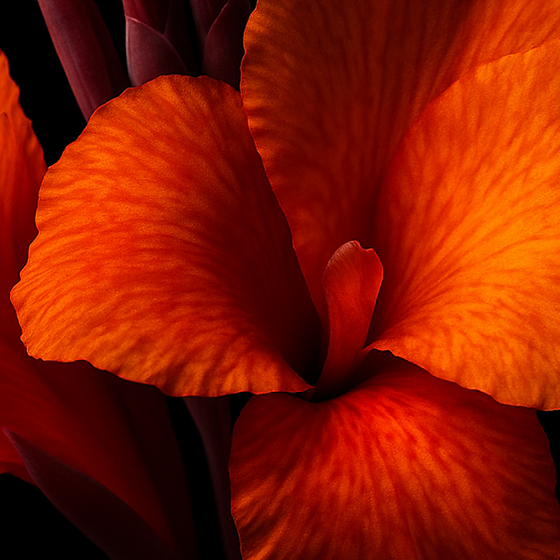
Cvet kane kao sirovina za parfeme
Srednje note
Canna indica
Definicija

Canna flower is the flower of Canna indica, commonly known as Indian shot, a plant species in the family Cannaceae. It is native to the Americas and naturalized elsewhere.

CVETNI SLADAK VOĆNI TOPAO SVEŽ TROPSKI
Indian shot, canna lily, African arrowroot, edible canna, purple arrowroot, Sierra Leone arrowroot, achira
Type
Sirovina
Olfactive family
Cvetni
Source
flower
Instrumenti
Piramida
GGornje note
SSrednje note
BBazne note
Zemlje proizvođači
Brazil Kolumbija Indija Indonezija Tajland

Detaljno

The plant

Canna indica is a perennial growing to between 0.5 and 2.5 metres, depending on the variety. All species of the genus are native to the American tropics and were naturalized in Europe, India and Africa in the 1860s. The name Canna originates from the Latin word for a cane or reed. The genus Canna is the only genus in the family Cannaceae, and its species are known as cannas or canna lilies. Cannas are not true lilies; they belong to the order Zingiberales, where the gingers, bananas, and arrowroots are among their closest relatives.

Flowers and pollination

What appear to be petals are highly modified stamens, or staminodes. The main pollinators of the flowers are bees, hummingbirds, sunbirds, and bats. All cannas produce nectar. The wild species often grow to at least 2-3 m in height.

Rhizome and starch

Cannas grow from swollen underground stems, correctly known as rhizomes, which store starch. The edible rhizomes of Canna indica consist of 73% water, 24% starch, 1% protein, 0.6% crude fiber and 1.4% minerals. Cooked, the rhizomes become translucent, mucilaginous, and sweet. Starch is produced by grinding or pounding the roots and soaking them in water, which separates the starch granules from the fibres. Rhizomes meant for starch should be processed within days of harvest because they perish quickly. In rural Colombia the harvested rhizomes are washed in tanks and mechanically grated to release the starch. The grated rhizomes are passed through a sieve with water, and the starch granules sink to the bottom of a tank. The starch is then washed several times with clean water and dried in the sun.

Uses

Internationally, cannas are one of the most popular garden plants. Today in China the rhizomes are processed into starch, vermicelli, white wine, and ethanol. In Vietnam, canna starch is used to make cellophane noodles known as miến dong. In South America, the leaves are used to wrap pastries such as tamales and humitas. In some areas, the leaves are fed to livestock. The seeds are used as beads in jewelry. In Thailand, cannas are a traditional gift for Father's Day.

Explore all seven extraits in the Discovery Set.

—

Related: Accord Eudora · African Marigold · Alpha Amylcinnamaldehyde · Alyssum · Angels Trumpet · Aquaflora · Ashoka Flower · Aurantiol

Zanimljivosti

The starch granules of C. indica are translucent and the largest known from any plant. In two Andean ecotypes of achira, Canna edulis, the starch granules are very large and oblong, approximately 45-52 μm on the major axis and approximately 33-34 μm on the minor axis.

Dobijanje i hemija

Botanički naziv
Canna indica
Izgled
Flowers typically red, orange, or yellow, or any combination of those colours
Sinonimi
Indian shot, canna lily, African arrowroot, edible canna, purple arrowroot, Sierra Leone arrowroot, achira
Status prema standardima IFRA
Pogledajte napomenu

No IFRA Standard for the material itself (51st Amendment)

U parfemima

Its listed uses are ornamental, and as a source of starch from the rhizome, for humans and animals.

Uloga u formuli
01pojačivač difuzije
02modifikator
03nota potpisa
04sredstvo za podizanje
05sirovina za stapanje
06graditelj volumena
Oblici na tržištu
sintetički akord fantazijska nota

Pogledajte i

7 nota