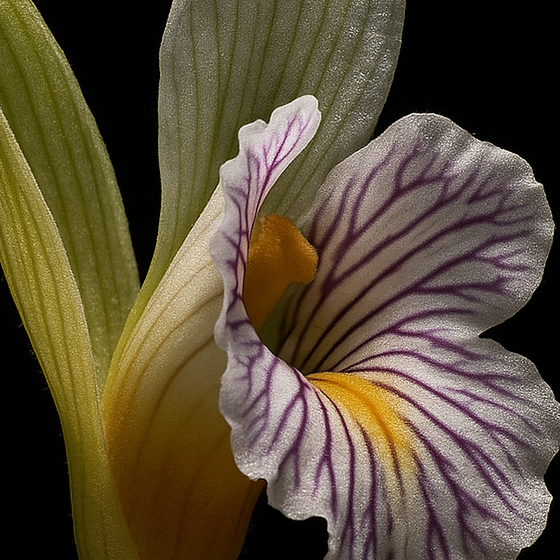
Cvet kardamoma

AkordCVETOVIcvetni · začinski · sladak

Sedam parfemaJedan od njih vas posmatra

Srednje notePiramida
—Jačina
—Trajnost
2Poreklo
Uzorak
Cvet kardamoma kao sirovina za parfeme
Srednje note
Elettaria cardamomum
Fantazijska/konceptualna
Definicija

Cardamom flower is the bloom of Elettaria cardamomum, the plant that gives the spice cardamom.

CVETNI ZELEN ZAČINSKI SLADAK TOPAO SVEŽ
Type
Akord
Olfactive family
Cvetni
Instrumenti
Piramida
GGornje note
SSrednje note
BBazne note
Zemlje proizvođači
Gvatemala Indija

Miris

It is spicy and warm, with camphor, medicinal, eucalyptus, balsamic and woody facets. A Guatemalan oil is described as clean and pure with a radiant top note, green, herbal and aromatic, with floral undertones. Its fragrance has two facets: the freshness of citrus notes and the warmth of spicy notes. Another description gives a green, slightly metallic character that evaporates on a thin fruity note.

Detaljno

The flowers are bisexual and about 4 cm long. The corolla lobes are pale green, and the labellum is white but streaked with violet. The inflorescences are loose panicles about 2 ft long, with many small blossoms, and they develop on separate horizontal stems that spread along the ground. Flower buds need about 30 days from initiation to full bloom. Pollination is by bees and ants. Flowering may occur throughout the year.

Wild cardamom is pollinated mainly by solitary bees, while cultivated cardamom is pollinated mainly by social bees. Plants grown outside tropical regions do not flower.

Cardamom is the third most expensive spice by weight. In 2022, world production of cardamom, reported together with nutmeg and mace, was 138,888 tonnes, led by India, Indonesia and Guatemala. In India, the state of Kerala is by far the most productive producer. Cardamom was introduced to Guatemala before World War I by the German coffee planter Oscar Majus Kloeffer. In 1979-1980, Guatemala surpassed India in worldwide production.

The fruit and its oil

Commercially, cardamom oil is made by steam-distilling crushed fruits. The essential oil distilled from the crushed fruits comprises mainly 1,8-cineole (20-60%) and α-terpinyl acetate (20-53%). The oil is colourless or pale yellow and darkens on exposure to light. Fruits are picked when fully developed but still green, and the seeds inside the green pods should have changed colour from white to brown or black. In Guatemala the pods are hand-picked between September and April, and the green fruit must be taken to a drying oven within 48 hours.

Composition of the oil

Some accessions are richer in α-terpinyl acetate and others in 1,8-cineole.

—

Related: Abelia · Almond Blossom · Alpha Terpineol · Alstroemeria · Alumroot · Amarillys · Amazon Moonflower · Amethyst Flower

Dobijanje i hemija

Način dobijanja

The seeds are traditionally processed into an essential oil and an absolute. Recently harvested cardamom that has not lost much of its essential oil gives a good yield. Distillation must be complete to give the full character of the oil, and at least 4 hours are needed to produce its full ester content. An oleoresin is also made, on a relatively small scale, by solvent extraction with a yield of about 10%.

Botanički naziv
Elettaria cardamomum
Status prema standardima IFRA
Pogledajte napomenu

No IFRA Standard for the material itself (51st Amendment)

U parfemima

In fine fragrances the oil brings spicy, warm and sweet notes. It is often used at the heart of spices, alongside ginger or cold spices, and it can be paired with woody notes of cedar or placed in gourmand accords. In flavour, the oil goes into spice blends and savory flavours, adds a minty, floral and woody effect to fruit flavours, and gives freshness to citrus compositions. The seed oil is also used in aromatherapy products, cosmetics, perfume and breath freshener.

Uloga u formuli
01modifikator
02nota potpisa
03sirovina za stapanje
04graditelj volumena
05svežina
Oblici na tržištu
sintetički akord fantazijska nota

Pogledajte i

6 nota