


Kopaiba balzam (copahu balm)
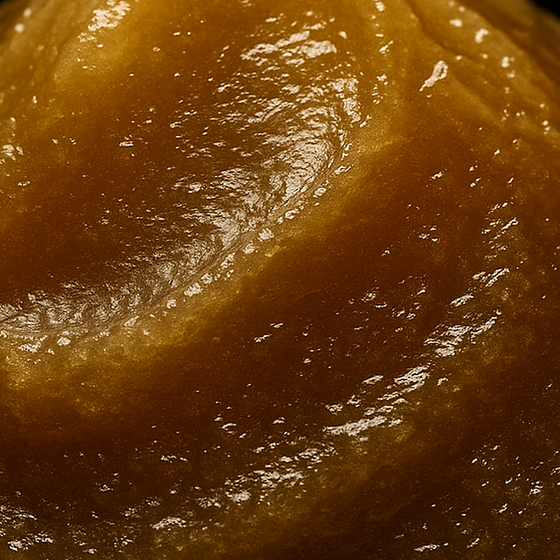
Pale, resinous transparency — like sniffing a plank of tropical hardwood through a gauze of black pepper. Drier and quieter than Peru balsam, without the vanilla push. An oleoresin that barely announces itself yet refuses to leave.
- Type
- Sirovina
- Olfactive family
- Smolasti
- Source
- resin
- Chemical class
- complex natural
Miris
Klase i odležavanje
Detaljno
Dobijanje i hemija
Način dobijanja
The oleoresin is collected by tapping: the trunk of a Copaifera tree is drilled or incised, and the liquid flows naturally from the wound — a process analogous to rubber or maple syrup tapping, not to resin distillation. The crude oleoresin is used directly in perfumery without further processing, making copaiba one of the very few natural materials employed in its raw state. For copaiba essential oil (CAS 8013-97-6), the crude oleoresin is steam-distilled to separate the volatile sesquiterpene fraction from the heavier diterpene acids. Average yield per tree ranges from 0.1 to 0.8 litres per harvest, with mid-diameter trees (45–65 cm DBH) producing the highest volumes. Reharvested trees produce approximately 35% of the initial yield.
- Formula
- Beta-caryophyllene C₁₅H₂₄ (major sesquiterpene; 5–87% depending on species)
- CAS
- 8001-61-4
- Botanički naziv
- Copaifera langsdorffii, C. reticulata, C. officinalis (and other Copaifera spp.)
- Izgled
- Pale yellow to amber, slightly viscous clear liquid
- Jačina mirisa
- Srednji
- Trajnost
- 100 hours at 20.00%
- Sinonimi
- Copaiba balsam, copaiba oil
Restricted — max 5% in fragrance concentrate (TGSC/RIFM recommendation). IFRA 51st Amendment conformity certificates exist with category-specific limits.
- Tačka paljenja
- 93°C
- Indeks prelamanja
- 1.4950–1.5100 @ 20°C
U parfemima
Base-note fixative and blender-modifier in amber, woody, and chypre compositions. Copaiba's primary contribution is mechanical: it extends the tenacity of more volatile materials above it — citrus oils, lavender, bergamot — without imposing strong character of its own. Its medium odor strength and 100+ hour substantivity at 20% concentration make it a workhorse anchor in functional and fine fragrance alike. The high beta-caryophyllene content gives it a peppery edge that bridges resinous bases (benzoin, myrrh, olibanum) with woody hearts (cedarwood, sandalwood, vetiver). It is commonly deployed in fougère and lavender-based compositions for detergent perfumery, and in low-cost amber bases where it substitutes for more expensive balsams. In a skin-scent register — warm ambers, saffron-oud accords — copaiba is a quiet resinous bed.
Pogledajte i
6 nota